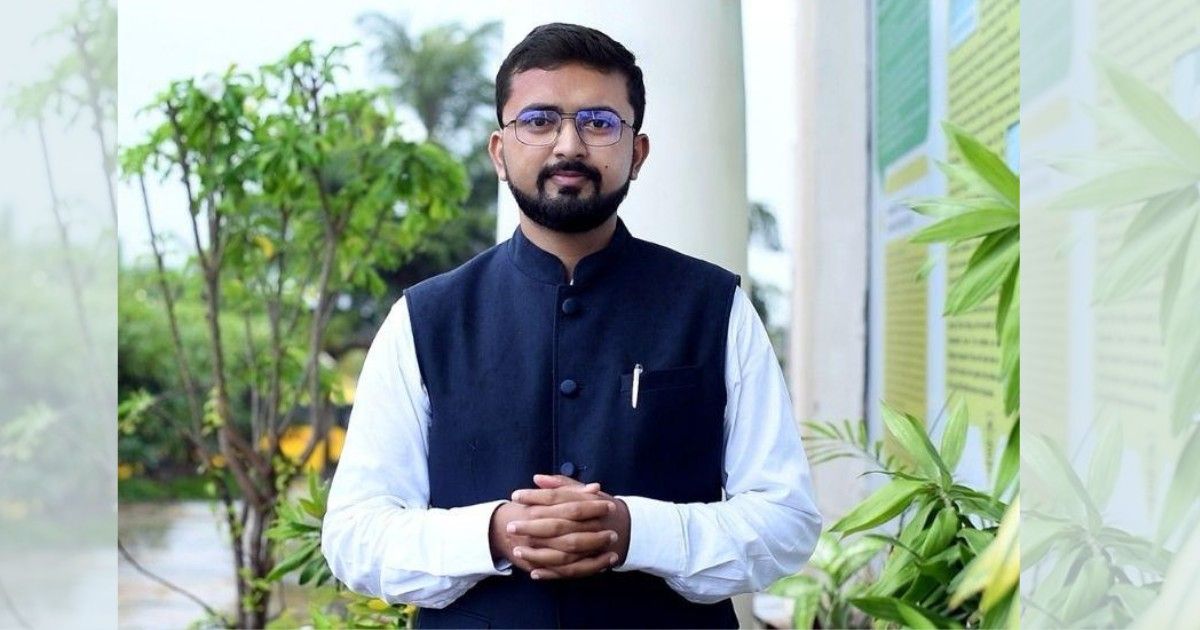
By Siddharth Rajgarhia
As the curtain falls on 2025, we find ourselves standing at the threshold of reflection—not just to review what has transpired, but to awaken to what we have become. At Delhi Public School, our campuses in Varanasi, Nashik, Lava Nagpur, and Hinjawadi have served as living ecosystems: dynamic, evolving, and deeply human. This year has not just been about academic results or grand events; it has been a journey of growing awareness, conscious choices, and radiant transformation.
Across our campuses, children have danced in musical symphonies, led sustainability initiatives, engaged in dramatic storytelling, and forged bonds through culture and collaboration. Yet behind these vibrant scenes lies a deeper pattern—an alignment of values and vision, a quiet revolution in how we see learning: not as information to be stored, but as awareness to be awakened.
2025 demanded resilience. The world continued to shift under our feet. The demands on schools were no longer confined to syllabus completion or board results. We were asked to teach joy, to nurture emotional stamina, and to foster innovation without losing the anchor of tradition. At DPS, we did not shrink from this challenge; we embraced it.
When students at Hinjawadi staged powerful dramas in Drama O’clock, it was not merely a performance—it was an assertion that creativity and compliance can coexist, that a school can both meet CBSE benchmarks and serve as a canvas for unfiltered expression. At Nashik, French Day, Janmashtami, and visits to Army Aviation Schools blurred the lines between classroom learning and real-world curiosity. Lava Nagpur saw our young leaders take up the mantle of sustainability, singing in Mandarin about global unity, reminding us that leadership is not taught; it is entrusted. And Varanasi, with its ACT Global Summit and Fam-jam celebrations, reminded us that learning is expansive—it involves community, collaboration, and consciousness.
Here lies the essence of what we have witnessed: education is not a linear process but a spiral of discovery. Each story that unfolded on our campuses this year was a lesson in perspective. As Dr. Srikumar Rao beautifully reminds us, suffering begins not with what happens to us, but with our labelling of it. The torrential rains that disrupted our events also became moments of spontaneous dance. The pressure of inspections brought forth deeper preparation and pride. What we thought were obstacles turned into opportunities for alignment and growth. “Good thing, bad thing, who knows?”—this refrain, as Rao sir teaches, helps us stay anchored in joy even amidst uncertainty.
The broader education industry, too, echoed this inner shift. Technology deepened its role not as a replacement for the teacher, but as an enhancer of personalized pathways. AI tools supported learning differentiation, while analytics helped us track well-being as rigorously as academics. Mental health and social-emotional development became non-negotiables, finally receiving the systemic attention they deserved. Sustainability entered the classroom not as a subject, but as a mindset. Syllabuses expanded to include empathy, ethics, and ecosystem thinking.
What emerged was a new understanding: schools are not merely knowledge dispensers; they are temples of consciousness. And school leaders are not merely administrators—they are gardeners of potential. They align vision with systems, strategy with heart. We are learning to lead both for today and for tomorrow: to protect the core while exploring the future.
This dual focus is not easy. It requires adaptive leadership—the ability to distinguish between technical problems (like exam scheduling) and adaptive challenges (like shifting the culture of feedback). At DPS, we are embracing this distinction. We are building systems that serve not just efficiency, but empathy. We are training teachers not just to deliver content, but to model resilience. And we are involving our students in co-creating their learning journeys through NSA clubs, summits, and inquiry-based projects.
So, what does 2026 hold for all of us?
It begins with clarity. We will deepen teacher engagement not through compliance, but inspiration. Our vision is to create schools where teachers thrive, because we know that when teachers thrive, students do too. We will continue to benchmark performance—not for external validation, but for internal alignment. Bagless Weeks, interdisciplinary exhibitions, and action research will be scaled across campuses. And most critically, we will invest in building resilient systems—ones that adapt with grace, that honour human dignity, and that keep the flame of inquiry alive.
As we walk into the new year, I carry forward a final thought from Dr. Rao: “Feed the dog, not the wolf.” Within each of us lies both—a part that seeks connection and upliftment, and another that is anxious, judgmental, and reactive. As educators, our daily choices determine which one we nourish. At DPS, we choose the dog. We choose to see possibility, to foster generosity, and to light the lamp of inner excellence in every learner, teacher, and parent.
Education is not about preparing for a life someday; it is life—lived in moments of drama, in the notes of a band, in the quiet smile of a teacher who sees a child’s potential, in the collaborative hum of students building a better world.
2025 was not perfect, but it was profound. And for that, we are deeply grateful.
Welcome, 2026.
We are ready—not with blueprints, but with belief.
Not with certainties, but with strength.
Not just with strategies, but with soul.
(The above article is authored by Siddharth Rajgarhia, Co-Founder Equanimity Learning Chief Learner and Director, Delhi Public School – Varanasi, Nashik, Lava Nagpur & Hinjawadi Pune. Views are his personal)
Last Updated on: Tuesday, January 6, 2026 10:09 am by Admin | Published by: Guest Post on Tuesday, January 6, 2026 10:08 am | News Categories: Opinion, Education