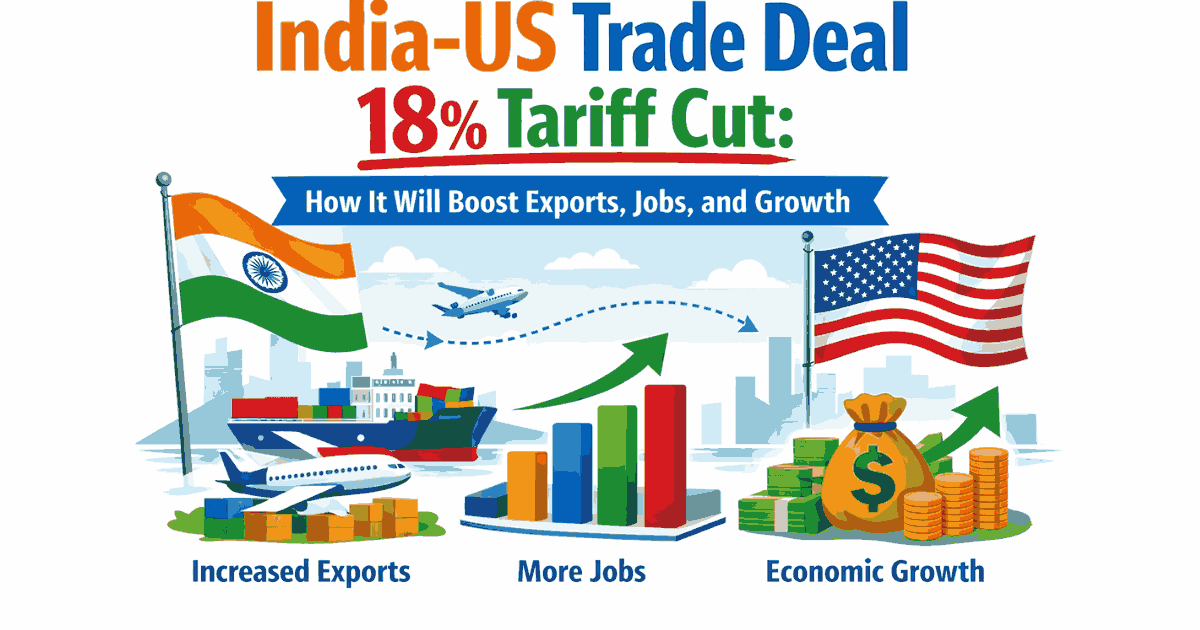
India-US Trade Deal 18% Tariff Cut marks a major shift in economic ties between New Delhi and Washington, moving years of negotiations toward meaningful cooperation. The reduction of reciprocal tariffs to 18% signals a clear intent from both nations to strengthen bilateral trade and improve market access.
From an Indian trade expert’s perspective, this is more than a routine policy move. The India-US trade deal boosts key export sectors such as pharmaceuticals, textiles, engineering goods, and IT services, giving Indian businesses a stronger foothold in the US market. Amid global trade uncertainty, this tariff cut provides stability and reinforces India’s position as a strategic trade partner for the United States.
How the India-US Trade Deal 18% Tariff Cut Was Finalised
For several years, India-US Trade Deal 18% Tariff Cut discussions revolved around tariffs, market access, and trade imbalances between New Delhi and Washington. While both countries aimed to deepen economic ties, high reciprocal tariffs often slowed progress. Multiple trade rounds focused on easing friction and building a more stable bilateral trade framework.
The breakthrough came as both nations acknowledged the need for stability in a volatile global trade environment. Geopolitical tensions, supply-chain disruptions, and weakening demand pushed consensus forward. The India-US Trade Deal 18% Tariff Cut supports India’s export growth and manufacturing ambitions while ensuring the US has a dependable partner in a fast-growing economy making this agreement a balanced and practical win for both sides.
Sectors Set to Benefit Most from the Tariff Reduction
The India-US Trade Deal 18% Tariff Cut is expected to deliver immediate gains for export-oriented sectors that rely heavily on the US market. Pharmaceuticals stand out as a major beneficiary, as lower tariffs can reduce costs and improve competitiveness for Indian drug manufacturers. Textiles and apparel exporters are also likely to see stronger demand, especially as US buyers look for reliable alternatives in global supply chains.
Engineering goods and IT-enabled services are set to gain from smoother trade flows and improved market access under the tariff reduction. For MSMEs and small exporters, the India-US Trade Deal 18% Tariff Cut lowers entry barriers and pricing pressure, making it easier to scale operations and compete globally. Overall, the tariff cut strengthens India’s export ecosystem by supporting both large industries and smaller businesses aiming to expand in the US market.
What the 18% Tariff Cut Means for Indian Exporters and Jobs
The India-US Trade Deal 18% Tariff Cut directly improves the competitiveness of Indian exporters in the US market. Lower tariffs reduce overall export costs, allowing Indian goods to be priced more attractively against global competitors. This cost advantage is especially important in price-sensitive sectors, where even small reductions can influence large purchase decisions.
As demand becomes more stable and predictable, exporters are likely to scale production to meet higher orders. The India-US Trade Deal 18% Tariff Cut can lead to increased factory output, better capacity utilisation, and new hiring across manufacturing and services. For India, this translates into stronger job creation, particularly in export-driven industries and MSME clusters, reinforcing the link between trade growth and employment generation.
Strategic Impact on India’s Global Trade Position
The India-US Trade Deal 18% Tariff Cut strengthens India’s position as a reliable and long-term trade partner in the global economy. By lowering tariffs through negotiation rather than dispute, India signals its readiness to engage constructively with major economies. This approach enhances investor confidence and reinforces India’s image as a stable destination for manufacturing and export-led growth.
At a strategic level, the India-US Trade Deal 18% Tariff Cut aligns with India’s broader goal of integrating deeper into global supply chains. As companies look to diversify sourcing beyond traditional hubs, India becomes a more attractive option for trade and investment. Over time, this agreement could serve as a template for future trade partnerships, helping India expand its influence and bargaining power in global trade negotiations.
The India-US Trade Deal 18% Tariff Cut is more than a tariff adjustment it reflects a maturing trade relationship built on mutual trust and long-term economic interests. By reducing costs, improving competitiveness, and creating new opportunities for exporters and workers, the agreement delivers tangible benefits for India’s economy.
Looking ahead, the India-US Trade Deal 18% Tariff Cut could act as a foundation for deeper trade cooperation and future agreements with other global partners. If implemented effectively, it has the potential to strengthen India’s role in global supply chains, boost employment, and support sustained economic growth making this deal a meaningful step forward in India’s global trade journey.
Add Digital Herald as a preferred source on Google – Click Here
Last Updated on: Tuesday, February 3, 2026 2:51 pm by Digital Herald Team | Published by: Digital Herald Team on Tuesday, February 3, 2026 2:51 pm | News Categories: Business