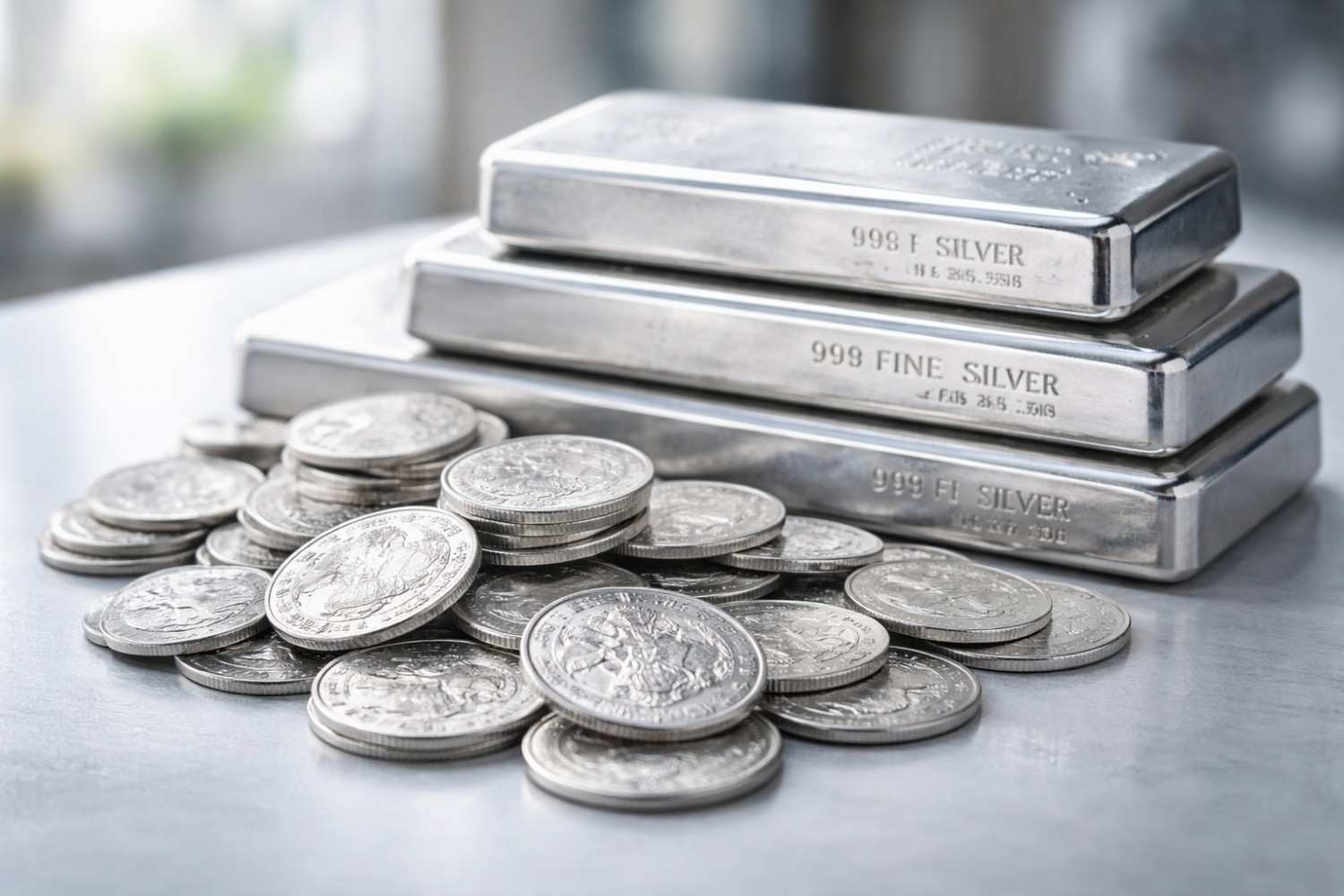
Silver prices in India exhibited significant volatility on Thursday, with both physical retail rates and futures contracts showing sharp movements amid global and domestic market influences. On the Multi Commodity Exchange of India (MCX), silver futures weakened considerably, while retail prices in major Indian cities such as Delhi, Mumbai and Chennai recorded notable shifts compared with recent days. These developments reflect broader pressures in global commodity markets as well as local demand-supply dynamics.
Lead: Silver prices retreat in volatile trade
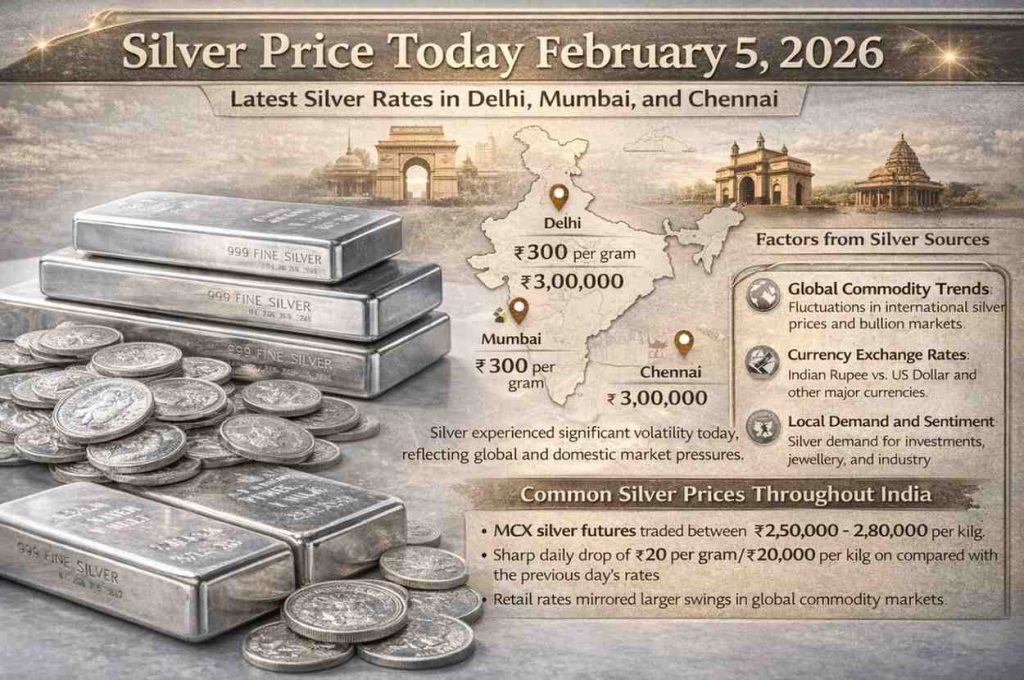
On February 5, 2026, the silver rate in India stood at approximately ₹300 per gram and ₹3,00,000 per kilogram on a retail basis according to pricing data compiled across major trading platforms. Physical silver prices moved lower from the previous day’s levels, falling by several thousand rupees per kilogram amid volatile trading conditions. Futures contracts on the MCX, which reflect market expectations for delivery later in the year, also lost value, with some contracts trading near ₹2,50,000–₹2,80,000 per kilogram at various points during the session.
These price movements underline the sensitivity of silver markets to both international bullion trends and domestic factors such as rupee-dollar exchange rates, investor sentiment, demand from jewellery and industrial sectors, and broader financial market conditions.
Background: how silver prices are set in India
Silver is a globally traded commodity, and its price in India is influenced by movements in international markets as well as local supply-demand conditions. Daily rates for physical silver in cities across India are commonly tracked in terms of prices per gram and per kilogram, with key centres including Delhi, Mumbai and Chennai serving as barometers for retail demand.
Prices in the Indian market are generally aligned with international spot prices, adjusted for import duties, logistics costs and the prevailing value of the Indian rupee relative to the US dollar. Futures trading on the MCX also reflects traders’ expectations for future price movements and can diverge from spot or retail rates due to market sentiment, speculative flows and hedging activity.
Market developments on February 5, 2026
Retail rates in major Indian cities
As of February 5, 2026, data from pricing trackers indicate that the silver rate in India on a retail basis was around ₹300 per gram and ₹3,00,000 per kilogram across major centres. This represented a decline of around ₹20 per gram and ₹20,000 per kilogram compared with the previous day’s rates, underscoring short-term downward pressure on prices.
The retail price across major urban markets such as Delhi, Mumbai and Chennai showed a consistent pattern on the day, reflecting uniform pricing for common weights such as 10 grams, 100 grams and 1 kilogram. These rates form the basis for jewellery pricing, investment decisions in physical silver products and consumer purchases.
Futures trading and MCX activity
In futures trading on the MCX, silver contracts for near-term delivery saw significant declines. Short-dated contracts, such as March and April deliveries, were reported to have slipped into lower trading ranges, at times breaking key support levels. The sharp drop in futures prices mirrored wider volatility in commodity markets, which was influenced by factors including a stronger US dollar, changes in bond yields, and shifts in investor risk appetite.
The divergence between lower futures values and higher retail rates in some periods pointed to an arbitrage gap between the physical and derivatives markets, highlighting uneven sentiment among traders and buyers.
Price trends over recent days
Silver prices in the first week of February showed notable fluctuation. Early in the month, prices had exhibited a brief recovery, with some increases recorded on February 4 compared with preceding sessions. However, the retreat on February 5 marked a reversal of that short-lived uptrend, with both physical and futures prices easing.
While silver had experienced periodic rallies linked to safe-haven demand and industrial interest, persistent volatility in broader financial markets contributed to the downward pressure seen on February 5.
Factors influencing price movements
Global commodity trends
International prices of silver experienced sharp swings leading up to February 5. Global spot silver values were reported to have plunged significantly amid strengthening of the US dollar and reduced risk aversion among investors. The firming of the dollar makes dollar-priced commodities such as silver more expensive for holders of other currencies, dampening demand and exerting downward pressure on prices.
Such dynamics in global bullion markets directly influence India’s import costs and domestic price formation, given that a large portion of the Indian silver market is linked to global benchmarks.
Currency fluctuations
The value of the Indian rupee against the US dollar plays a key role in silver pricing. A weaker rupee makes imported silver costlier in Indian rupees, which can contribute to upward pressure on domestic prices. Conversely, a stronger rupee can ease import costs and temper local rates. Movements in currency markets ahead of and on February 5 likely played a role in how silver rates adjusted.
Domestic demand and sentiment
Silver demand in India spans investment, jewellery, industrial and festive segments. While retail demand often supports price stability, speculative trading in futures markets can introduce volatility. On February 5, shifts in investor sentiment, particularly in commodity and financial markets, contributed to price realignment.
Market participants often interpret silver price moves alongside broader economic signals such as interest rate expectations, inflation data and global geopolitical developments, all of which influence the appeal of precious metals as investment assets.
City-wise rates: Delhi, Mumbai and Chennai
On February 5, 2026, silver prices followed broadly similar patterns across India’s major cities.
In Delhi, the silver rate was reported near ₹300 per gram and approximately ₹3,00,000 per kilogram, showing a pullback from higher levels earlier in the week. Price history indicates that this reflected recent volatility, with rates having fluctuated significantly in the opening days of February.
In Mumbai, pricing data also placed the silver rate at around ₹300 per gram and about ₹3,00,000 per kilogram. Like Delhi, the Mumbai market saw a downward shift compared with the previous trading session.
In Chennai, similar pricing was observed, with physical silver quoted at comparable levels on the same day. This consistency across urban centres suggests that national pricing mechanisms and common supply channels contribute to broadly uniform retail rates for silver.
These city-level rates form the basis for a range of consumer decisions, including purchases of silver jewellery, coins and bullion bars.
Historical context and recent trends
Silver prices in India over recent months have shown significant ups and downs. After periods of strength that saw prices near multi-year highs earlier in the year, pressure from changing global conditions and commodity market corrections led to intermittent declines. Comparisons of rates across days in early February illustrate this trend, with prices rising before retreating sharply around February 5.
Such volatility is often characteristic of precious metal markets, which can move quickly in response to changing investment flows, economic data and currency shifts.
Impact on consumers and markets
Consumer purchases and expenditure
For retail buyers — including individuals purchasing silver jewellery, utensils or coins — fluctuating rates affect the cost of acquisition. Lower silver prices on February 5 could provide some relief for buyers, particularly those seeking to acquire silver for personal use or gifting during the winter and wedding seasons.
At the same time, rapid price movements pose challenges for consumers attempting to time purchases, as uncertainty around short-term price paths can complicate decision-making.
Investor sentiment and financial markets
In financial markets, silver is often held as a store of value or speculative asset, particularly in periods of economic uncertainty. Sharp declines in futures prices can signal risk aversion and a preference for other asset classes. Market participants, including traders, portfolio managers and commodity investors, closely monitor such price shifts to adjust their exposure and risk strategies.
Silver’s performance relative to other precious metals, such as gold, is also a key consideration. On February 5, movements in gold and silver prices indicated mixed sentiment, with gold at times showing resilience while silver experienced more pronounced swings.
Trade and import dynamics
India is a significant importer of silver, meaning that changes in global prices and the rupee’s value can affect import costs and trade balances. Variations in silver rates influence the cost of bullion imports, which in turn have implications for domestic pricing and inventory decisions among wholesalers and jewellers.
Expert observations and market commentary
Analysts tracking precious metal markets have noted that silver’s higher sensitivity to industrial demand — compared with gold — makes it more vulnerable to economic cycles. As such, silver prices can reflect shifts in broader economic activity as well as investment flows.
The volatility seen on February 5 can be interpreted as part of a larger cycle of correction following previous market rallies. Market observers point out that silver, like other commodities, may continue to respond to macroeconomic cues, including currency movements, interest rate expectations and geopolitical developments.
Looking ahead: price outlook
Predicting short-term movements in silver prices remains challenging due to the number of variables at play. However, market participants generally watch key indicators such as global spot prices, currency trends, futures market positioning and macroeconomic data to inform expectations.
For stakeholders in India — from consumers to traders — staying informed about both international and domestic drivers of price movement is essential for navigating the daily shifts in silver rates.
Silver prices in India on February 5, 2026 showed marked volatility, with retail rates around ₹300 per gram and ₹3,00,000 per kilogram in major cities such as Delhi, Mumbai and Chennai. The downturn in both physical and futures markets reflected broader pressures from global commodity trends, currency movements and market sentiment.
These price fluctuations have direct implications for consumers, investors and traders in India’s precious metals market, influencing purchasing decisions, investment strategies and retail pricing. As the market continues to adjust to evolving global and domestic conditions, silver rates are likely to remain sensitive to economic indicators and financial market developments.
Financial Disclaimer: Markets and investment-related products are subject to risks and fluctuations. Readers should conduct their own research and consider consulting a qualified financial advisor before making any investment decisions
Last Updated on: Thursday, February 5, 2026 12:50 pm by Digital Herald Team | Published by: Digital Herald Team on Thursday, February 5, 2026 12:07 pm | News Categories: News, India