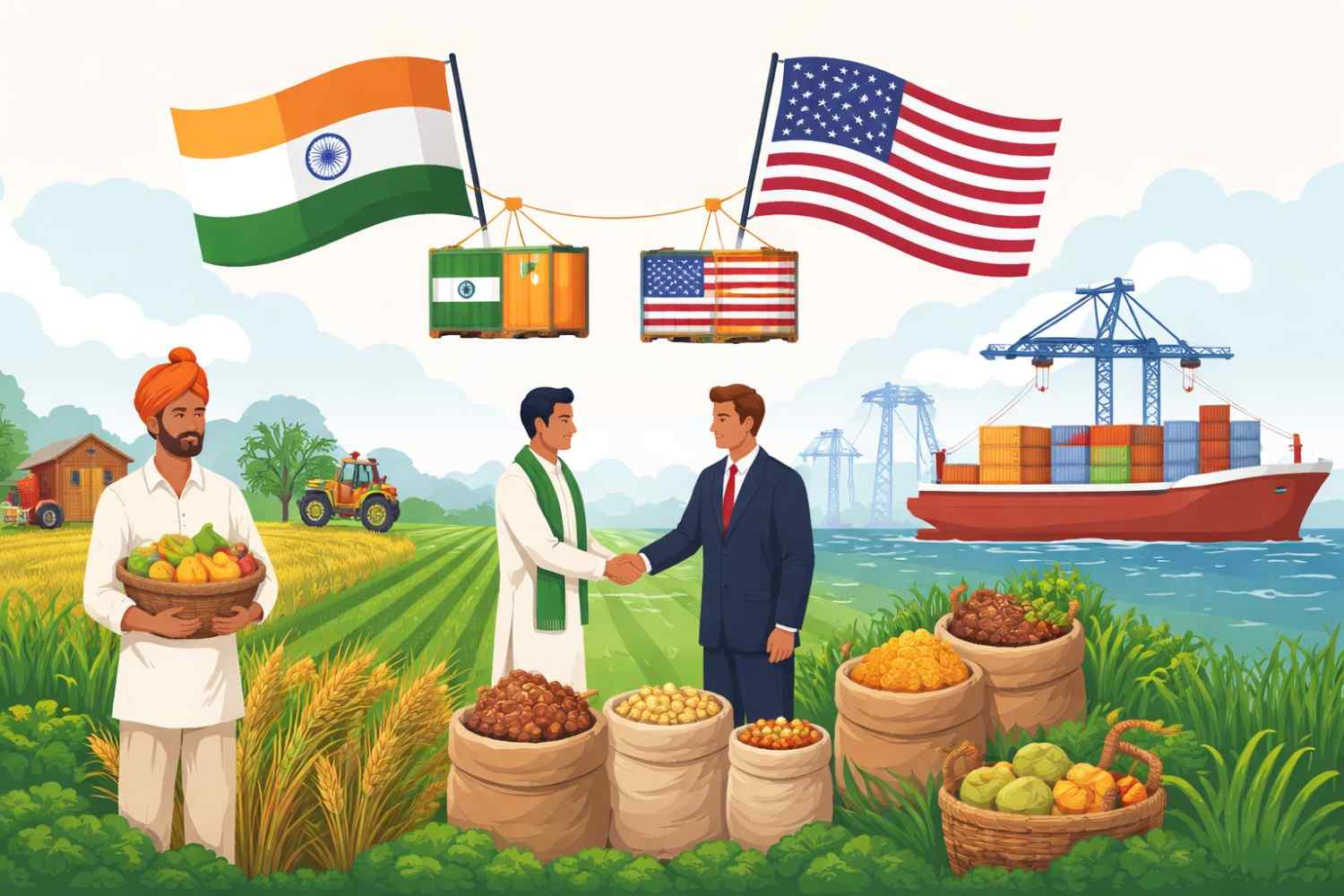
The India–US interim trade deal 2026 has become one of the most discussed economic developments this week. While the agreement aims to expand trade and exports, many farmers and political groups have raised concerns about its impact on domestic agriculture.
In response, Union Agriculture Minister Shivraj Singh Chouhan has said that Indian farmers will remain fully protected under the new framework. He also stressed that the deal will create fresh export opportunities for Indian farm products in the American market.
The agreement comes at a time when India is trying to boost exports, create jobs, and reduce trade tensions with the United States. For the government, the deal is part of a larger strategy to open new markets while protecting key domestic sectors.
Why the India–US Trade Deal Matters Now
The interim framework between India and the US aims to reduce tariffs and increase trade flows between the two countries. The deal is expected to ease earlier trade tensions and support Indian exports across sectors.
For agriculture, the government says the agreement has two main goals. One is to protect sensitive domestic farm sectors, and the other is to open new export markets for Indian products. Officials say the deal has been designed carefully so that trade growth does not come at the cost of farmer security.
This balance is important because agriculture still supports a large part of India’s population. Any trade decision that affects farm prices or imports becomes a major political and economic issue.
Minister’s Key Assurance: ‘Farmers’ Interests Are Non-Negotiable’
The Agriculture Minister said the government has ensured that the agreement fully safeguards the interests of Indian farmers. He described the deal as historic and unprecedented, and said it would strengthen the economy without harming agriculture.
According to the minister, no harmful agricultural product has been included in the agreement. He said the government has carefully studied each item before offering any tariff concessions.
He also highlighted that the deal will create new opportunities for farmers, women, and young entrepreneurs. The minister stressed that the government’s approach is based on commitment, not compromise, when it comes to agriculture.
Sensitive Farm Sectors Kept Out of Tariff Cuts
The government has made it clear that several key crops and farm sectors will remain protected under the agreement. These include major staples such as rice, wheat, and corn, along with sugar, dairy products, poultry, oilseeds, fruits, and coarse grains.
Officials say these products were deliberately excluded from tariff concessions. The aim is to prevent any sudden rise in cheaper imports that could hurt Indian farmers.
The trade framework also allows phased tariff cuts over a period of up to 10 years on selected items. This long transition period is meant to give Indian farmers and domestic industries enough time to adjust to any changes in trade conditions.
Zero-Duty Access for Many Indian Farm Exports
One of the biggest benefits of the deal is zero-tariff access for several Indian agricultural products in the US market. This is expected to open new income streams for farmers and exporters.
Government estimates suggest that farm exports worth around $1.36 billion could get zero additional duty under the agreement. This includes products where India already has strong global demand.
Items likely to benefit include spices, tea, coffee, coconut products, and several fruits such as mangoes, bananas, and papayas. Nuts like cashew and chestnut, along with sesame and poppy seeds, are also expected to gain from easier access to the US market.
In addition, processed food products such as fruit pulp, juices, and jams may see better export opportunities. Officials believe this could encourage more value-added food processing within India.
Tariff Changes and Export Boost
Under the new framework, Indian goods are expected to face reduced tariffs in the US market, improving their price competitiveness. The United States will reduce or eliminate duties on several Indian farm and industrial products.
Officials say these tariff changes will help Indian exporters compete better in the American market. The move is also expected to support labour-intensive industries, especially those linked to agriculture and food processing.
The government believes the deal will create new jobs in both rural and urban areas. Increased exports can lead to higher production, more processing units, and better supply chains.
Current Trade Numbers Between India and the US
Agriculture trade between the two countries is already significant. Recent data shows that India exports about $3.4 billion worth of farm and food products to the United States each year.
At the same time, imports from the US stand at around $2.1 billion. This gives India a trade surplus of roughly $1.3 billion in the agriculture sector.
Officials say the new deal could help increase this surplus further by opening more export channels and reducing trade barriers.
Opposition and Farmer Groups Raise Concerns
Despite government assurances, several farmer unions and opposition parties have raised concerns about the agreement. Some groups fear that increased access for US agricultural products could affect domestic prices.
They argue that American farmers receive higher subsidies, which makes their products cheaper in global markets. This, they say, could make it harder for Indian farmers to compete if imports rise.
Some farmer organisations have announced nationwide protests and demanded full transparency on the details of the agreement. They have asked the government to release all tariff schedules and product lists.
The government, however, maintains that sensitive sectors are fully protected and that no harmful concessions have been made.
What the Deal Means for Indian Farmers
Experts say the real impact of the deal will depend on several factors. These include the final tariff schedules, the level of export demand in the US, and domestic support policies for farmers.
If implemented carefully, the agreement could increase export income for farmers, especially those growing fruits, spices, and other high-value crops. It may also support value-added food processing, which can create jobs and improve rural incomes.
However, analysts say the government will need to closely monitor imports to ensure they do not harm local producers.
Part of India’s Larger Trade Strategy
The US agreement is part of a broader trade push by India during 2025–2026. The country has been actively negotiating trade deals with several major economies.
India has recently moved forward with agreements involving the European Union, the United Kingdom, and EFTA countries. These deals aim to expand export markets, attract investment, and reduce trade barriers.
The US deal is seen as especially important because the United States remains one of India’s largest trading partners.
What Happens Next
The current framework is an interim trade agreement. Final details, including tariff schedules and product lists, are expected to be announced in the coming months.
The government has said it will share full details with Parliament and continue consultations with farmer groups. Officials have also promised to keep sensitive sectors protected during the implementation phase.
Bottom Line
The India–US Trade Deal 2026 marks a major step in India’s trade policy. The government says it will open new export opportunities while keeping farmers safe.
Key outcomes include zero-duty access for several Indian farm exports, full protection for sensitive crops and dairy, and potential benefits for $1.36 billion worth of agricultural exports. Tariff cuts on selected items will be introduced gradually over up to 10 years.
The final impact will depend on how the agreement is implemented and how global markets respond. For now, the government’s message remains clear: farmer interests will not be compromised.
Disclaimer: The information presented in this article is intended for general informational purposes only. While every effort is made to ensure accuracy, completeness, and timeliness, data such as prices, market figures, government notifications, weather updates, holiday announcements, and public advisories are subject to change and may vary based on location and official revisions. Readers are strongly encouraged to verify details from relevant official sources before making financial, investment, career, travel, or personal decisions. This publication does not provide financial, investment, legal, or professional advice and shall not be held liable for any losses, damages, or actions taken in reliance on the information provided.
Last Updated on: Tuesday, February 10, 2026 9:50 am by Digital Herald Team | Published by: Digital Herald Team on Tuesday, February 10, 2026 9:50 am | News Categories: Business