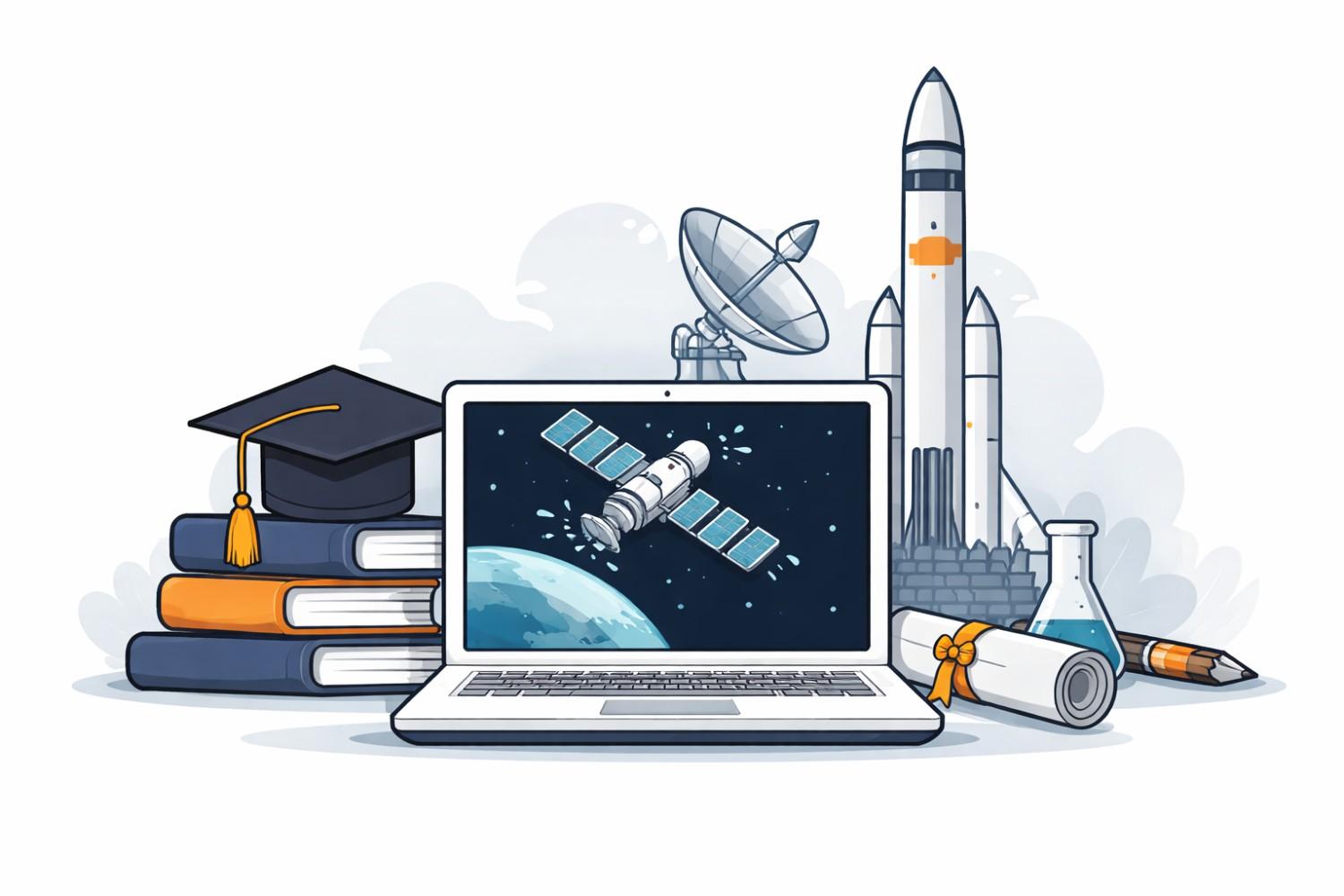
In a major shift from the traditional IIT admission model, the Indian Institute of Technology Madras (IIT Madras) has launched a new online Bachelor of Science (BS) in Aeronautics and Space Technology. The most striking feature of this programme is that students do not need to clear JEE Advanced to apply.
The new course is designed to open doors for students interested in space, aviation, and core engineering fields, even if they could not secure a seat through the highly competitive IIT entrance process. With flexible learning options and online delivery, the programme aims to reach students across India and abroad.
For many aspirants, this marks a significant change in how IIT-level education can be accessed.
Why This Announcement Matters
For decades, entry into IIT undergraduate programmes required clearing the JEE Advanced, one of the toughest exams in the world. Every year, lakhs of students compete for a limited number of seats.
The new online BS in Space Technology offers a different pathway. Students who have completed Class 12 or an equivalent qualification can apply directly, without any JEE score requirement.
The programme is part of IIT Madras’s effort to expand access to high-quality technical education through online and hybrid learning models. The institute has already seen strong demand for similar online degrees in data science and electronics.
Key Highlights of the IIT Madras BS in Space Technology
The new degree comes with several student-friendly features. The BS in Aeronautics and Space Technology will be delivered primarily in an online mode, with a mix of online classes and periodic examinations.
Students do not need JEE Main or JEE Advanced scores to apply. The basic eligibility requirement is passing Class 12 or an equivalent qualification. The programme can be completed in up to four years, with flexible pacing depending on the student’s schedule.
Assessments will include a combination of online proctored tests and centre-based exams, ensuring academic standards while maintaining flexibility.
Eligibility Criteria Explained
The eligibility rules are designed to be simple and inclusive. Anyone who has passed Class 12 or an equivalent examination can apply for the programme. Diploma holders are also eligible.
There is no age limit for admission, and the programme does not require any national entrance exam score.
Students who are still in school can apply after finishing Class 11, but they must complete Class 12 before joining the degree stage. This flexible approach is meant to make IIT-level education accessible to more learners.
Course Structure and Learning Model
The BS in Aeronautics and Space Technology is a four-year undergraduate degree delivered mainly through online learning.
Students can study from anywhere and complete the programme at their own pace within the prescribed timelines. The course includes core engineering subjects, space science topics, hands-on projects, and practical learning components.
Examinations are expected to be conducted on Sundays, using a mix of online proctored tests and physical exam centres. This model is similar to IIT Madras’s earlier online BS programmes.
Total Fees and Financial Support
The total fee for the programme is expected to be around ₹6.12 lakh for the full course.
The institute is also expected to offer fee waivers and financial support for eligible students, especially those from economically weaker sections. In earlier online BS programmes, IIT Madras has provided concessions of up to 75% based on family income, and similar support may be available here.
Students may also have access to scholarships or education loans to make the programme more affordable.
Flexible Duration and Exit Options
One of the key features of the programme is its flexible structure. Students can complete the degree in the standard four-year timeline or take more time if needed.
The programme also allows students to take breaks between stages and continue later. If a student exits early, they may receive certificates or diplomas, depending on the number of credits completed.
This system helps students continue their education even if they face financial or personal challenges.
Who Should Consider This Programme
The BS in Space Technology is aimed at a wide range of learners. It may be suitable for students interested in space, aerospace, or aviation careers, as well as those who could not secure an IIT seat through JEE.
Diploma holders seeking a recognised IIT degree, working professionals looking to upskill, and students from rural or remote areas may also benefit from the programme.
Because the course is online, it removes the need to relocate to a campus for daily classes.
Career Opportunities After the Degree
Graduates of the programme may find opportunities in space research, satellite technology, aerospace manufacturing, aviation, and drone industries. They may also work in defence organisations, research institutions, or private space startups.
With India’s space sector expanding rapidly and more private companies entering the field, demand for trained engineers and technologists is expected to grow.
The degree may also serve as a pathway to higher studies, research roles, or competitive technical careers.
Part of IIT Madras’s Online Education Push
The launch of the BS in Space Technology is part of a broader strategy by IIT Madras to expand online higher education.
The institute has already introduced online BS degrees in Data Science and Electronic Systems. These programmes have attracted thousands of learners, including school students, graduates, and working professionals.
The new space technology degree aims to bring the same flexibility to core engineering and aerospace-related fields.
How the Programme Differs from Traditional IIT Courses
Traditional IIT undergraduate programmes require JEE Advanced qualification, have limited seats, and follow full-time, on-campus study.
In contrast, the new BS in Space Technology does not require JEE, has no strict seat cap, and is delivered primarily online. It also allows flexible pacing based on the student’s schedule.
This model is designed to make IIT-level education more accessible while maintaining academic standards.
Application Timeline and Process
Applications for the programme are expected to open in February 2026, with deadlines around May 31, 2026 for the first admission cycle.
The application process will likely include online registration, submission of academic details, payment of the application fee, and an entry-level qualifier stage if required.
After clearing the initial stage, students can move into the full degree programme.
What Students Should Keep in Mind
Before applying, students should consider the self-paced online learning model, weekly study commitments, and periodic examinations at centres.
While the programme offers flexibility, it still follows IIT-level academic standards, and students must stay consistent with their studies.
Bottom Line
The IIT Madras online BS in Aeronautics and Space Technology marks a major shift in engineering education in India.
Key takeaways include no JEE Advanced requirement, eligibility for Class 12 pass students, a fully online learning model, total fees of around ₹6.12 lakh, and a flexible duration with exit options.
The programme offers a new pathway to IIT-quality education, especially for students who want to build careers in the fast-growing space and aerospace sectors. For many aspirants, it could become one of the most accessible routes to an IIT degree in the coming years.
Disclaimer: The information presented in this article is intended for general informational purposes only. While every effort is made to ensure accuracy, completeness, and timeliness, data such as prices, market figures, government notifications, weather updates, holiday announcements, and public advisories are subject to change and may vary based on location and official revisions. Readers are strongly encouraged to verify details from relevant official sources before making financial, investment, career, travel, or personal decisions. This publication does not provide financial, investment, legal, or professional advice and shall not be held liable for any losses, damages, or actions taken in reliance on the information provided.
Last Updated on: Tuesday, February 10, 2026 10:10 am by Digital Herald Team | Published by: Digital Herald Team on Tuesday, February 10, 2026 10:10 am | News Categories: Education