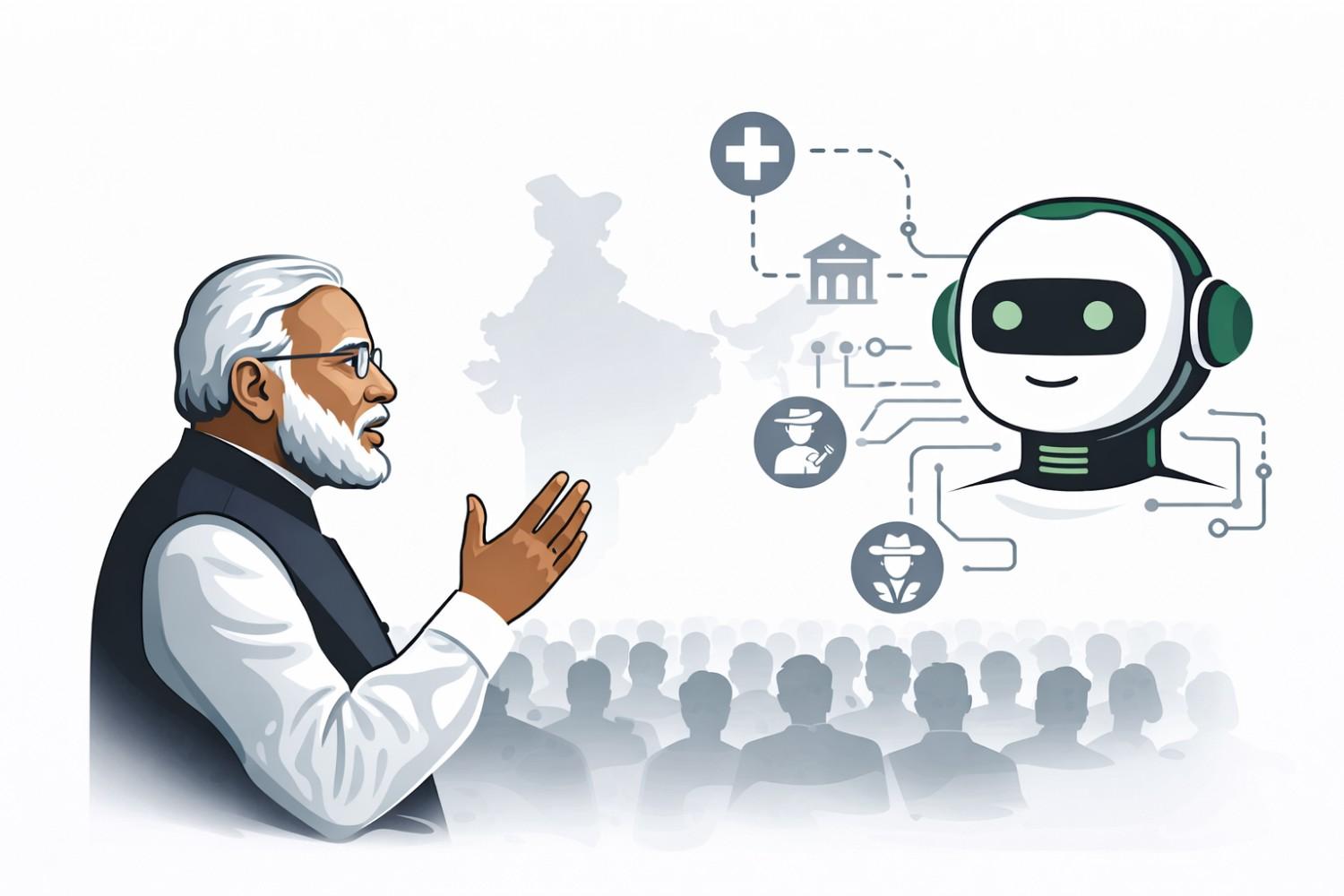
Prime Minister Urges Global Cooperation and Responsible Use of Artificial Intelligence
On Day 2 of the India AI Impact Summit 2026, Prime Minister Narendra Modi called for the responsible and inclusive use of artificial intelligence, stressing that AI must be developed and deployed in the public interest.
Addressing global leaders, technology executives, and policymakers in New Delhi, the Prime Minister highlighted the need for AI systems that are safe, transparent, and beneficial for society. The summit has brought together international experts, government representatives, and industry leaders to discuss the future of AI policy, innovation, and global cooperation.
AI Must Benefit Society, Says Prime Minister
In his keynote address, the Prime Minister emphasised that artificial intelligence should be used to solve real-world problems and improve the lives of citizens.
He called for AI systems that are safe and trustworthy, technology that supports human progress, global cooperation on AI standards, and policies that protect citizens’ rights. He stressed that the focus should remain on AI for public good, especially in developing countries where technology can help address challenges in healthcare, education, agriculture, and governance.
India’s Vision: AI for Public Interest
The Prime Minister outlined India’s approach to artificial intelligence, which centres on using technology to improve public services and economic growth.
He highlighted the importance of inclusive AI development, affordable digital infrastructure, skills training for the workforce, and responsible data use. India’s strategy focuses on ensuring that AI benefits not just large corporations, but also small businesses, farmers, students, and ordinary citizens.
Focus on AI in Key Public Sectors
During the summit, officials discussed how AI could transform several major sectors.
Healthcare
AI tools are being used to detect diseases early, improve diagnostic accuracy, manage hospital resources, and support telemedicine services. These technologies can help expand access to healthcare, especially in rural areas.
Agriculture
In agriculture, AI solutions can help farmers with weather predictions, crop health monitoring, soil analysis, and yield forecasting. Such tools can improve productivity and reduce risks for farmers.
Education
AI-based learning platforms are helping students by personalising study plans, offering language support, providing virtual tutors, and supporting skill development. Officials said AI could help bridge gaps in access to quality education.
Public Governance
Government departments are using AI for fraud detection, service delivery improvements, traffic management, and disaster response planning. These systems can help improve efficiency and transparency.
Global Cooperation a Key Theme
A major theme of Day 2 was the need for international cooperation on AI policies.
Leaders at the summit discussed common AI safety standards, ethical guidelines for AI systems, cross-border data frameworks, and joint research initiatives. The Prime Minister urged countries to work together to ensure AI is used responsibly and does not increase global inequality. He stressed that developing countries should have a voice in shaping global AI rules.
India’s Rapid AI Growth Highlighted
Officials at the summit pointed to India’s fast-growing AI ecosystem.
Key developments include a large base of AI users across the country, growing startup activity in AI and deep tech, increased investment in AI infrastructure, and government-backed AI skill programmes. India is now seen as one of the fastest-growing markets for artificial intelligence tools and services.
Focus on Skills and Workforce Readiness
The Prime Minister also stressed the need to prepare the workforce for the AI era.
He highlighted the importance of digital literacy, training programmes for students and workers, reskilling initiatives for existing employees, and AI education in schools and colleges. Officials said millions of people may need new skills as AI changes the nature of jobs across industries.
Balancing Innovation and Regulation
At the summit, policymakers and tech leaders discussed how to balance innovation with regulation.
Key issues included preventing misuse of AI systems, ensuring data privacy, reducing bias in algorithms, and protecting jobs and workers. Experts said governments must create clear and balanced policies that encourage innovation while protecting citizens.
Private Sector’s Role in Responsible AI
Industry leaders at the summit acknowledged the need for responsible AI development.
They highlighted transparency in AI systems, ethical data practices, safety testing before deployment, and collaboration with governments. Many companies said they are investing in AI safety research and developing internal guidelines for responsible use.
India’s Push for Affordable AI Access
Another key message from the summit was the need to make AI accessible and affordable.
Officials said India aims to provide low-cost AI tools for small businesses, support startups building AI solutions, expand digital infrastructure, and promote AI in regional languages. This approach is intended to ensure that AI adoption is broad-based and inclusive.
Major Announcements and Partnerships
Day 2 of the summit also saw several announcements related to AI research, investment, and skill development.
These included new collaborations between tech companies and Indian institutions, plans for AI research centres, training programmes for students and professionals, and partnerships in public sector AI projects. Officials said these initiatives would strengthen India’s AI ecosystem in the coming years.
Challenges Discussed at the Summit
While the tone of the summit was optimistic, speakers also highlighted key challenges.
Digital Divide
Access to technology is still uneven across regions, and ensuring equal access to AI tools remains a priority.
Data Privacy Concerns
As AI systems rely on large datasets, protecting personal information is a major concern.
Job Displacement
Automation may affect certain job roles, making reskilling essential.
Global Policy Differences
Different countries have different AI regulations, which can create challenges for international cooperation.
What to Expect After the Summit
The summit is expected to lead to new AI policy discussions, international partnerships, skill development programmes, and increased investment in AI infrastructure. Officials said the outcomes could shape India’s AI strategy over the next decade.
Bottom Line
On Day 2 of the India AI Impact Summit 2026, Prime Minister Narendra Modi called for the responsible and inclusive use of artificial intelligence.
Key messages from the summit included the need for AI to serve the public interest, the importance of global cooperation, the need for skills and workforce readiness, and the importance of responsible AI policies.
As AI continues to reshape economies and societies, India is positioning itself as a country that promotes innovation with responsibility and inclusion at its core.
Disclaimer: The information presented in this article is intended for general informational purposes only. While every effort is made to ensure accuracy, completeness, and timeliness, data such as prices, market figures, government notifications, weather updates, holiday announcements, and public advisories are subject to change and may vary based on location and official revisions. Readers are strongly encouraged to verify details from relevant official sources before making financial, investment, career, travel, or personal decisions. This publication does not provide financial, investment, legal, or professional advice and shall not be held liable for any losses, damages, or actions taken in reliance on the information provided.
Last Updated on: Tuesday, February 17, 2026 10:00 am by Digital Herald Team | Published by: Digital Herald Team on Tuesday, February 17, 2026 10:00 am | News Categories: India