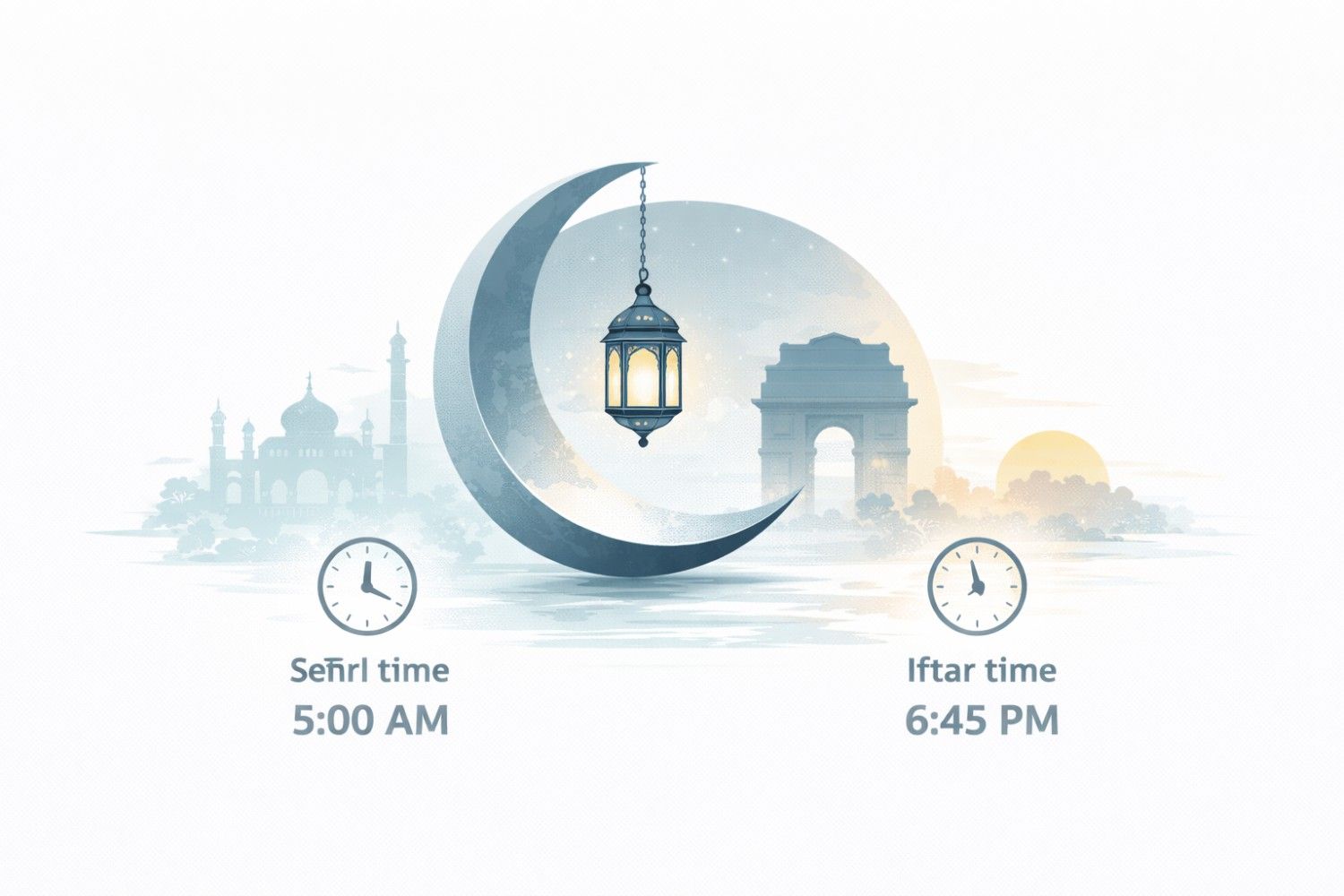
Ramadan 2026 has begun in India, marking the start of a month of fasting, prayer, and reflection for millions of Muslims across the country. With the sighting of the crescent moon, communities have started observing roza from dawn to sunset.
As families prepare for the holy month, one of the most searched topics online is Sehri and Iftar timings across Indian cities. Accurate daily timings are essential, as fasting begins before sunrise and ends at sunset.
When Did Ramadan 2026 Begin in India?
Ramadan 2026 in India began following the moon sighting announcement by religious authorities. The Islamic calendar follows the lunar cycle, so the start date may vary slightly depending on local moon sightings.
The first fast is observed the morning after the crescent moon is confirmed.
Ramadan lasts for 29 or 30 days, depending on the lunar cycle, and ends with the celebration of Eid al-Fitr.
What Are Sehri and Iftar?
Sehri, also called Suhoor, is the pre-dawn meal eaten before the fast begins.
Iftar is the meal taken at sunset to break the fast. Traditionally, many people break their fast with dates and water, followed by a full meal.
The time for Sehri ends at Fajr prayer, while Iftar begins immediately after the Maghrib prayer.
Sehri and Iftar Timings in Major Indian Cities
Sehri and Iftar timings vary by location because sunrise and sunset times differ across cities.
Below are approximate timings for Ramadan 2026 Day 1 in major cities. Timings change slightly each day and should be checked daily through local mosques or verified calendars.
Delhi
Sehri: Around 5:20 AM
Iftar: Around 6:25 PM
Mumbai
Sehri: Around 5:45 AM
Iftar: Around 6:45 PM
Kolkata
Sehri: Around 4:55 AM
Iftar: Around 5:55 PM
Chennai
Sehri: Around 5:15 AM
Iftar: Around 6:20 PM
Hyderabad
Sehri: Around 5:25 AM
Iftar: Around 6:30 PM
Bengaluru
Sehri: Around 5:30 AM
Iftar: Around 6:35 PM
These timings are approximate and will shift gradually throughout the month as daylight hours change.
Why Sehri and Iftar Timings Matter
Precise timing is crucial during Ramadan fasting. Even a small delay beyond sunrise can invalidate the fast, while breaking the fast before sunset is not permitted.
Many families rely on mosque announcements, prayer calendars, mobile apps, and official religious bodies for accurate daily timings.
Search interest around “Ramadan 2026 Sehri time today” and “Iftar time India” has increased sharply as the holy month begins.
How Timings Change During Ramadan
Sunrise and sunset times shift by a few minutes each day.
As Ramadan progresses, Sehri may become slightly earlier and Iftar slightly later in some regions. These gradual changes make it important to follow daily updated schedules.
Most Islamic organisations release full-month Ramadan timetables for convenience.
Spiritual Significance of Ramadan
Ramadan is considered one of the holiest months in Islam.
Muslims fast from dawn to sunset, refraining from food, drink, and other physical needs during daylight hours. The fast is meant to promote self-discipline, gratitude, and spiritual growth.
The month is also marked by increased prayers, charity, and community gatherings.
Taraweeh Prayers Begin Across India
Special nightly prayers called Taraweeh are offered after the Isha prayer during Ramadan.
Mosques across India witness large gatherings during these prayers. Many people aim to complete the recitation of the Quran during the month.
Community participation increases during the first week of Ramadan.
Ramadan and Community Bonding
Ramadan strengthens community bonds.
Families gather for Iftar, and many mosques organise community Iftar meals. Sharing food with neighbours and supporting the needy are key aspects of the holy month.
Charity, known as Zakat and Sadaqah, increases significantly during Ramadan.
Health and Fasting Considerations
Fasting requires careful planning, especially during longer daylight hours.
Doctors advise:
- Staying hydrated during non-fasting hours
- Eating balanced Sehri meals
- Avoiding heavy fried foods
- Getting adequate rest
People with medical conditions are encouraged to consult healthcare professionals before fasting.
Digital Tools Help Track Timings
Technology plays a growing role in observing Ramadan.
Mobile applications, GPS-based prayer apps, and official mosque websites provide accurate city-wise timings. Many users set daily alarms for Sehri and Iftar.
Digital engagement increases significantly during Ramadan.
Markets and Businesses See Increased Activity
Markets across Indian cities see higher activity during Ramadan evenings.
Food stalls, sweet shops, and grocery stores experience increased demand before Iftar. Popular Ramadan foods such as dates, fruits, and traditional dishes see strong sales.
Retail activity often peaks in the days leading up to Eid.
Eid al-Fitr to Mark End of Ramadan
Ramadan concludes with Eid al-Fitr, one of the most significant Islamic festivals.
The date of Eid depends on the sighting of the Shawwal moon. It typically falls after 29 or 30 days of fasting.
Preparations for Eid begin during the final week of Ramadan.
What Worshippers Should Keep in Mind
During Ramadan 2026, worshippers are advised to:
- Follow verified Sehri and Iftar timings
- Plan meals wisely
- Stay hydrated
- Increase acts of charity
- Maintain spiritual focus
Staying informed ensures smooth and meaningful observance.
Bottom Line
Ramadan 2026 has begun in India, with Sehri and Iftar timings varying across cities. Accurate daily timing updates remain essential for those observing the fast.
As communities across the country mark the holy month with prayer, fasting, and charity, the focus remains on spiritual growth and unity.
Disclaimer: The information presented in this article is intended for general informational purposes only. While every effort is made to ensure accuracy, completeness, and timeliness, data such as prices, market figures, government notifications, weather updates, holiday announcements, and public advisories are subject to change and may vary based on location and official revisions. Readers are strongly encouraged to verify details from relevant official sources before making financial, investment, career, travel, or personal decisions. This publication does not provide financial, investment, legal, or professional advice and shall not be held liable for any losses, damages, or actions taken in reliance on the information provided.
Last Updated on: Friday, February 20, 2026 4:52 pm by Digital Herald Team | Published by: Digital Herald Team on Friday, February 20, 2026 4:52 pm | News Categories: Lifestyle