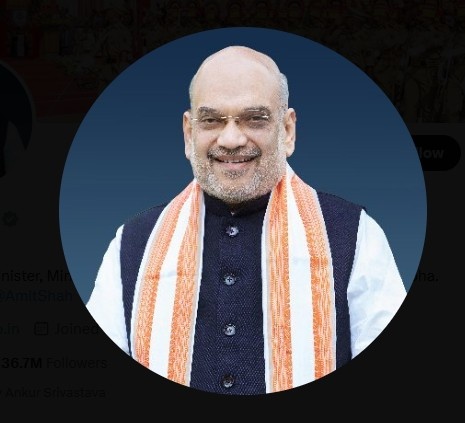
Home Minister recalls 1857 freedom fighter’s role in resisting British rule and her enduring legacy
Union Home Minister Amit Shah on Friday paid tribute to Rani Avantibai Lodhi on her martyrdom day, remembering her role in the 1857 uprising against British rule and her contribution to India’s freedom struggle.
In a message shared on social media, Shah described her life as a symbol of courage, sacrifice, and patriotism.
Key Highlights
- Amit Shah honours Rani Avantibai Lodhi on her martyrdom day
- Recognises her role in the Revolt of 1857
- Highlights her resistance against British rule and sacrifice
- Emphasises her legacy of courage and national pride
Official Statement
In his message, the Home Minister said Rani Avantibai Lodhi’s life continues to inspire generations with its example of bravery and dedication to the nation.
He noted that during the Revolt of 1857, she led resistance against British forces and chose to lay down her life rather than surrender. He added that her sacrifice reflects a strong sense of self-respect and commitment to the country.
Background: Who Was Rani Avantibai Lodhi?
Rani Avantibai Lodhi was a queen of Ramgarh (in present-day Madhya Pradesh) and a prominent figure in the Revolt of 1857, often regarded as India’s first war of independence.
After the British attempted to take control of her kingdom, she organised local resistance and led armed forces against colonial rule. Historical accounts note that she played a key role in mobilising people in central India during the uprising.
Facing defeat, she is believed to have chosen martyrdom rather than being captured by British forces.
Context: The Revolt of 1857
The Revolt of 1857 marked one of the earliest large-scale uprisings against British colonial rule in India. It involved soldiers, rulers, and civilians across regions and is widely seen as a turning point in India’s independence movement.
Leaders like Rani Avantibai Lodhi contributed to regional resistance efforts that challenged British authority.
Public Impact: Why This Matters
Commemorating historical figures like Rani Avantibai Lodhi serves to:
- Recognise contributions of lesser-known freedom fighters
- Preserve regional histories within the broader independence narrative
- Inspire civic values such as courage, resistance, and public service
- Promote awareness of India’s early struggles against colonial rule
Such observances also highlight the role of women leaders in India’s freedom movement, often underrepresented in mainstream historical accounts.
Conclusion
The tribute by the Home Minister underscores the continued relevance of historical figures in shaping national identity. As India reflects on its past, the legacy of leaders like Rani Avantibai Lodhi remains an important part of the country’s collective memory.
Her story, rooted in resistance and sacrifice, continues to resonate as a symbol of determination and patriotism.
Source – PIB
Edited by Mantena Sasank
Last Updated on: Friday, March 20, 2026 4:04 pm by Mantena Sasank | Published by: Mantena Sasank on Friday, March 20, 2026 4:04 pm | News Categories: Kolkata