Independent assessment highlights differences in call performance and data speeds among telecom operators
The Telecom Regulatory Authority of India (TRAI) has released findings from its Independent Drive Test (IDT) conducted across Jammu city and the highway corridor from Delhi to Jammu, offering a detailed snapshot of mobile network performance in February 2026.
The assessment covered urban areas, transport hubs and long-distance highway routes, evaluating real-time performance of voice and data services across major telecom operators including Airtel, BSNL, Reliance Jio and Vodafone Idea.
Scope of the TRAI Drive Test
The drive test was carried out between February 2 and 5, 2026, under TRAI’s Delhi regional office. It covered 178.2 km within Jammu city and 620.5 km along highways, along with hotspot testing and walk tests in crowded markets. Key areas assessed in Jammu included residential neighbourhoods such as Gandhi Nagar and Shastri Nagar, as well as high-footfall locations like Jammu Tawi Railway Station, bus stands and hospitals. The highway testing extended from Delhi to Jammu via Ambala and Jalandhar, focusing on network performance during travel.
Performance against key QoS parameters
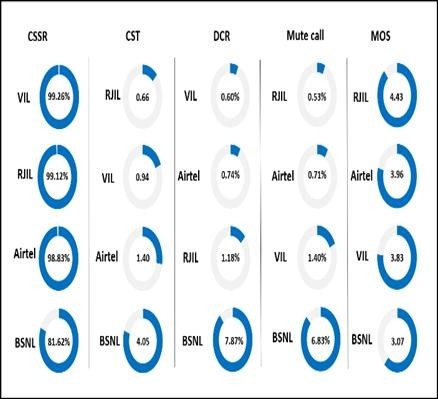
CSSR: Call Setup Success Rate (in %), CST: Call Setup Time (in seconds), DCR: Drop Call Rate (in %) & MOS: Mean Opinion Score.
Voice Services Performance
The report indicates variation in voice service quality across telecom operators. Call setup success rates were above 98 percent for most private operators, while BSNL recorded a comparatively lower success rate of around 81 percent. Drop call rates were generally low for Airtel and Vodafone Idea, whereas BSNL showed a higher rate. Call setup time was fastest on Reliance Jio’s network and slower on BSNL. In terms of voice clarity, measured through Mean Opinion Score (MOS), Reliance Jio recorded the highest score among the operators.
Data Services Performance
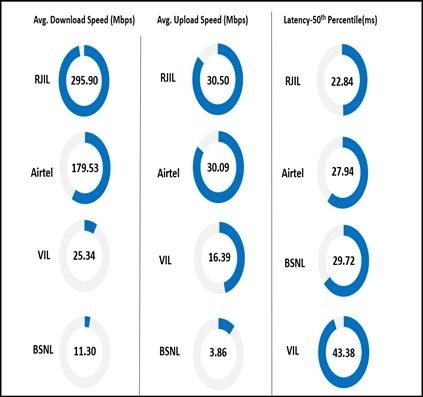
Data performance results showed notable differences in internet speeds and latency. Reliance Jio recorded the highest average download speed at nearly 296 Mbps, followed by Airtel at around 180 Mbps. Vodafone Idea and BSNL reported lower average speeds. Upload speeds followed a similar pattern, with private operators performing better overall. Latency levels, which affect real-time applications such as video calls and online gaming, were comparatively lower for Jio and Airtel. Hotspot testing further highlighted the advantage of 5G networks over 4G in high-traffic areas.
Official Statement
TRAI stated that the purpose of the drive test was to capture actual user experience across varied environments, including dense urban zones and high-speed transit routes. The findings have been shared with telecom service providers for necessary improvements in service quality.
Context: Monitoring Quality of Service
Independent Drive Tests are part of TRAI’s ongoing efforts to monitor the Quality of Service (QoS) offered by telecom operators. These assessments help identify gaps in network performance and ensure that operators meet regulatory standards. With the rapid expansion of mobile data usage and 5G services, such evaluations are becoming increasingly important.
Public Impact: What This Means
For users, the findings highlight that network performance can vary depending on the operator and location. Differences in call reliability and internet speed can directly impact everyday activities such as communication, streaming and digital services. The report also signals areas where telecom providers may need to strengthen infrastructure to deliver more consistent service.
Conclusion
TRAI’s latest findings underline both improvements and existing gaps in mobile network performance along a key travel corridor and in Jammu city. As demand for high-speed and reliable connectivity continues to grow, the insights from the report are expected to guide telecom operators in enhancing service quality in the coming months.
Source – PIB
Edited by Mantena Sasank
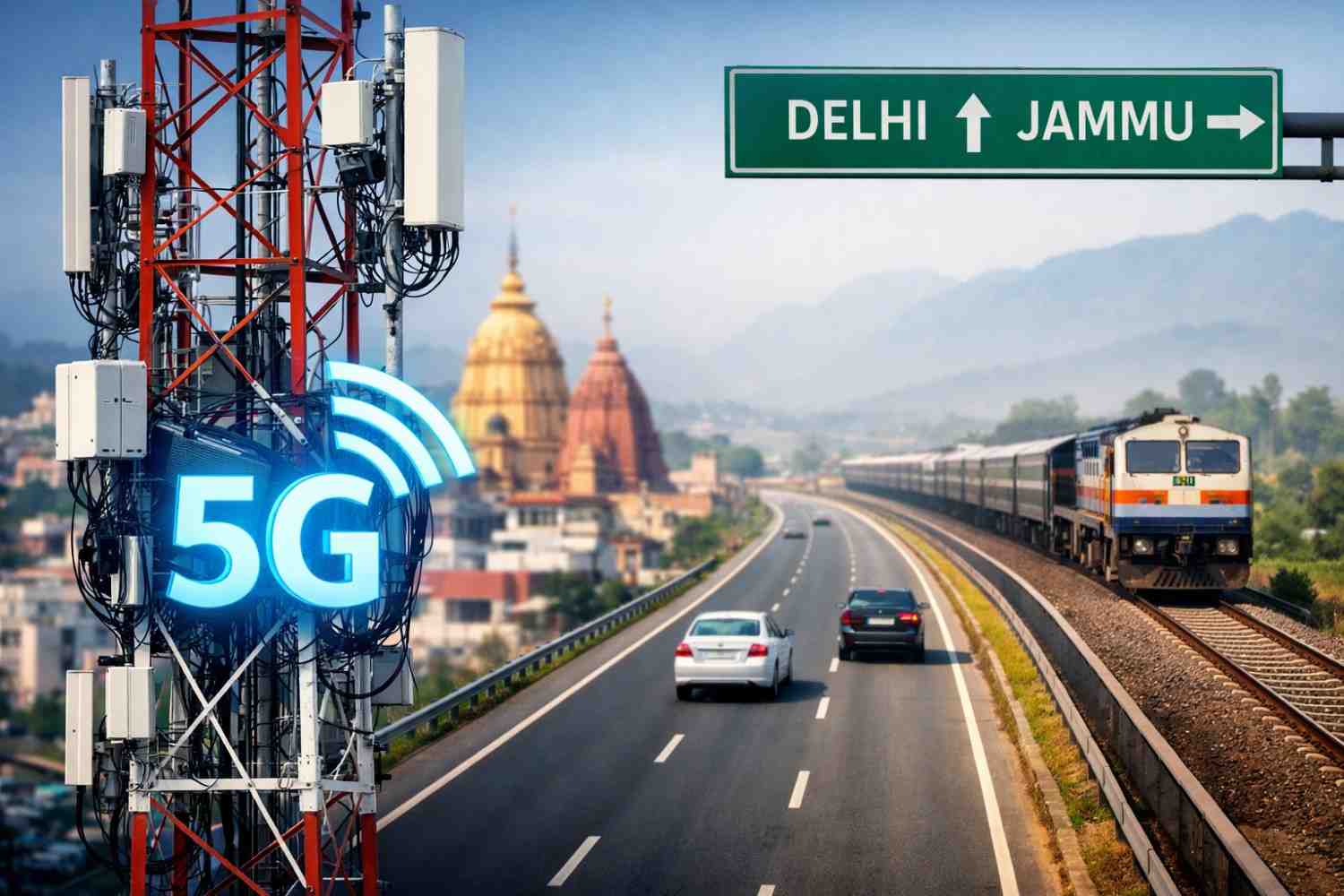
image source: generated using ai (only for representation purpose)
Add Digital Herald as preferred source on google – click here
Also read – Railways Approves ₹647.58 Crore Projects in Gujarat and Bihar to Boost Capacity and Reduce Congestion
Last Updated on: Tuesday, March 24, 2026 12:56 pm by Mantena Sasank | Published by: Mantena Sasank on Tuesday, March 24, 2026 12:56 pm | News Categories: Delhi