Government seeks political consensus as concerns grow over energy security and regional instability
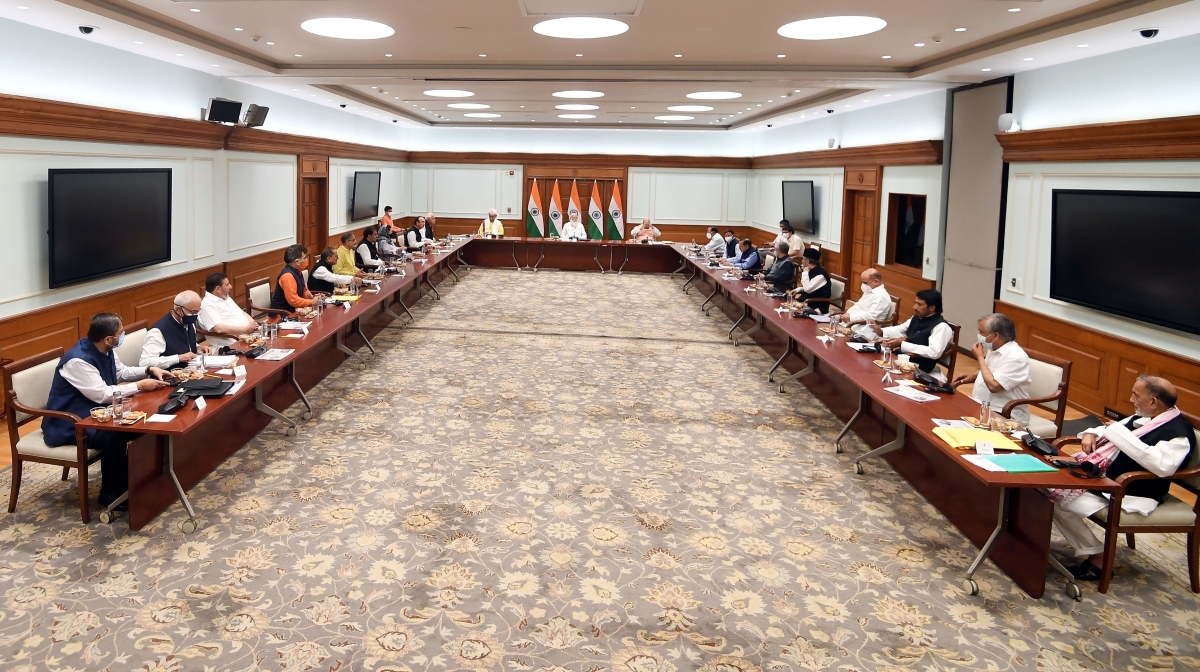
The Union government has called an all-party meeting on Wednesday evening to discuss the ongoing conflict in West Asia and its potential implications for India. The meeting, scheduled at 5 pm in the Parliament complex in New Delhi, follows increasing demands from opposition parties for clarity on India’s diplomatic and strategic stance.
The discussions come against the backdrop of escalating tensions involving Iran, Israel and the United States, raising concerns over global energy supplies and regional stability.
Key Announcements / Highlights
The government has convened leaders from across the political spectrum to brief them on the evolving situation in West Asia and gather inputs. The move signals an effort to build consensus on India’s response to the crisis. The meeting also follows recent diplomatic engagements between India and the United States, as well as internal reviews of preparedness related to energy and security.
Prime Minister Narendra Modi has indicated that India is closely monitoring developments and has taken steps to safeguard essential supplies. The government has also set up multiple groups to manage risks linked to fuel, fertilisers and supply chains.
Official Statement
In recent remarks, Prime Minister Narendra Modi reiterated India’s position in favour of de-escalation and dialogue. He emphasised the importance of maintaining open sea routes, particularly the Strait of Hormuz, which is a critical passage for global oil shipments.
During a conversation with US President Donald Trump, Modi discussed the need to ensure uninterrupted trade and energy flows through the region. He also told Parliament that India has sufficient crude oil reserves and contingency plans in place to manage any disruptions.
The Prime Minister noted that seven empowered groups have been formed to assess and respond to challenges related to fuel availability, logistics and fertiliser supply.
Context / Background
The Strait of Hormuz is one of the world’s most important energy corridors, with a significant share of global oil trade passing through it. Any disruption in the region can have immediate consequences for oil prices and supply chains worldwide.
India, which imports a large portion of its crude oil, is particularly sensitive to such disruptions. Previous geopolitical crises in West Asia have led to volatility in energy markets, affecting domestic inflation and economic stability.
In parallel, Defence Minister Rajnath Singh recently chaired a high-level security review with senior military leadership and defence officials to assess India’s preparedness amid the evolving situation.
Public Impact
For India, the conflict’s most immediate impact is likely to be on energy security and supply chains. Stable oil supplies are crucial for transportation, industry and agriculture. Disruptions could lead to higher fuel prices and broader economic effects.
The government’s emphasis on strategic reserves and contingency planning is aimed at minimising such risks. Ensuring fertiliser supply is also critical, given its direct impact on agriculture and food production.
Conclusion
The all-party meeting is expected to provide a platform for the government to outline its strategy and address political concerns over the West Asia conflict. As the situation continues to evolve, India’s focus remains on safeguarding economic stability, ensuring energy security and supporting diplomatic efforts toward de-escalation.
Input & Images: Hindusthan Samachar
Edited by Manten Sasank
Add Digital Herald as preferred source on google – click here
Also read – Pax Silica Initiative Aims to Build Resilient Global Tech Supply Chains for AI Era
Last Updated on: Wednesday, March 25, 2026 12:58 pm by Mantena Sasank | Published by: Mantena Sasank on Wednesday, March 25, 2026 12:58 pm | News Categories: Delhi