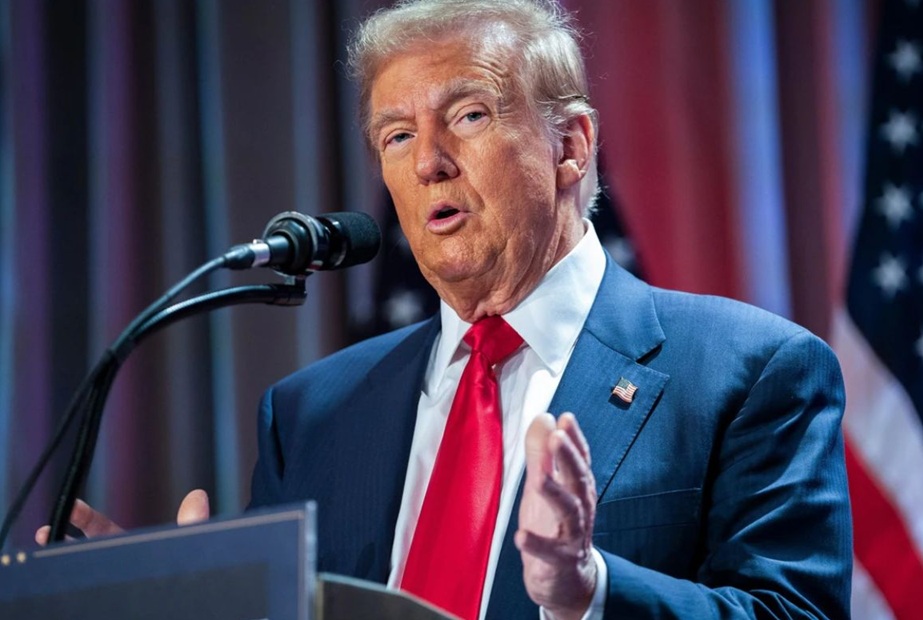
Washington signals tougher military action amid escalating conflict with Iran, raising global energy and security concerns
The United States has defended its targeted military strikes against Iranian leadership, while President Donald Trump warned of further escalation, including potential attacks on Iran’s energy infrastructure. The developments come as the conflict between the US, Israel, and Iran intensifies, with growing fears of wider regional instability.
Key Developments
US officials have justified recent strikes on Iranian leaders, claiming Tehran misled Washington during earlier negotiations. The White House indicated that diplomatic efforts had been prolonged without meaningful outcomes, prompting a shift toward more aggressive military action.
At the same time, the US has continued targeted operations on Iranian military and nuclear-linked facilities. Reports suggest the use of high-impact bunker-buster munitions aimed at fortified sites, including locations in Isfahan believed to be strategically significant.
Official Statement
White House Press Secretary Karoline Leavitt stated that previous negotiations with Iran failed due to what she described as deceptive conduct by Iranian leadership. She emphasized that any future commitments made by Tehran would be closely scrutinized and enforced.
US officials also described ongoing talks as an opportunity for Iran to change its approach, while making it clear that failure to comply could result in further military consequences.
Iran, however, has rejected these claims. Its foreign ministry said the country is acting in self-defence and described US proposals as unrealistic. Officials in Tehran maintain that their public statements reflect their actual position and accuse Washington of escalating the conflict.
Escalation and Military Activity
The conflict has intensified in recent weeks, with continued US-led strikes targeting Iranian infrastructure. Among the reported targets are ammunition depots and sites linked to Iran’s defence and nuclear capabilities.
Iran has responded with missile and drone attacks on Israeli territory and US military bases in the Gulf region, further widening the scope of the confrontation.
Trump’s Warning on Energy Targets
In a public statement, President Trump warned that the US could strike Iran’s critical infrastructure if a deal is not reached quickly. He specifically mentioned the possibility of targeting power generation facilities and Kharg Island, Iran’s primary oil export terminal.
The warning also referenced the need to reopen the Strait of Hormuz, a key global energy corridor currently disrupted by the conflict. The strait is one of the world’s most important routes for oil and gas shipments, and its closure has raised concerns about global supply disruptions.
Context and Background
The current escalation began in March 2026, when US and Israeli forces carried out coordinated strikes inside Iran, reportedly killing several senior officials, including the country’s Supreme Leader.
Since then, the conflict has evolved into a broader regional confrontation, involving repeated cross-border attacks and increasing military engagement from both sides. Casualty estimates have crossed 3,000, with significant damage reported in both civilian and strategic areas.
Public and Global Impact
The ongoing conflict is having far-reaching consequences beyond the region. Disruptions in oil supply routes have already pushed global energy prices higher, increasing inflation risks worldwide.
Analysts warn that potential strikes on Iran’s power and desalination infrastructure could trigger humanitarian challenges, particularly in areas dependent on energy-driven water systems. At the same time, prolonged instability in the region may affect global trade and economic recovery.
Conclusion
The situation remains highly volatile, with diplomatic efforts continuing alongside escalating military actions. International stakeholders have called for restraint and renewed negotiations to prevent further deterioration.
The coming weeks will be critical in determining whether the conflict moves toward de-escalation or expands into a broader geopolitical crisis with global implications.
Input & Images: Hindusthan Samachar
Edited by Manten Sasank
Add Digital Herald as preferred source on google – click here
Also read – US Stock Market Enters Correction Amid Rising Recession Concerns in March 2026
Last Updated on: Tuesday, March 31, 2026 12:15 pm by Mantena Sasank | Published by: Mantena Sasank on Tuesday, March 31, 2026 12:15 pm | News Categories: Politics, News