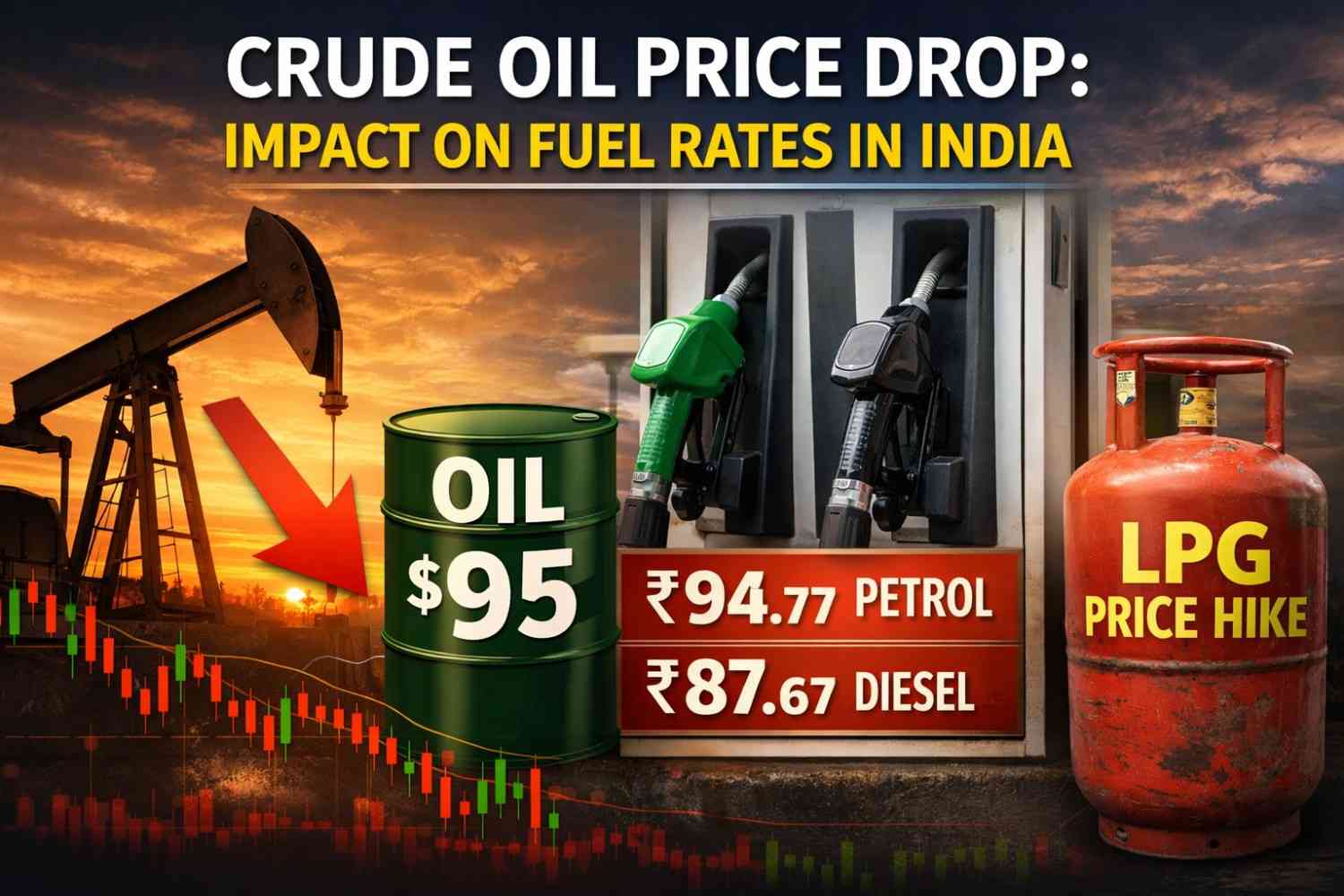
A sharp decline in global crude oil prices has raised expectations of lower fuel costs in India, though immediate relief at petrol pumps remains uncertain.
Global crude oil prices have dropped by nearly 15% in recent weeks, falling from around $120 to approximately $95 per barrel as geopolitical tensions between Israel and Iran eased. The development is significant for India, which relies on imports for nearly 80% of its crude oil needs. However, despite the global decline, petrol and diesel prices in major Indian cities remain unchanged as of April 8, 2026.
Key Highlights
Crude oil prices have declined to about $95 per barrel, offering potential economic relief for import-dependent countries like India. The country imports nearly 80% of its crude oil requirements, making global price movements highly relevant. Despite this drop, petrol and diesel prices remain stable across major cities. At the same time, LPG prices have increased, and experts suggest that any reduction in fuel prices may happen gradually if current trends continue.
Current Fuel Prices in India
Fuel prices have remained largely stable due to government intervention and tax adjustments. In Delhi, petrol is priced at ₹94.77 per litre and diesel at ₹87.67 per litre. This stability is being maintained through excise duty reductions of ₹10 per litre, aimed at shielding consumers from global price volatility. Meanwhile, premium fuels and prices at private retailers have seen increases, reflecting higher import costs in recent months.
Why Prices Haven’t Dropped Yet
Despite the fall in crude oil prices, retail fuel prices have not been reduced immediately. Oil marketing companies are recovering losses incurred during earlier periods of high crude prices. Additionally, fuel pricing in India is influenced by government policy decisions and not solely by global market trends. Authorities also tend to avoid frequent price fluctuations to maintain stability in the market.
LPG Prices Move in the Opposite Direction
In contrast to petrol and diesel, LPG prices have increased recently. Commercial LPG cylinder prices rose by over ₹195 in April, while domestic LPG saw a ₹60 increase in March. This difference reflects the fact that LPG pricing is influenced by separate global supply chains and contracts, rather than crude oil prices alone.
Context and Background
India’s dependence on imported crude makes it highly sensitive to global price movements. In the past, sharp increases in oil prices have contributed to inflation and widened the country’s trade deficit. To manage the domestic impact, the government often adjusts excise duties or intervenes indirectly to stabilise retail prices. The recent easing of geopolitical tensions has reduced concerns over supply disruptions, leading to the current correction in oil prices.
Public Impact: What It Means for Consumers
For consumers, the decline in crude oil prices is a positive development, but immediate relief may be limited. If global prices remain stable in the $90–95 per barrel range for several weeks, petrol and diesel prices could see modest reductions. Transportation and logistics costs may also ease gradually, which could help reduce inflation over time. However, the benefits are expected to be gradual rather than immediate.
Conclusion: Outlook for Fuel Prices
The recent drop in crude oil prices offers a favourable outlook for India’s economy. However, any reduction in petrol and diesel prices is likely to be measured and delayed. Sustained stability in global oil markets will be crucial before oil companies and policymakers pass on the benefits to consumers.
Image Credit: AI-generated image for illustrative purposes
Edited by Manten Sasank
Add Digital Herald as preferred source on google – click here
Also read – Trump Criticises Allies Over Support in Iran Conflict, Praises Gulf Partners
Last Updated on: Wednesday, April 8, 2026 10:49 am by Mantena Sasank | Published by: Mantena Sasank on Wednesday, April 8, 2026 10:49 am | News Categories: Business, News