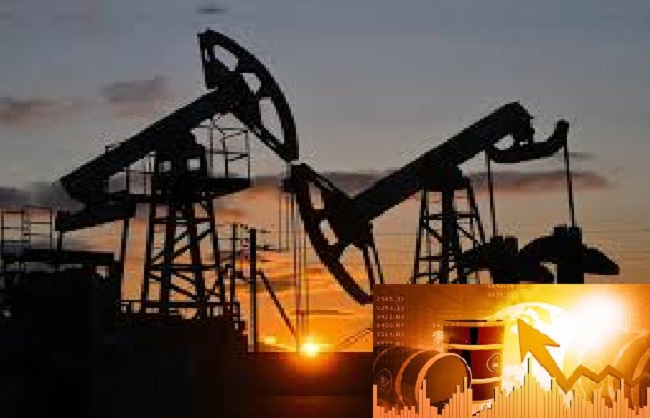
Brent and WTI crude jump sharply as US–Iran tensions raise concerns over global supply.
Global oil prices climbed above $104 per barrel on April 13, driven by escalating tensions in West Asia and growing fears of disruption in the Strait of Hormuz, a key global energy corridor.
The surge follows the breakdown of recent US–Iran talks and signals from US President Donald Trump indicating potential naval action that could restrict access to Iranian ports.
Key Announcements / Highlights
In early trading, Brent crude rose sharply, briefly crossing the $104 mark before stabilising slightly above $102. US benchmark West Texas Intermediate (WTI) also recorded a significant jump, trading above $104 after gaining more than 8%.
The spike reflects heightened market anxiety over possible supply disruptions, particularly if tensions in the Strait of Hormuz escalate further.
Official Market View
Market analysts say oil prices are reacting to the risk of reduced supply from the Gulf region. The Strait of Hormuz handles a substantial portion of the world’s oil shipments, making it highly sensitive to geopolitical developments.
Experts note that any restrictions on Iranian exports or broader disruptions in the region could tighten global supply significantly, pushing prices higher.
Context / Background
The current volatility follows the collapse of diplomatic efforts between the United States and Iran. The situation has been compounded by discussions around a potential naval blockade targeting Iranian-controlled waters.
Iran has historically exported large volumes of crude oil, and any interruption to its output or shipping routes could have ripple effects across global energy markets.
The situation has drawn comparisons to earlier oil crises, where geopolitical tensions led to sharp price increases and economic strain worldwide.
Public Impact
Rising oil prices can directly affect fuel costs, transportation expenses, and inflation levels across countries. For import-dependent economies like India, higher crude prices can increase the cost of petrol, diesel, and essential goods.
Industries reliant on energy inputs may also face higher operational costs, potentially impacting economic growth and consumer spending.
Conclusion
With geopolitical tensions showing little sign of easing, oil markets are expected to remain volatile in the near term. Traders and governments alike are closely monitoring developments in the Strait of Hormuz, as any escalation could further disrupt supply and push prices higher.
Input & Images: Hindusthan Samachar
Edited by Manten Sasank
Add Digital Herald as preferred source on google – click here
Also read – Sensex, Nifty Fall Over 1.6% in Early Trade as Broad Sell-Off Hits Markets
Last Updated on: Sunday, April 12, 2026 4:36 am by Mantena Sasank | Published by: Mantena Sasank on Sunday, April 12, 2026 4:36 am | News Categories: News, Business