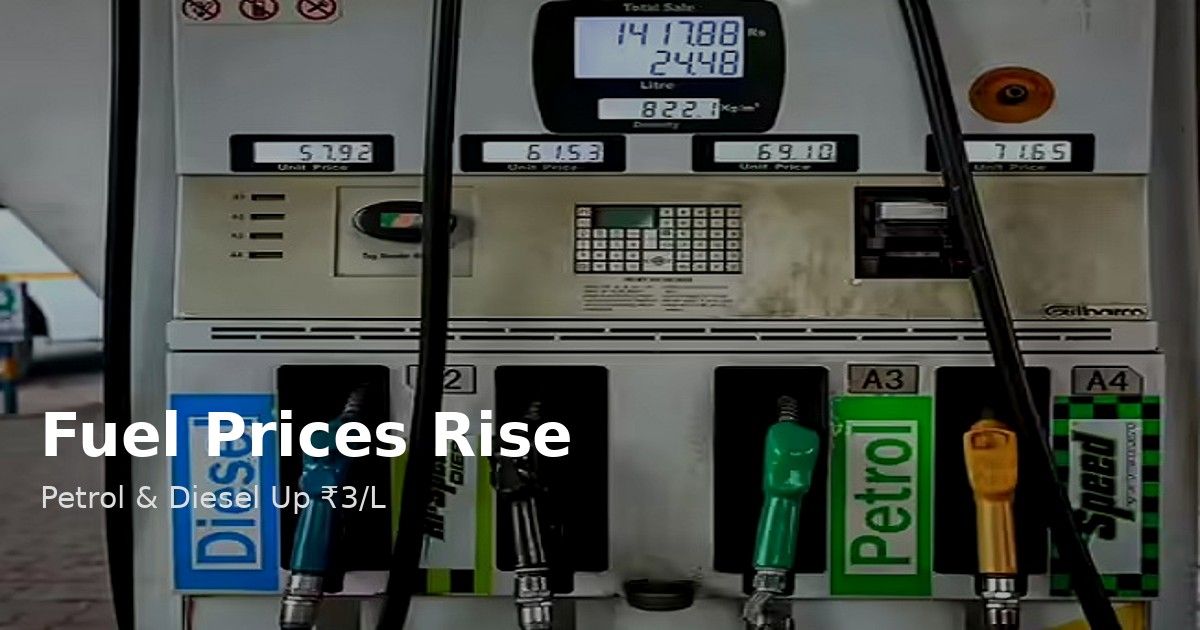
India has raised petrol and diesel prices for the first time in nearly four years, reflecting rising global crude oil costs and mounting pressure on domestic fuel retailers. The increase comes at a time of geopolitical uncertainty and renewed inflation concerns.
Fuel price hike takes effect across major cities
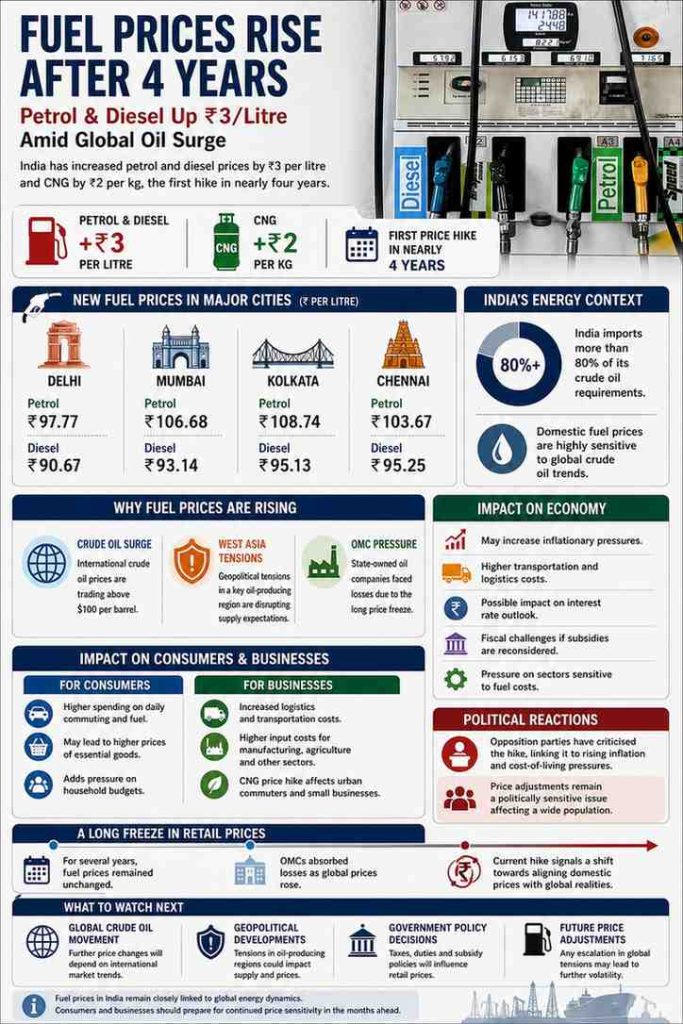
Petrol and diesel prices have been increased by ₹3 per litre across India, with the revised rates coming into effect immediately. Compressed Natural Gas (CNG) prices have also been raised by ₹2 per kilogram.
In Delhi, petrol is now priced at ₹97.77 per litre, while diesel has risen to ₹90.67 per litre. Similar increases have been recorded in other major cities, including Mumbai, Kolkata, and Chennai, where fuel prices are traditionally higher due to local taxes.
This marks the first revision in fuel prices in nearly four years, ending a prolonged period of relative stability at the retail level.
What is driving the increase?
Global crude oil surge
The primary trigger behind the hike is the sharp rise in international crude oil prices, which are currently hovering above $100 per barrel. India imports more than 80% of its crude oil requirements, making domestic fuel prices highly sensitive to global trends.
West Asia tensions
Ongoing geopolitical tensions in West Asia—a key oil-producing region—have disrupted supply expectations and pushed prices higher. Any instability in this region directly affects global energy markets.
Pressure on oil marketing companies
State-owned oil marketing companies (OMCs) had reportedly been absorbing losses in recent months as global prices rose while domestic retail prices remained unchanged. The latest hike is seen as a move to partially offset those losses.
Why this matters now
The price increase comes at a delicate time for the Indian economy. Fuel costs play a critical role in determining inflation levels, as they influence transportation, logistics, and production expenses across sectors.
A sustained rise in fuel prices could:
- Increase the cost of essential goods
- Push up transportation and logistics expenses
- Add pressure on household budgets
Impact on consumers and businesses
For consumers, the immediate effect will be higher spending on daily commuting and household fuel usage. Commercial sectors such as logistics, agriculture, and manufacturing are also likely to face increased input costs.
CNG price hikes could impact urban commuters and small businesses that rely on gas-powered vehicles as a cost-effective alternative to petrol and diesel.
Political reactions and public sentiment
The fuel price hike has triggered mixed reactions. While some consumers view it as an unavoidable outcome of global conditions, opposition parties have criticised the move, linking it to rising inflation and cost-of-living pressures.
Such price adjustments often become politically sensitive, especially when they affect a wide section of the population.
Background: A long freeze in retail prices
Fuel prices in India have largely remained unchanged for an extended period despite fluctuations in global crude markets. Analysts have often pointed out that this gap between international prices and domestic rates can lead to under-recoveries for oil companies.
The current revision suggests a shift toward aligning domestic prices more closely with global realities.
Broader economic implications
The increase in fuel prices could have ripple effects across the economy:
- Higher inflationary pressures
- Possible impact on interest rate outlook
- Increased fiscal challenges if subsidies are reconsidered
- Pressure on sectors sensitive to fuel costs
At the same time, aligning prices with global markets may help maintain the financial health of oil companies and ensure supply stability.
What to watch next
Going forward, fuel prices will likely depend on:
- Movements in global crude oil markets
- Geopolitical developments in oil-producing regions
- Government policy decisions on taxes and subsidies
Any further escalation in global tensions could lead to additional price volatility.
The latest fuel price hike reflects the growing impact of global energy dynamics on India’s domestic economy. While the move may ease financial pressure on fuel retailers, it also raises concerns about inflation and affordability for consumers. As global uncertainties persist, fuel pricing is expected to remain a key economic and policy issue in the months ahead.
Highlights
- Petrol and diesel prices have been increased by ₹3 per litre across India, marking the first fuel price hike in nearly four years.
- The revision follows a surge in global crude oil prices above $100 per barrel and ongoing geopolitical tensions in West Asia.
- State-owned oil marketing companies had been absorbing rising costs, with the hike aimed at easing financial pressure and aligning domestic prices with global trends.
- CNG prices have also been raised by ₹2 per kg, adding to the overall fuel cost burden for consumers and transport sectors.
- Higher fuel prices are expected to push up inflation by increasing transportation and logistics costs, impacting everyday goods and services.
- Key sectors such as logistics, agriculture, and manufacturing may face higher input costs, while households could see increased spending on fuel.
- Future fuel price movements will depend on global crude trends, geopolitical developments, and government policy decisions on taxes and subsidies.
Input & Images: Hindusthan Samachar
Edited by Manten Sasank
Add Digital Herald as preferred source on google – click here
Also read – PM Modi Meets BRICS Foreign Ministers in Delhi to Boost Cooperation and Global Coordination
Last Updated on: Friday, May 15, 2026 1:57 pm by Mantena Sasank | Published by: Mantena Sasank on Friday, May 15, 2026 1:28 pm | News Categories: India, News