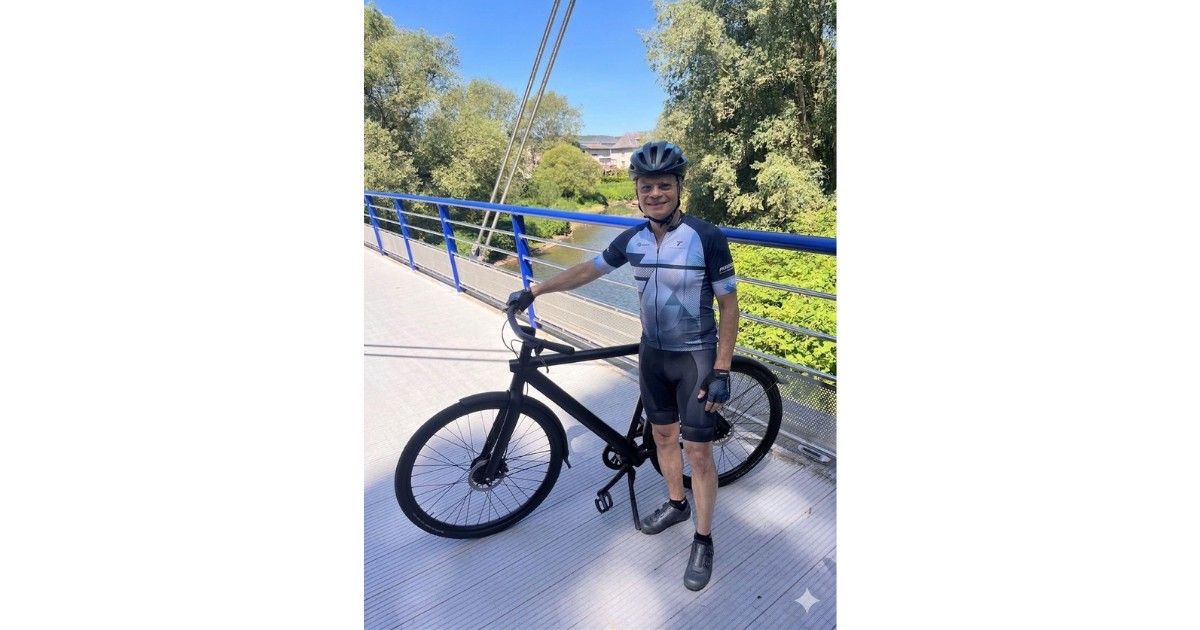
I grew up in Dadar Hindu Colony, Mumbai, but some of my fondest childhood memories are from my summer vacations in Miraj, a small town near Sangli in Maharashtra. We would spend our holidays at a community Dharamshala, where I first learned to ride a bicycle on its open grounds. That simple experience gave me a sense of freedom, adventure, and independence that stayed with me long after the vacations ended and sparked a lifelong love for cycling.
A few years later, I got a sporty-looking bicycle that quickly became my trusted companion. Whether it was riding to tuition classes or exploring the town with friends, cycling was an integral part of my growing-up years.
After graduation, I joined my father’s business, Asian General Stores, which I often describe as my true alma mater. Those were formative years that taught me some of life’s most valuable lessons. I did everything—from sales and customer service to sweeping floors, packing goods, loading and unloading inventory, and visiting wholesale markets. My bicycle was often my workhorse, helping me collect supplies from local distributors and navigate the town efficiently.
I loved cycling and always imagined it would remain a lifelong habit.
Unfortunately, like many Indians, I gradually stopped. Increasing traffic congestion, inadequate cycling infrastructure, and a lack of road discipline made cycling feel unsafe. What was once a simple and enjoyable activity slowly disappeared from my daily life.
Then, nearly three decades later, I found myself riding a beautiful bicycle through Luxembourg. It was just 8.2 kilometres, but it felt like travelling back in time. The joy, freedom, and simplicity of cycling returned instantly. It was pure nostalgia—and a reminder of what we are missing in many of our cities today.
As we celebrate World Bicycle Day and this year’s theme, “Cycling for a Greener Future,” it is worth reflecting on why cycling matters more today than ever before.
From an environmental perspective, cycling is one of the most sustainable forms of mobility. Every kilometre cycled instead of driven reduces carbon emissions, eases traffic congestion, and contributes to cleaner, healthier cities. As India grapples with urban pollution and climate challenges, promoting cycling should be a key part of our sustainability agenda.
From a health and fitness perspective, cycling is one of the most accessible forms of exercise. It improves cardiovascular health, builds endurance, strengthens muscles, and supports mental well-being. Most importantly, it integrates fitness into everyday life rather than requiring separate time commitments.
What is particularly exciting today is the emergence of cycling not just as a recreational activity but as a serious sporting discipline.
Across India, we are witnessing growing participation in endurance sports, triathlons, Ironman races, cycling clubs, cyclothons, and long-distance cycling events. This growing ecosystem is inspiring more Indians to adopt cycling as both a fitness activity and a competitive sport.
Cities such as Pune have emerged as important hubs for this movement. Home to a thriving cycling community, the city has increasingly become a destination for national and international cycling events. The recent Pune Grand Tour—India’s premier international cycling event—which traverses the scenic Sahyadri hills, Mulshi, and iconic city landmarks, is a strong example of how cycling is evolving into a serious sporting and tourism opportunity. Events like these not only encourage participation but also help build a larger ecosystem around cycling, fitness, adventure tourism, and community engagement.
I believe cycling represents one of the biggest untapped opportunities in Indian sports. It offers benefits across multiple dimensions—fitness, sustainability, recreation, tourism, community building, and competitive sport.
However, for India to truly become a cycling nation, we need more than enthusiasm. We need safer roads, dedicated cycling tracks, better urban planning, and stronger support from both public and private stakeholders.
As someone whose cycling journey began on the streets of Miraj and was rekindled decades later in Luxembourg, I sincerely hope that future generations of Indians will be able to enjoy cycling not occasionally, but every day—safely, confidently, and joyfully.
Because when we invest in cycling, we are not just investing in a sport.
We are investing in healthier people, greener cities, and a more sustainable future.
Last Updated on: Friday, June 5, 2026 3:53 pm by Digital Herald Team | Published by: Digital Herald Team on Friday, June 5, 2026 3:52 pm | News Categories: Brand Post