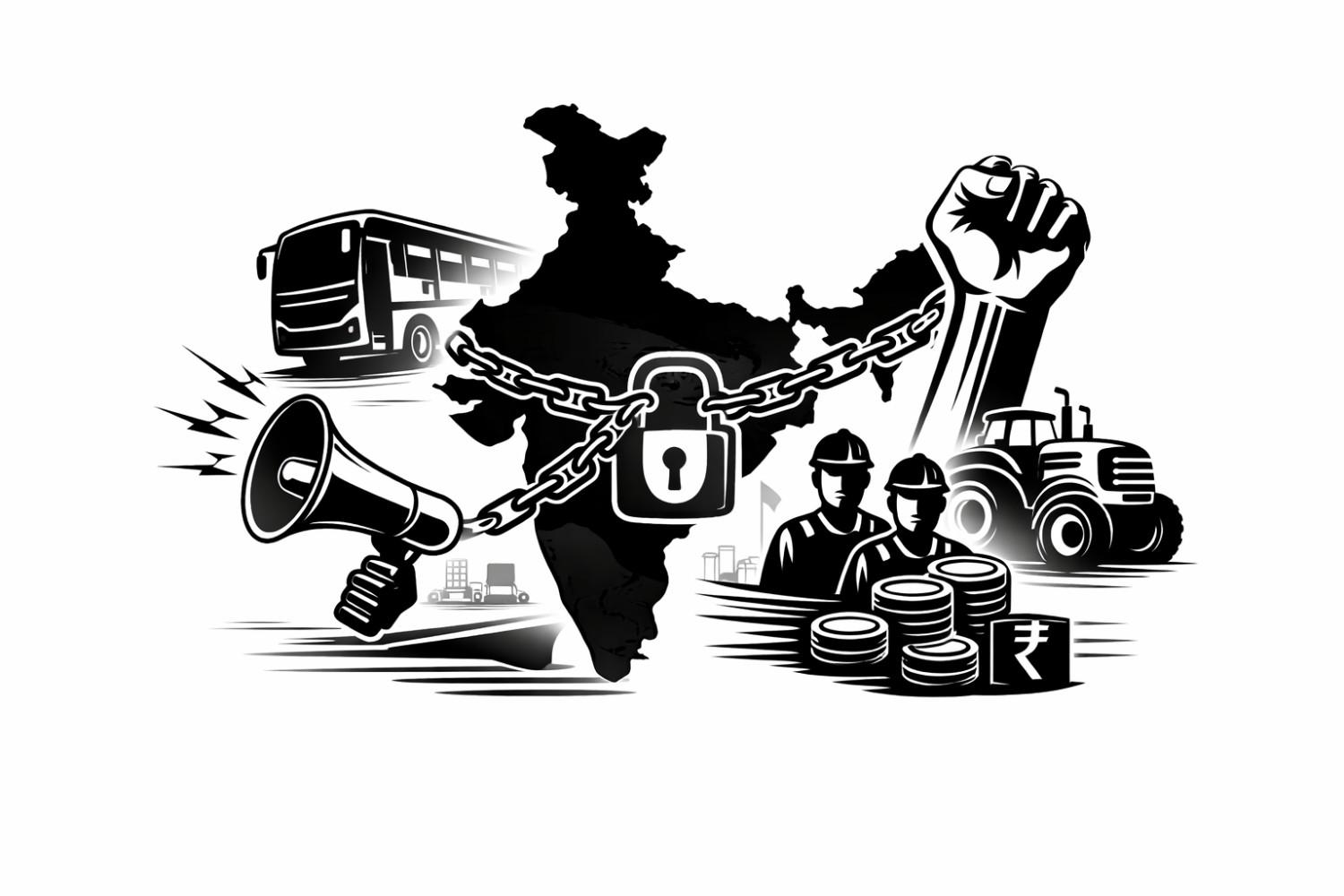
A nationwide Bharat Bandh is being observed today as several central trade unions and farmer groups stage protests against government policies. The strike is expected to affect banking, transport, and government services in many parts of the country.
The bandh has been called by more than 10 central trade unions and supported by farmer organisations and other groups. Organisers say nearly 30 crore workers from different sectors could participate, making it one of the largest coordinated strikes in recent years.
The level of disruption varies from state to state. While some regions are likely to see major shutdowns, others may function normally with only minor delays.
Why the Bharat Bandh Was Called
Trade unions and farmer organisations have called the strike to protest several government policies.
The main demands include the rollback of the four labour codes, opposition to the Electricity Bill 2025, and concerns over trade and agricultural policies. Unions say these measures may affect worker rights, wages, and job security.
The protest has also received support from student groups, rural labour unions, and various public sector workers.
Sectors Likely to Be Affected
The strike is expected to disrupt several key services across the country.
Public sector banks, state transport services, government offices, industrial units, and rural employment schemes may face disruptions in areas where participation is high. In some states, public buses, wholesale markets, and government offices may remain closed for the day. However, the impact depends on local participation and enforcement.
What Will Remain Open
Essential services are expected to function normally across the country.
Hospitals, ambulance services, pharmacies, fire services, water supply, electricity, airports, and railways are likely to remain operational, although minor delays are possible in some areas. Many private offices, online delivery services, and metro networks may also continue to operate, depending on local conditions.
Banking Services: Partial Disruptions Expected
Banking services may be affected in several cities.
Public sector banks could operate with reduced staff or remain closed in some regions due to employee participation in the strike. Customers have been advised to use digital banking services where possible.
Transport Services: Likely to Face Major Impact
Transport is expected to be one of the most affected sectors.
State-run bus services, local transport, and freight movement may slow down or stop in areas with strong union participation. In some states, traffic movement may be slower due to protests and road blockades.
Schools and Colleges: Mostly Open
In many states, schools and colleges are expected to remain open unless local authorities announce closures.
Reports indicate that educational institutions in Delhi, Uttar Pradesh, Punjab, Maharashtra, Chennai, Kolkata, and Rajasthan are likely to function normally. However, attendance may be affected in areas with transport disruptions.
State-Wise Impact Overview
Assam and Odisha
These states are expected to see some of the highest levels of disruption. Transport services, markets, and government offices may shut down in several districts.
Kerala and West Bengal
Significant participation is expected in these states. Public transport, shops, and government offices may remain closed in many areas.
Punjab
Punjab is likely to witness strong participation, with support from local political groups and unions. Public transport and government services may be affected.
Karnataka
The bandh may disrupt banking, transport, and some government services. However, schools are expected to remain open in most parts of the state.
Telangana
Major disruptions are expected, especially in public transport and banking services, due to large-scale worker participation.
Delhi and Major Metro Cities
Metro rail services, hospitals, and essential services are expected to run normally. Some government offices, banks, and public transport services may face disruptions depending on local participation.
Why Participation Is So Large
Trade unions claim that nearly 30 crore workers across sectors are taking part in the strike.
Participants include workers from banking, transport, insurance, electricity, industrial units, and rural employment schemes. The scale of participation could lead to disruptions in several districts across the country.
Advice for Commuters and Residents
Authorities have advised people to check transport schedules before travelling, use digital banking services, avoid non-essential travel in protest areas, and stay updated with local announcements. These steps can help reduce inconvenience during the bandh.
Key Numbers to Know
More than 10 central trade unions have called the bandh. Around 30 crore workers are expected to participate. Disruptions are likely across hundreds of districts nationwide.
The Bottom Line
The Bharat Bandh on February 12 is expected to cause disruptions in banking, transport, and government services in several states. However, essential services such as hospitals, railways, and airports are likely to remain operational.
The actual impact will depend on the level of participation in each region. While some states may see near-total shutdowns, others could function with only minor interruptions.
For most citizens, the key advice is simple: plan travel carefully, check local updates, and rely on digital services where possible.
Disclaimer: The information presented in this article is intended for general informational purposes only. While every effort is made to ensure accuracy, completeness, and timeliness, data such as prices, market figures, government notifications, weather updates, holiday announcements, and public advisories are subject to change and may vary based on location and official revisions. Readers are strongly encouraged to verify details from relevant official sources before making financial, investment, career, travel, or personal decisions. This publication does not provide financial, investment, legal, or professional advice and shall not be held liable for any losses, damages, or actions taken in reliance on the information provided.
Last Updated on: Thursday, February 12, 2026 10:15 am by Digital Herald Team | Published by: Digital Herald Team on Thursday, February 12, 2026 10:15 am | News Categories: India