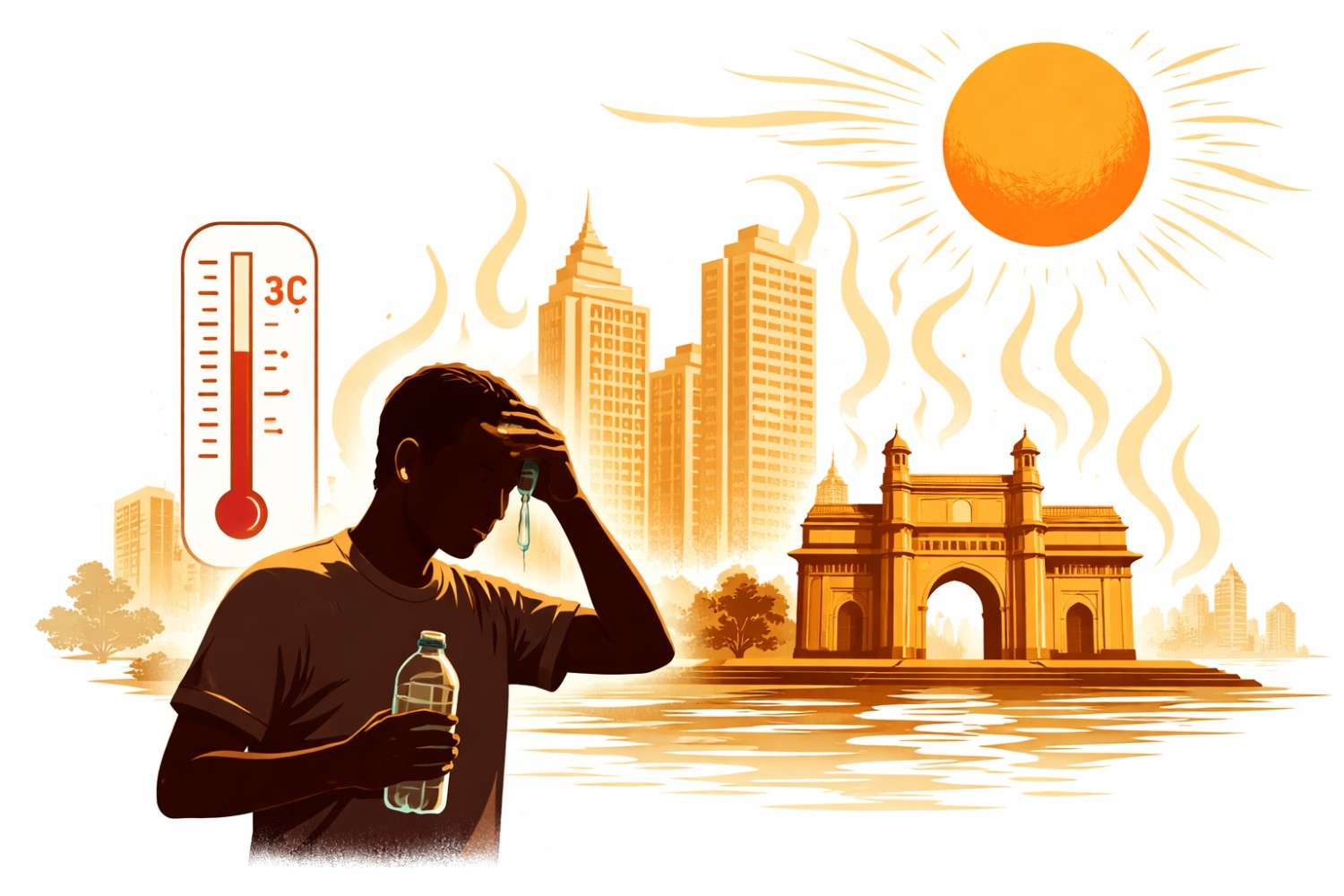
Rising Temperatures Trigger Early Heat Alert in Western India
Western India is experiencing an early spell of intense heat, with temperatures climbing above seasonal averages in several locations. Weather officials have issued alerts after daytime temperatures in parts of the Mumbai metropolitan region crossed 38°C, signaling the possibility of early heatwave conditions.
The warning comes from the India Meteorological Department, which tracks temperature patterns across the country and issues advisories when weather conditions may affect public safety.
Early heat spells are a growing concern because they can impact public health, water availability, power demand, and urban infrastructure. Authorities are advising residents to stay cautious as temperatures continue to rise across western states.
Temperatures Rise Above Normal in Mumbai and Surrounding Areas
Weather monitoring stations have recorded daytime temperatures exceeding 38°C in parts of the Mumbai metropolitan region, which is higher than the typical temperature range for this time of year.
The increase in temperature has been felt across several nearby districts in Maharashtra, where hot and dry weather conditions have intensified during recent days.
Meteorologists say such early spikes can occur due to changing wind patterns and clear skies, which allow stronger solar heating during the daytime.
The India Meteorological Department continues to monitor conditions and issue updates as weather systems evolve.
Understanding What Qualifies as a Heatwave
In India, heatwaves are officially defined based on temperature levels and how much they exceed long-term averages.
According to the India Meteorological Department, a heatwave may be declared when:
- Maximum temperature reaches 40°C or higher in plains, or
- The temperature is 4.5°C to 6.4°C above normal, or
- Maximum temperature crosses 45°C, regardless of the average
While the current readings in the Mumbai region are below the extreme threshold for plains, temperatures above 38°C in coastal areas can still create intense heat stress due to high humidity.
Humidity levels in coastal cities often make the weather feel hotter than the actual temperature.
Why Coastal Cities Feel Hotter During Heat Spells
Cities located near the sea often experience a combination of high temperature and high humidity. This combination creates what meteorologists call the “heat index,” which reflects how hot the weather actually feels to the human body.
In coastal locations like Mumbai, humidity prevents sweat from evaporating quickly. This reduces the body’s ability to cool itself.
As a result, temperatures slightly above the seasonal average can feel significantly hotter.
Residents often experience:
- Increased fatigue
- Excessive sweating
- Dehydration risk
These conditions are especially challenging for people working outdoors.
Impact on Daily Life in Urban Areas
High temperatures in major cities can affect several aspects of daily life.
Public Health Concerns
Heatwaves increase the risk of heat exhaustion and dehydration. Hospitals often see a rise in heat-related illnesses during extreme weather events.
Children, elderly individuals, and people with medical conditions are more vulnerable to heat stress.
Rising Electricity Demand
As temperatures rise, the use of air conditioners, fans, and cooling devices increases significantly. This leads to higher electricity demand in urban areas.
Power utilities often prepare for increased load during peak summer months.
Pressure on Water Supply
Hot weather increases water consumption across households, commercial buildings, and public facilities. Municipal water systems may experience higher demand during extended heat spells.
Urban planners and authorities often encourage water conservation during such periods.
Weather Patterns Behind the Early Heat
Meteorologists point to several weather factors that can lead to early heat conditions.
These include:
- Clear skies allowing stronger sunlight
- Dry air masses over western India
- Weak coastal winds reducing cooling effect
- Absence of cloud cover
When these conditions occur together, daytime temperatures can rise rapidly.
Seasonal climate patterns also influence temperature variations from year to year.
Western India Often Experiences Early Summer Heat
States in western India frequently see early heat during late winter and early summer.
Regions in Maharashtra, Gujarat, and Rajasthan are known for experiencing rising temperatures earlier than some other parts of the country.
Inland areas tend to heat faster because they are not moderated by sea winds.
Urban areas also experience additional warming due to the urban heat island effect, where buildings, roads, and infrastructure absorb and retain heat.
Urban Heat Island Effect in Major Cities
Large cities often record higher temperatures than surrounding rural regions.
This phenomenon occurs because urban surfaces like concrete and asphalt absorb heat during the day and release it slowly at night.
Other factors contributing to urban heat include:
- High traffic density
- Limited green spaces
- Dense construction
- Industrial activity
These factors make large metropolitan areas more vulnerable to extreme heat events.
Precautions Recommended During Heat Alerts
Health authorities recommend several precautions when temperatures rise above seasonal averages.
Residents are advised to:
- Drink water frequently to stay hydrated
- Avoid outdoor activities during peak afternoon hours
- Wear light and loose clothing
- Use hats, umbrellas, or shade when outdoors
Employers with outdoor workers are encouraged to provide regular rest breaks and access to drinking water.
Public awareness campaigns often play a key role in preventing heat-related illnesses.
Impact on Agriculture and Rural Areas
While cities experience immediate heat discomfort, rural areas may face challenges in agriculture.
High temperatures can affect crops that are sensitive to heat stress. Farmers may need to adjust irrigation schedules to protect crops during early heat spells.
Agricultural departments often monitor weather forecasts to advise farmers on crop management practices.
Access to timely weather information helps farmers reduce risks associated with sudden temperature changes.
Climate Trends and Rising Heat Events
Weather experts have noted that extreme temperature events have become more frequent in recent years.
Climate researchers continue to study the long-term impact of rising global temperatures on regional weather patterns.
While individual heat events can be influenced by short-term weather systems, long-term trends suggest that many regions may face higher average temperatures in the future.
Cities across India are developing heat action plans to manage the risks associated with extreme heat.
Government and Local Preparedness
State governments and local authorities often activate preparedness measures when heat alerts are issued.
These measures may include:
- Public heat advisories
- Increased monitoring by health departments
- Emergency response planning
- Awareness campaigns for vulnerable communities
Urban administrations also monitor water supply and electricity demand during peak summer months.
Advance planning helps reduce the impact of extreme heat on daily life.
Key Highlights of the Current Heat Situation
- Temperatures in the Mumbai region crossed 38°C during recent days
- The India Meteorological Department has issued heat alerts for western India
- Coastal humidity may increase heat discomfort in cities like Mumbai
- Rising temperatures could affect public health, electricity demand, and water usage
- Authorities advise residents to take precautions during peak daytime heat
Conclusion: Early Heatwave Signals Start of a Challenging Summer
The recent spike in temperatures across western India highlights the early arrival of summer heat in several regions.
With readings crossing 38°C in the Mumbai metropolitan region, the advisory from the India Meteorological Department serves as an important reminder for residents to stay alert and prepared.
While such temperature spikes are not uncommon during seasonal transitions, early heat can strain urban infrastructure and increase health risks if precautions are not taken.
As the country moves toward the peak summer months, regular weather updates and public awareness will play a critical role in helping communities manage extreme heat safely.
Disclaimer: The information presented in this article is intended for general informational purposes only. While every effort is made to ensure accuracy, completeness, and timeliness, data such as prices, market figures, government notifications, weather updates, holiday announcements, and public advisories are subject to change and may vary based on location and official revisions. Readers are strongly encouraged to verify details from relevant official sources before making financial, investment, career, travel, or personal decisions. This publication does not provide financial, investment, legal, or professional advice and shall not be held liable for any losses, damages, or actions taken in reliance on the information provided.
Last Updated on: Friday, March 6, 2026 11:26 pm by Digital Herald Team | Published by: Digital Herald Team on Friday, March 6, 2026 11:26 pm | News Categories: India