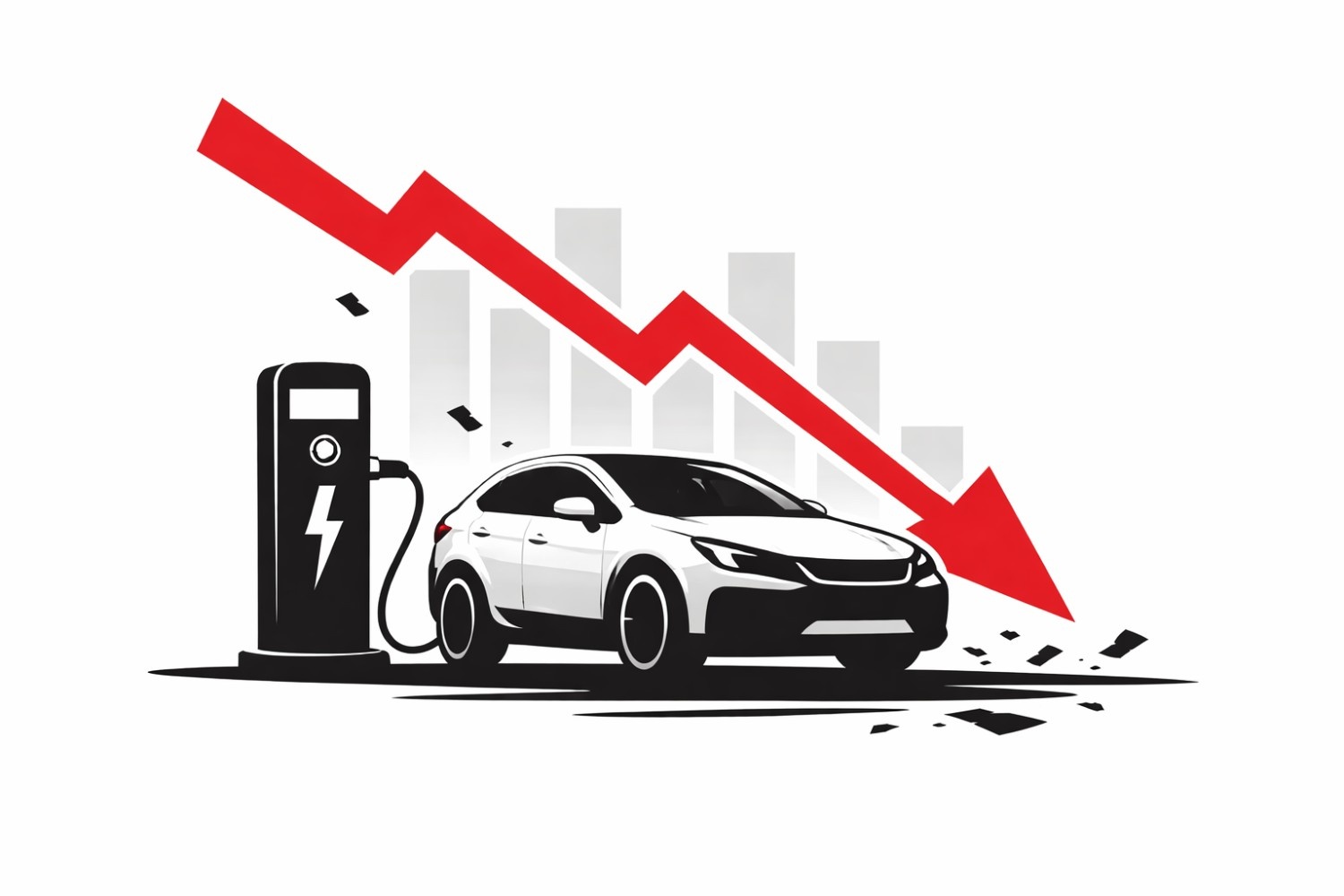
Market Volatility Weighs on Electric Vehicle and Auto Shares in India
Indian stock markets faced renewed selling pressure today, with electric vehicle (EV) stocks and auto sector shares witnessing notable declines. The broader market sell-off has impacted several frontline and mid-cap companies, reflecting investor caution amid global and domestic uncertainties.
The weakness in auto and EV stocks matters because the sector has been one of the key growth drivers in recent years. Electric mobility, government incentives, and rising consumer demand have kept investor interest strong. However, during periods of market stress, high-growth sectors often see sharper corrections.
Here is a detailed look at what is happening, why EV and auto stocks are under pressure, and what it means for investors.
Broader Market Sell-Off Impacts Key Indices
The decline in auto and EV stocks comes as benchmark indices such as the Nifty 50 and Sensex trade lower. When global markets show volatility or investors turn risk-averse, cyclical sectors like automobiles often face selling.
Auto stocks are sensitive to:
- Interest rate changes
- Commodity price movements
- Consumer demand trends
- Global supply chain issues
In a risk-off environment, investors usually reduce exposure to sectors that depend heavily on consumer spending.
EV Stocks See Profit Booking
Electric vehicle-related stocks have seen strong rallies over the past few years. Many companies gained sharply due to:
- Government EV incentives
- State-level subsidies
- Push for clean mobility
- Rising fuel prices
During a broader correction, investors often book profits in stocks that have delivered high returns earlier.
In India, listed EV-focused and EV-exposed companies include:
- Tata Motors
- Mahindra & Mahindra
- Ola Electric Mobility
These companies have significant exposure to electric vehicles, either through passenger EVs, two-wheelers, or upcoming product launches.
When the broader market weakens, such stocks may see sharper swings due to higher retail participation.
Auto Sector Faces Multiple Headwinds
1. Input Cost Concerns
Automobile manufacturing depends heavily on raw materials such as steel, aluminum, and battery components. Any rise in global commodity prices can impact margins.
For EV makers, lithium and other battery materials remain critical cost factors. Even small price movements can affect profitability expectations.
2. Interest Rate Sensitivity
Auto sales, especially passenger vehicles and two-wheelers, depend on financing. Higher interest rates can reduce demand for loans.
If investors expect tight liquidity or slower economic growth, auto stocks may face selling pressure.
3. Demand Moderation Signals
The auto sector had reported steady recovery after pandemic disruptions. However, market participants closely track monthly sales data.
If there are signs of slowing growth in passenger vehicles or two-wheelers, stock prices often react quickly.
Tata Motors and EV Leadership
Tata Motors remains a key player in India’s EV space. The company has launched multiple electric models in recent years and holds a significant share in the domestic EV passenger vehicle market.
However, during broad sell-offs, even market leaders are not spared. Large-cap auto stocks often see institutional selling when foreign investors reduce exposure to emerging markets.
Tata Motors’ stock performance is closely watched because it reflects both domestic EV demand and global business trends.
Mahindra & Mahindra’s EV Push
Mahindra & Mahindra has announced plans to expand its electric SUV portfolio. The company has positioned itself strongly in both traditional SUVs and upcoming EV segments.
Despite long-term optimism around EV expansion, near-term market volatility can weigh on sentiment. Investors often shift funds from growth themes to defensive sectors during uncertain phases.
Ola Electric and Market Sentiment
Ola Electric Mobility represents the new-age EV story in India. As a pure-play electric vehicle company, its stock tends to reflect retail investor sentiment.
High-growth companies can see higher volatility during corrections. When overall market mood turns cautious, such stocks may face stronger price swings.
Global Factors Adding to Pressure
The sell-off in EV and auto stocks is not happening in isolation. Global factors also play a role.
These include:
- US market volatility
- Changes in crude oil prices
- Global EV demand trends
- Supply chain updates
Indian markets often react to overnight developments in the US and Asian markets. If global auto stocks decline, domestic peers may also see pressure.
Auto Index Movement
The Nifty Auto index is a key benchmark for tracking sector performance. When the index falls sharply in a session, it signals broad-based selling across passenger vehicles, commercial vehicles, and two-wheelers.
Sector-wide declines usually indicate macro concerns rather than company-specific problems.
Long-Term EV Story Remains Intact
Despite near-term volatility, India’s EV transition continues to move forward.
Key structural drivers include:
- Government schemes promoting EV adoption
- Expansion of charging infrastructure
- Rising fuel costs over the long term
- Urban demand for clean mobility
The central government has introduced policies to support electric vehicles under programs such as FAME. State governments also provide incentives.
These long-term policies are important for investors assessing future growth potential.
Investor Strategy During Market Corrections
Market corrections often test investor confidence. Financial experts generally suggest focusing on:
- Company fundamentals
- Debt levels
- Cash flow strength
- Long-term demand trends
Auto and EV stocks can be cyclical. That means they may rise strongly during growth phases and correct during uncertainty.
Retail investors are advised to avoid panic selling and to make decisions based on risk appetite and financial goals.
What to Watch Next
Investors tracking EV and auto stocks should monitor:
- Monthly auto sales data
- Upcoming quarterly earnings
- Commodity price movements
- Policy announcements
- Global market cues
Earnings commentary from companies like Tata Motors and Mahindra & Mahindra can provide insight into demand trends and margin outlook.
Any updates related to EV battery costs or supply chain improvements may also influence stock prices.
Why This Matters for Indian Investors Today
The auto sector contributes significantly to India’s manufacturing output and employment. It also plays a major role in stock market indices.
When EV and auto stocks fall sharply, it affects:
- Mutual fund portfolios
- Retail investor holdings
- Index performance
Given the strong interest in electric mobility themes, today’s pressure has drawn attention from traders and long-term investors alike.
Search trends show rising queries related to:
- “EV stocks fall today”
- “Auto sector share price news”
- “Tata Motors stock update”
- “Nifty Auto index today”
This reflects active investor participation.
Balanced View on the Sector
While the broader market sell-off has created short-term pressure, it does not automatically change long-term growth drivers.
India remains one of the fastest-growing major auto markets. EV penetration is still at an early stage compared to global benchmarks. This means both risks and opportunities exist.
Market volatility is a normal part of equity investing. Corrections often reset valuations and test investor conviction.
Conclusion
EV stocks and auto sector shares are facing pressure amid a wider market sell-off. Companies like Tata Motors, Mahindra & Mahindra, and Ola Electric are seeing movement in line with overall sentiment.
Short-term volatility may continue if global and domestic uncertainties persist. However, the long-term transition toward electric mobility remains a key structural theme in India’s growth story.
For investors, the focus now shifts to earnings, demand signals, and broader market stability.
As markets evolve in the coming sessions, EV and auto stocks will remain closely watched by traders, analysts, and long-term investors across the country.
Disclaimer: The information presented in this article is intended for general informational purposes only. While every effort is made to ensure accuracy, completeness, and timeliness, data such as prices, market figures, government notifications, weather updates, holiday announcements, and public advisories are subject to change and may vary based on location and official revisions. Readers are strongly encouraged to verify details from relevant official sources before making financial, investment, career, travel, or personal decisions. This publication does not provide financial, investment, legal, or professional advice and shall not be held liable for any losses, damages, or actions taken in reliance on the information provided.
Last Updated on: Tuesday, February 24, 2026 11:13 am by Digital Herald Team | Published by: Digital Herald Team on Tuesday, February 24, 2026 11:13 am | News Categories: Automobile