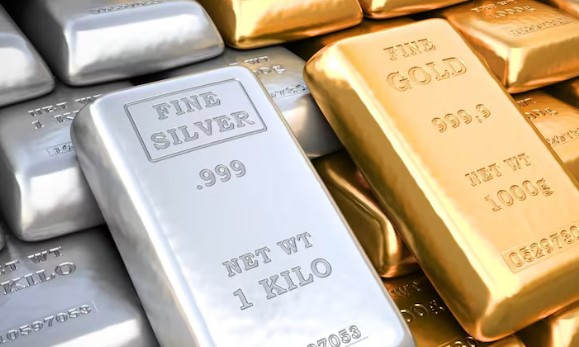
Gold rates declined by up to ₹820 per 10 grams on April 8, while silver prices held steady amid shifting global market sentiment.
Gold prices continued their downward trend in India’s domestic bullion markets on Wednesday, April 8, with rates falling between ₹750 and ₹820 per 10 grams in early trade. The decline comes amid easing geopolitical tensions globally, which have reduced demand for safe-haven assets like gold.
Key Highlights
Gold prices dropped sharply across major cities, with 24-carat gold now trading in the range of ₹1,49,830 to ₹1,49,980 per 10 grams. Similarly, 22-carat gold prices slipped to between ₹1,37,340 and ₹1,37,490 per 10 grams.
In contrast, silver prices remained unchanged for the third consecutive session, holding steady at ₹2,49,900 per kilogram in Delhi’s bullion market.
Price Trends Across Major Cities
Gold prices showed a consistent downward trend across the country. In Delhi, 24-carat gold was priced at ₹1,49,980 per 10 grams, while 22-carat gold stood at ₹1,37,490. Mumbai reported slightly lower levels at ₹1,49,830 and ₹1,37,340 respectively.
Similar pricing patterns were observed in cities such as Ahmedabad, Chennai, Kolkata, Bhopal, Lucknow, Jaipur, and Patna, indicating a broad-based decline in gold rates nationwide.
Southern and eastern markets, including Bengaluru, Hyderabad, and Bhubaneswar, also mirrored this trend, with prices aligning closely with national averages.
Official Statement
Market observers attribute the decline in gold prices to a shift in investor sentiment following easing geopolitical tensions. As risks in global markets recede, demand for gold—traditionally considered a safe investment during uncertainty—tends to weaken, leading to price corrections.
Context and Background
Gold prices are closely linked to global economic conditions, currency movements, and geopolitical developments. In recent weeks, heightened tensions had pushed gold prices higher as investors sought safety.
However, with signs of de-escalation in key conflict zones, market participants are moving towards riskier assets such as equities, reducing demand for gold.
Silver, on the other hand, has held steady due to its dual role as both a precious and industrial metal. Stable industrial demand has supported its price despite fluctuations in gold.
Public Impact: What It Means for Buyers
The decline in gold prices may offer a temporary opportunity for buyers, especially ahead of upcoming wedding and festive seasons when demand typically rises.
Jewellers and retail buyers may benefit from slightly lower purchase costs, although price volatility remains a concern.
For investors, the current trend signals a shift in market sentiment, with gold potentially facing further pressure if global stability continues.
Conclusion: Outlook for Bullion Markets
The recent fall in gold prices reflects changing global dynamics rather than domestic factors alone. If geopolitical stability persists, gold prices may remain under pressure in the near term.
However, analysts note that any renewed uncertainty could quickly reverse the trend, making bullion markets highly sensitive to global developments.
Input & Images: Hindusthan Samachar
Edited by Manten Sasank
Add Digital Herald as preferred source on google – click here
Also read – Crude Oil Prices Fall 15% Globally; Relief for India Likely but Fuel Price Cuts May Take Time
Last Updated on: Wednesday, April 8, 2026 11:25 am by Mantena Sasank | Published by: Mantena Sasank on Wednesday, April 8, 2026 11:25 am | News Categories: Finance, Business, News