A Rare Sky Event Meets a Major Festival
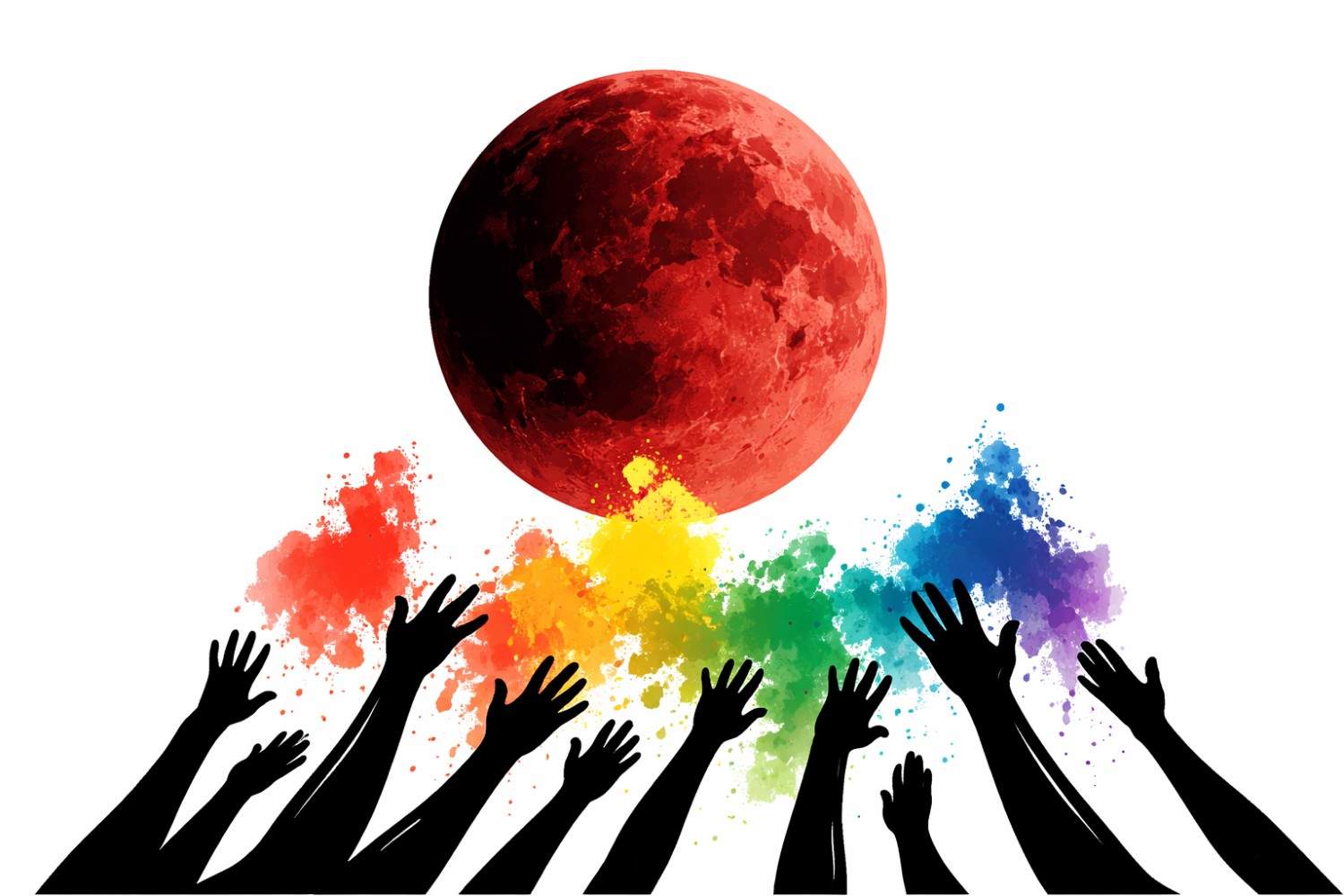
India will witness a rare celestial event in March 2026, when a total lunar eclipse, also known as a Blood Moon, is expected to occur on the same day as Holi. The rare alignment of a major Hindu festival and a total lunar eclipse has not happened in nearly 100 years, making it a moment of both cultural and astronomical importance.
For millions across the country, Holi is a day of colour, celebration, and tradition. At the same time, a total lunar eclipse is one of the most dramatic sky events visible without any special equipment. The combination of the two is already generating interest among skywatchers, religious groups, and families planning festive gatherings.
Here is what Indian readers need to know about the Lunar Eclipse 2026, its timing, visibility, and how it may affect Holi celebrations.
What Is a Total Lunar Eclipse or Blood Moon?
A total lunar eclipse happens when the Earth comes directly between the Sun and the Moon. During this time, the Earth blocks sunlight from reaching the Moon.
Instead of turning completely dark, the Moon appears deep red or copper in colour. This happens because sunlight passes through Earth’s atmosphere, which filters out blue light and allows red light to reach the Moon. That is why it is commonly called a Blood Moon.
Unlike a solar eclipse, a lunar eclipse is safe to watch with naked eyes. No special glasses are required.
When Will the Lunar Eclipse 2026 Occur?
The total lunar eclipse is expected in March 2026, close to the date of Holi, which is usually celebrated on a full moon day in the Hindu month of Phalguna.
Since a lunar eclipse can only happen on a full moon, the alignment makes it possible for both events to fall on the same date.
Exact timings for India will be confirmed closer to the date by astronomical bodies such as the Indian Institute of Astrophysics (IIA) and space agencies like ISRO. However, current astronomical calendars indicate that the eclipse will be visible from several parts of Asia, including India, depending on local time zones.
Why Is This Alignment So Rare?
Holi is celebrated every year on the full moon. Lunar eclipses also occur during full moons, but they do not happen every month. The Moon’s orbit is slightly tilted compared to Earth’s orbit around the Sun. Because of this tilt, the Sun, Earth, and Moon do not line up perfectly every time there is a full moon.
A total lunar eclipse happens only when this alignment is exact.
For Holi and a total lunar eclipse to coincide, the timing must match precisely. This rare overlap is believed to have occurred nearly a century ago, making the 2026 event special for this generation.
How India Will Experience the Blood Moon During Holi
If the eclipse is fully visible during night hours in India, people across states such as Uttar Pradesh, Rajasthan, Delhi, Maharashtra, West Bengal, Tamil Nadu, and Karnataka may be able to see the red Moon after sunset.
Here is how the event may unfold:
- The Moon will rise as a normal full moon.
- As the eclipse begins, a shadow will slowly cover part of the Moon.
- During totality, the Moon will turn deep red.
- After some time, the red colour will fade as the eclipse ends.
The entire process of a total lunar eclipse usually lasts for several hours, while the total red phase may last for around one hour or more, depending on the alignment.
Since Holi celebrations usually take place during the day, the eclipse is likely to be visible at night, reducing any direct impact on daytime festivities.
Religious Significance and Traditions During Lunar Eclipse
In Hindu tradition, eclipses are often linked with spiritual beliefs. Many people avoid eating during the eclipse period. Some temples close their doors during the event. Ritual bathing after the eclipse is also common in some regions.
However, practices vary from family to family.
Holi itself is connected to the legend of Prahlada and the burning of Holika during Holika Dahan. The festival celebrates the victory of good over evil.
Since both events are tied to the full moon, some communities may combine traditional observances with eclipse-related rituals. Religious authorities and temple boards are expected to issue detailed guidelines closer to the date.
Will the Eclipse Affect Holi Celebrations?
As of now, there is no official restriction or advisory linked to the lunar eclipse.
Because Holi celebrations mostly happen during daylight hours and the eclipse will occur after sunset, the impact on colour play and public gatherings is expected to be minimal.
However, temple timings and puja schedules may be adjusted depending on the exact eclipse window.
Local administrations typically issue public advisories closer to major celestial events if required. There is no indication of any safety concern.
Scientific Perspective: A Learning Opportunity for Students
For schools and colleges, the Lunar Eclipse 2026 presents a strong educational opportunity.
Institutions may organise:
- Night sky observation sessions
- Public awareness drives
- Astronomy workshops
- Science talks explaining the eclipse
Organisations like Indian Space Research Organisation and science clubs often use such events to promote interest in space science.
Because a lunar eclipse is visible without equipment, families can also observe it together from rooftops and open areas.
Best Ways to Watch the Blood Moon in India
Watching a lunar eclipse is simple and safe.
Here are a few tips:
- Choose an open area with a clear view of the sky
- Avoid tall buildings blocking the eastern horizon
- Use binoculars or a small telescope for a better view
- Check local weather forecasts for cloud cover
No special eye protection is required.
Those in metro cities like Delhi, Mumbai, Kolkata, Chennai, and Bengaluru should try to move away from heavy light pollution areas for a clearer view.
What Makes a Blood Moon Look Red?
During totality, the Moon does not disappear completely. Instead, it turns red.
This happens because Earth’s atmosphere bends sunlight. Blue light gets scattered. Red light travels further and reaches the Moon.
The exact shade of red depends on atmospheric conditions. If there are dust particles or pollution in the atmosphere, the Moon may appear darker.
How Often Do Total Lunar Eclipses Happen?
On average, total lunar eclipses occur about once every 2 to 3 years somewhere in the world. However, they are not always visible from India.
That is why visibility from Indian skies during a major festival adds to the excitement.
Public Interest Rising Ahead of 2026
Search trends already show growing interest in keywords such as:
- Lunar Eclipse 2026 India
- Blood Moon March 2026
- Holi and Lunar Eclipse same day
- Is Holi 2026 affected by eclipse
As the date approaches, interest is likely to rise further.
Astronomy groups and event organisers may plan public viewing sessions in major cities.
A Rare Moment in the Sky and in Tradition
The alignment of Holi and a total lunar eclipse in March 2026 brings together science and tradition in a rare way.
For many Indians, it will be a day of colours followed by a night of cosmic wonder.
While the festival celebrates joy and togetherness, the Blood Moon will remind people of the vast universe beyond Earth.
With clear skies and careful planning, millions across India may witness this rare spectacle — a red Moon shining above a nation still coloured in celebration.
The next such alignment may not happen for decades, making Holi 2026 a date to remember for both cultural and astronomical reasons.
Disclaimer: The information presented in this article is intended for general informational purposes only. While every effort is made to ensure accuracy, completeness, and timeliness, data such as prices, market figures, government notifications, weather updates, holiday announcements, and public advisories are subject to change and may vary based on location and official revisions. Readers are strongly encouraged to verify details from relevant official sources before making financial, investment, career, travel, or personal decisions. This publication does not provide financial, investment, legal, or professional advice and shall not be held liable for any losses, damages, or actions taken in reliance on the information provided.
Last Updated on: Tuesday, March 3, 2026 12:21 pm by Digital Herald Team | Published by: Digital Herald Team on Tuesday, March 3, 2026 12:21 pm | News Categories: India