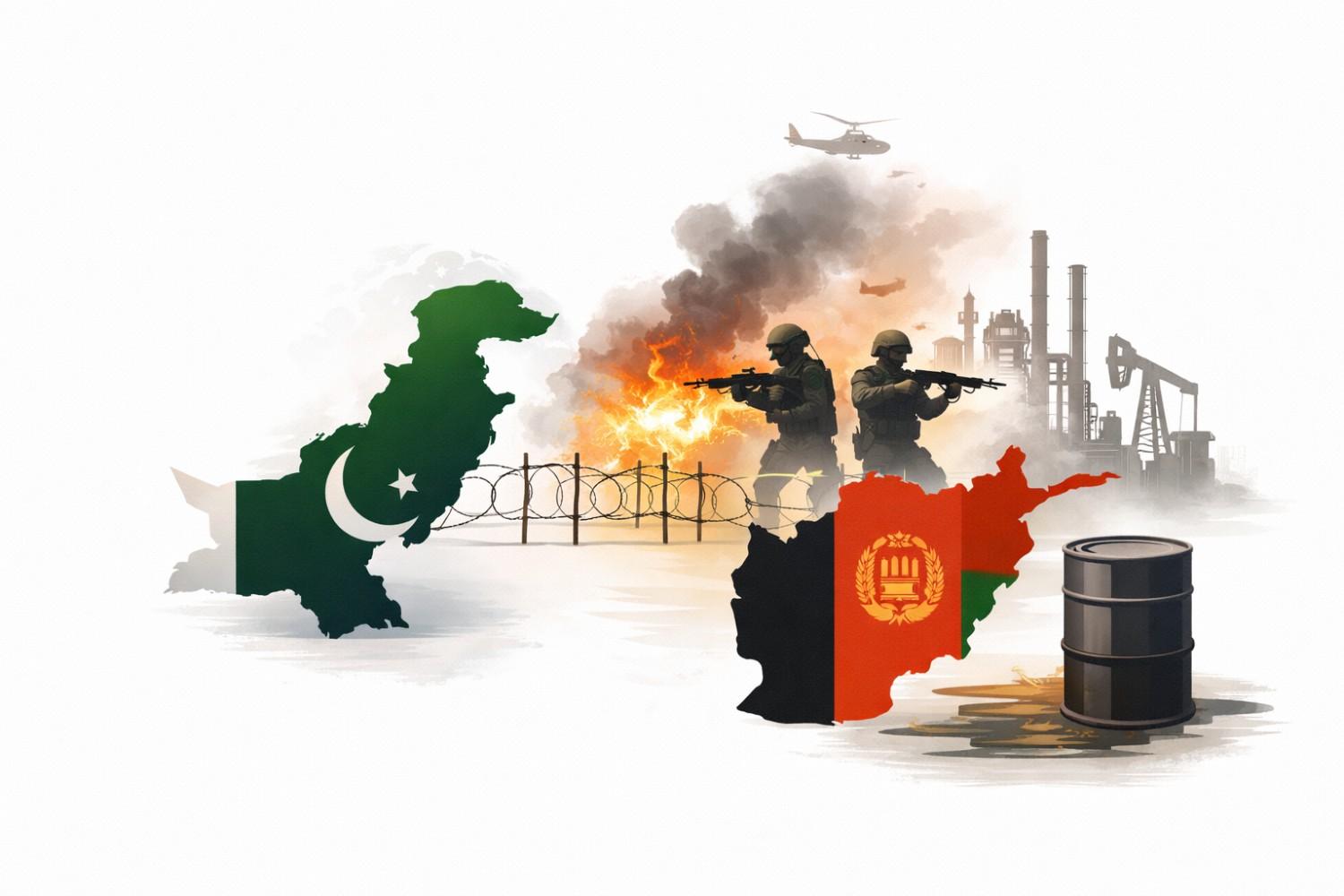
Rising tensions between Pakistan and Afghanistan, along with fresh instability in parts of the Middle East, have become the biggest international stories this week. Security concerns, diplomatic strains, and economic risks are shaping global conversations.
For Indian readers, these developments matter for several reasons. Both Pakistan and Afghanistan are part of India’s extended neighbourhood. Instability in the Middle East directly affects India’s energy supplies, trade routes, and the safety of millions of Indian workers living in the region.
With geopolitical tensions rising across multiple regions at the same time, global markets and governments are watching closely.
Why Pakistan–Afghanistan Relations Are Under Strain
Pakistan and Afghanistan share a long and sensitive border. Over the years, cross-border security issues have led to repeated diplomatic friction.
Recent developments have once again increased tensions. Border security incidents and allegations of militant activity have added pressure on both governments.
Such tensions often result in tighter border controls, suspension of trade routes, and strong official statements.
The situation remains complex, with both sides calling for security measures while also emphasising the need for dialogue.
Border Security and Regional Stability
The Pakistan–Afghanistan border region has long been a sensitive area. Security operations in the region often attract global attention due to concerns about militancy and cross-border movement.
When tensions rise, trade and civilian movement across the border can be affected.
Any disruption in this region can have wider implications for South Asian stability.
Neighbouring countries, including India, monitor the situation carefully because regional instability can affect broader security calculations.
Diplomatic Signals and International Reactions
Diplomatic exchanges between Pakistan and Afghanistan are closely watched by global powers.
International organisations and regional partners typically urge both countries to resolve disputes through dialogue.
Stability in Afghanistan remains a priority for many countries due to its strategic location.
Pakistan’s security situation also holds importance for regional and global geopolitics.
The current phase of tension has once again brought focus on peace efforts in the region.
Middle East Concerns Add to Global Anxiety
At the same time, fresh concerns in parts of the Middle East are adding to global uncertainty.
The region is critical for global energy supplies. Any instability can quickly impact oil prices and financial markets.
Several Middle Eastern countries are facing political, military, or economic challenges.
Global investors react strongly to developments in the region because of its role in oil production and international trade routes.
When Middle East tensions rise, crude oil prices often become volatile. For energy-importing nations like India, this has direct economic consequences.
Impact on Oil Prices and Indian Economy
India imports a large share of its crude oil from Middle Eastern countries.
If oil prices rise sharply due to regional instability, it can affect fuel costs, inflation levels, and the trade deficit.
Energy prices influence transportation, manufacturing, and consumer goods pricing.
Indian policymakers monitor Middle East developments carefully to manage economic risks.
Any prolonged instability in oil-producing nations can increase financial pressure on importing countries.
Indian Diaspora and Safety Concerns
Millions of Indians live and work in Middle Eastern countries.
Whenever tensions rise in the region, safety concerns for overseas workers increase.
The Government of India closely tracks developments and maintains contact with embassies and local authorities.
In past crises, India has organised evacuation efforts when required.
The safety of Indian nationals abroad remains a top priority during periods of regional instability.
Global Markets React to Geopolitical Risk
Financial markets respond quickly to geopolitical tensions.
Stock markets may become volatile when uncertainty rises.
Investors often move funds toward safer assets during such periods.
Currency markets can also react sharply to global risk factors.
Indian markets are not isolated from global trends. Developments in South Asia and the Middle East can influence investor sentiment in India.
Strategic Importance of the Middle East
The Middle East is strategically important not only for oil but also for global shipping routes.
Key maritime passages in the region are vital for international trade.
Any disruption in shipping lanes can affect supply chains worldwide.
India’s trade ties with Middle Eastern countries are strong, covering energy, infrastructure, and technology sectors.
Maintaining stability in the region benefits global economic growth.
Security Cooperation and Counter-Terror Efforts
Security concerns in Pakistan and Afghanistan often connect to wider counter-terror efforts.
Regional cooperation is critical in addressing cross-border threats.
International agencies frequently call for coordinated security strategies.
Tensions between neighbouring countries can complicate these efforts.
Long-term peace depends on sustained diplomatic engagement and trust-building measures.
Why This Matters for India
India shares historical, cultural, and economic ties with both regions.
Instability in Pakistan and Afghanistan can affect regional security dynamics.
Tensions in the Middle East directly impact India’s energy security.
With India emerging as a major global economy, global geopolitical developments influence domestic economic planning.
For Indian businesses, global uncertainty can affect trade, investments, and market confidence.
Global Political Landscape and Shifting Alliances
Geopolitical tensions often reshape alliances and diplomatic partnerships.
Countries may adjust foreign policy positions in response to evolving security conditions.
International forums become platforms for dialogue and conflict management.
India continues to engage with multiple countries to promote regional stability.
Balanced diplomacy remains crucial in uncertain times.
Economic Ripple Effects
Beyond oil prices, geopolitical tensions can affect global trade flows.
Shipping costs may rise if security risks increase in key corridors.
Insurance premiums for cargo can also increase during unstable periods.
For export-driven sectors, global uncertainty can influence demand.
Indian policymakers track these indicators to ensure economic resilience.
Role of International Mediation
International mediation efforts often aim to reduce tensions between neighbouring countries.
Diplomatic talks, peace agreements, and confidence-building measures are part of long-term solutions.
While immediate tensions attract headlines, sustained engagement is required for lasting peace.
Global institutions emphasise dialogue and restraint during crises.
Media and Online Buzz
Social media platforms and global news channels are actively covering Pakistan–Afghanistan tensions and Middle East developments.
Search trends show rising interest in regional security updates.
Indian readers are seeking real-time information to understand potential economic and security impacts.
Accurate and verified reporting is essential during periods of high uncertainty.
What to Watch in the Coming Days
Key developments to monitor include official diplomatic statements, border security updates, and oil price movements.
Any escalation or de-escalation can quickly shift global sentiment.
Investors will track market reactions closely.
Governments are likely to continue diplomatic engagement to prevent wider instability.
Key Takeaways
Tensions between Pakistan and Afghanistan have raised fresh regional security concerns.
Instability in parts of the Middle East is adding to global economic uncertainty.
Oil prices remain a major factor affecting India’s economy.
The safety of Indian nationals abroad remains a priority.
Global markets are reacting cautiously to geopolitical risks.
As global tensions dominate headlines, Indian readers and policymakers are watching developments closely. Regional stability in South Asia and the Middle East remains critical for economic security and long-term peace.
Disclaimer: The information presented in this article is intended for general informational purposes only. While every effort is made to ensure accuracy, completeness, and timeliness, data such as prices, market figures, government notifications, weather updates, holiday announcements, and public advisories are subject to change and may vary based on location and official revisions. Readers are strongly encouraged to verify details from relevant official sources before making financial, investment, career, travel, or personal decisions. This publication does not provide financial, investment, legal, or professional advice and shall not be held liable for any losses, damages, or actions taken in reliance on the information provided.
Last Updated on: Monday, February 23, 2026 10:33 am by Digital Herald Team | Published by: Digital Herald Team on Monday, February 23, 2026 10:33 am | News Categories: General