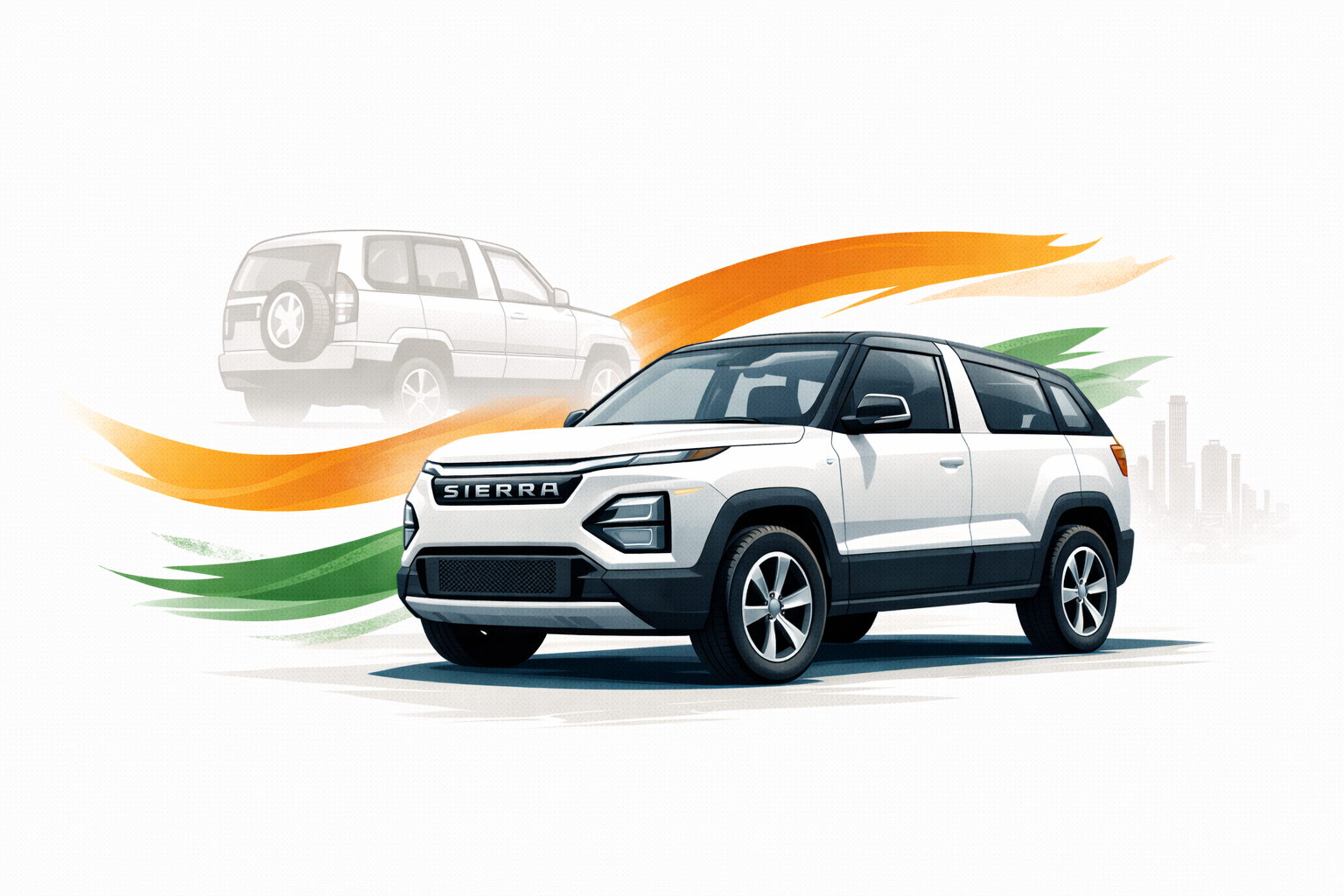
The revival of the iconic Tata Sierra has reignited interest among India’s classic SUV lovers. With strong nostalgia attached to the original model, the return of the Sierra is being seen as one of the most talked-about developments in the Indian auto industry.
The SUV, which first appeared in the early 1990s, was among the earliest lifestyle SUVs in India. Now, decades later, its comeback reflects changing consumer preferences and the rising demand for retro-inspired vehicles with modern technology.
As Indian buyers increasingly prefer SUVs, the reintroduction of a legendary nameplate like the Tata Sierra has triggered excitement across social media and automobile forums.
The Legacy of the Original Tata Sierra
The original Tata Sierra was launched in 1991 and quickly became a unique presence on Indian roads. It stood out because of its large rear glass windows and bold design.
At a time when SUV choices were limited, the Sierra offered a mix of rugged build and urban appeal.
Although production eventually stopped, the vehicle earned a loyal following.
Many enthusiasts still consider it one of India’s most distinctive SUV designs.
The revival taps directly into this nostalgia.
Why the Sierra Revival Matters Now
India’s SUV market has grown rapidly in recent years. SUVs now account for a major share of passenger vehicle sales.
Buyers are increasingly drawn to strong road presence, higher ground clearance, and modern safety features.
Automakers are also reintroducing older, popular models with updated technology.
The Tata Sierra fits this trend perfectly.
Its comeback signals that heritage branding can be a powerful tool in a competitive market.
Modern Design with Retro Inspiration
The new Sierra is expected to blend classic styling cues with contemporary design.
Concept previews have showcased a modern silhouette inspired by the original’s shape.
The signature large glass area remains a visual highlight.
However, the updated version reflects current design language seen in other Tata SUVs.
Sharp LED lighting, improved aerodynamics, and premium interiors are likely to define the final production model.
Electric and ICE Possibilities
One of the most significant aspects of the Sierra revival is its expected powertrain options.
Industry observers anticipate both electric and internal combustion engine variants.
Tata Motors has been expanding its electric vehicle lineup in India.
An electric Sierra would align with the company’s broader EV strategy.
At the same time, a petrol or diesel option could appeal to traditional SUV buyers.
The flexibility of platform design makes this dual strategy possible.
SUV Segment Competition in India
The Indian SUV market is highly competitive.
Compact, mid-size, and premium SUVs dominate showroom floors.
The Sierra will likely compete in the mid-size SUV category.
This segment attracts buyers looking for space, features, and brand value.
Strong competition means the Sierra must offer competitive pricing and features.
However, its heritage factor could provide an emotional advantage.
Technology and Safety Expectations
Modern Indian buyers prioritise safety and connectivity.
Advanced driver assistance systems, multiple airbags, and strong crash ratings are now key purchase factors.
Tata vehicles have built a reputation for solid safety performance in recent years.
The Sierra revival will likely follow this path.
Infotainment systems with large touchscreens, smartphone connectivity, and digital instrument clusters are expected features.
Comfort features such as panoramic sunroofs and climate control may also be included.
Growing Demand for Retro Models
Globally, automotive brands have successfully revived classic models.
Retro-inspired vehicles often combine nostalgia with modern convenience.
Indian consumers, especially urban buyers, are increasingly drawn to heritage branding.
The Sierra revival reflects this wider trend.
Classic SUV enthusiasts see it as more than just a new launch.
For many, it represents a connection to India’s automotive history.
Social Media and Online Buzz
The announcement and concept previews of the Tata Sierra have generated strong online engagement.
Auto enthusiasts have shared images and design comparisons between old and new versions.
Discussion forums highlight curiosity about pricing, features, and launch timeline.
Search trends show increased interest in keywords such as “Tata Sierra 2026,” “Tata Sierra electric,” and “Tata Sierra price.”
Digital excitement often influences early bookings and brand visibility.
Potential Pricing and Market Positioning
While official pricing details are yet to be confirmed, market analysts suggest the Sierra may be positioned in the mid-range SUV category.
This segment typically attracts urban professionals and families.
Competitive pricing will be crucial.
Premium design and technology features could justify a slightly higher price bracket.
However, affordability remains key in India’s price-sensitive market.
Buyers will compare it closely with established models in the same segment.
Impact on Tata’s Brand Image
For Tata Motors, the Sierra revival strengthens its brand storytelling.
Reviving a classic nameplate demonstrates confidence in heritage.
It also helps bridge older customers and new-age buyers.
Tata’s recent SUV launches have improved its market standing.
Adding the Sierra to the lineup could further strengthen its SUV portfolio.
A successful launch may reinforce Tata’s leadership in both conventional and electric segments.
Changing Consumer Preferences
Indian consumers are increasingly choosing SUVs over sedans and hatchbacks.
Higher seating position and perceived safety contribute to this shift.
Urban infrastructure improvements and highway expansion have also boosted SUV demand.
At the same time, environmental awareness is growing.
If the Sierra includes an electric variant, it may attract eco-conscious buyers.
Balancing performance, sustainability, and affordability will be critical.
Launch Timeline and Industry Expectations
Although a specific launch date has not been confirmed, industry reports suggest a possible introduction in the coming model years.
Concept displays at auto expos have kept the buzz alive.
Automobile enthusiasts are closely watching updates from Tata Motors.
Pre-launch teasers and test sightings may further increase anticipation.
The official launch announcement will likely generate strong media coverage.
Why This Revival Matters for Indian Auto Market
The return of the Tata Sierra is not just about nostalgia.
It reflects the evolution of India’s automotive landscape.
Consumers now demand global standards in design, technology, and safety.
Reviving iconic models shows how Indian brands are adapting to modern expectations while respecting legacy.
The Sierra revival symbolises both progress and heritage.
It represents how Indian automakers are blending past and future.
Key Takeaways
The Tata Sierra revival has sparked strong interest among classic SUV enthusiasts.
The original model, launched in 1991, holds nostalgic value.
The new version is expected to combine retro design with modern technology.
Electric and traditional engine options may be offered.
The SUV will likely compete in India’s growing mid-size segment.
As the Indian SUV market continues to expand, the reintroduction of the Tata Sierra stands out as one of the most anticipated developments. For classic car lovers and modern buyers alike, the Sierra revival brings together heritage appeal and contemporary innovation, making it a story that resonates across generations.
Disclaimer: The information presented in this article is intended for general informational purposes only. While every effort is made to ensure accuracy, completeness, and timeliness, data such as prices, market figures, government notifications, weather updates, holiday announcements, and public advisories are subject to change and may vary based on location and official revisions. Readers are strongly encouraged to verify details from relevant official sources before making financial, investment, career, travel, or personal decisions. This publication does not provide financial, investment, legal, or professional advice and shall not be held liable for any losses, damages, or actions taken in reliance on the information provided.
Last Updated on: Monday, February 23, 2026 11:02 am by Digital Herald Team | Published by: Digital Herald Team on Monday, February 23, 2026 11:02 am | News Categories: Automobile