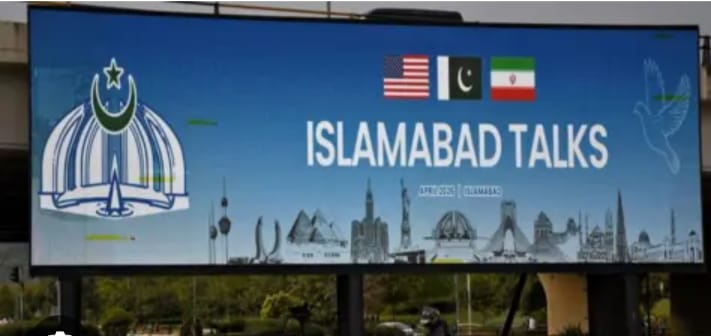
Delegations led by JD Vance and Mohammad Bagher Ghalibaf meet in Pakistan as world monitors outcome of high-stakes negotiations.
High-level talks between the United States and Iran commenced on April 11 in Islamabad, Pakistan, aimed at negotiating a long-term ceasefire following weeks of escalating conflict in West Asia. The discussions are being held at the Serena Hotel, with Pakistan acting as a mediator amid mounting global concern over the crisis.
Key Developments
The US delegation is led by Vice President JD Vance, accompanied by Special Envoy Steve Witkoff and adviser Jared Kushner. The Iranian side is headed by Parliamentary Speaker Mohammad Bagher Ghalibaf, with Foreign Minister Abbas Araghchi also participating. These talks follow a temporary two-week truce announced earlier this month, with Pakistan facilitating negotiations as a neutral intermediary.
Background to the Conflict
The current crisis escalated after a joint US–Israel strike on February 28 targeting Iranian nuclear and military infrastructure. The attack marked a significant turning point in regional tensions, prompting retaliatory strikes by Iran on Israel and Gulf states hosting US military bases.
The situation intensified further when Iran reportedly took control of the Strait of Hormuz, a critical global oil transit route. This disrupted energy supplies worldwide and triggered volatility in global oil and gas markets. Efforts by the United States to involve NATO allies did not materialise, keeping the conflict largely limited to regional actors.
Official Positions
US President Donald Trump has warned that failure to reach an agreement could result in renewed military action. Washington’s priorities include restoring access through the Strait of Hormuz and addressing concerns over Iran’s nuclear programme.
Iran, meanwhile, has outlined its conditions for a lasting agreement, including easing economic sanctions, unfreezing Iranian assets, and broader de-escalation steps in the region, such as a ceasefire in Lebanon.
Why This Matters
The outcome of these talks carries significant global implications. The Strait of Hormuz handles a substantial share of the world’s oil shipments, meaning any disruption can affect fuel prices and supply chains globally. A prolonged conflict also risks drawing in additional countries, raising concerns about a wider regional war. Economic uncertainty linked to sanctions and instability has already impacted global markets and trade flows.
Public Impact
For ordinary citizens worldwide, the crisis has translated into rising fuel prices, economic uncertainty, and concerns over geopolitical instability. In directly affected regions, civilians continue to face heightened security risks and humanitarian challenges.
What Happens Next
Negotiations are expected to continue over the coming days, with both sides under pressure to reach a sustainable agreement. While the current truce offers an opportunity for dialogue, key differences remain unresolved, and the outcome of the Islamabad talks will be crucial in determining whether tensions ease or escalate further.
Input & Images: Hindusthan Samachar
Edited by Manten Sasank
Add Digital Herald as preferred source on google – click here
Also read – Israeli Airstrikes Kill Over 180 in Lebanon, Raising Concerns Over Fragile US-Iran Ceasefire
Last Updated on: Saturday, April 11, 2026 6:10 pm by Mantena Sasank | Published by: Mantena Sasank on Saturday, April 11, 2026 6:10 pm | News Categories: News, Politics, Trending