CENTCOM says action will begin April 13, while Iran insists key shipping route will remain open for civilian traffic.
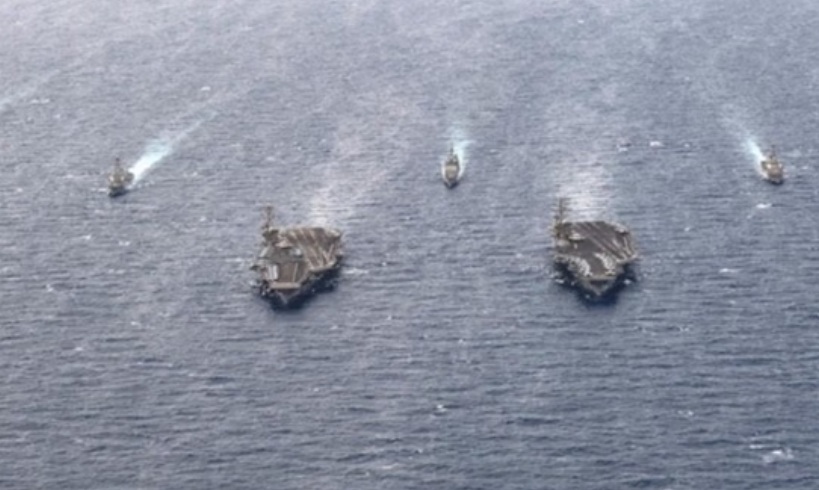
The United States is preparing to enforce a naval blockade on Iranian ports beginning April 13, escalating tensions in the Gulf region amid an ongoing ceasefire. The move was announced by the United States Central Command (CENTCOM), which said the operation would start at 10:00 a.m. Eastern Time under orders from President Donald Trump.
The blockade will target maritime traffic entering and exiting Iranian ports along the Arabian Gulf and the Gulf of Oman. However, US officials clarified that vessels transiting through the strategically critical Strait of Hormuz to non-Iranian destinations will not be obstructed.
Key Announcements / Highlights
CENTCOM stated that the blockade will apply to ships of all nationalities attempting to access Iranian ports. The command said it will issue advance notices to commercial vessels and advised mariners to maintain communication with US Navy forces, particularly in the Gulf of Oman and the Strait of Hormuz.
The Strait of Hormuz is one of the world’s most vital oil transit routes, carrying a significant share of global energy supplies. Any disruption in this corridor can have immediate effects on international markets.
Official Statement
In response, Iran’s Islamic Revolutionary Guard Corps (IRGC) said the Strait of Hormuz would remain open to civilian shipping. It emphasised that commercial vessels complying with international maritime regulations would be allowed safe passage.
However, the IRGC warned that any foreign military vessel entering the strait would be considered a violation of the ceasefire and could face “strict action,” signalling the potential for confrontation despite the ongoing truce.
Context / Background
The latest development comes amid heightened tensions following recent military exchanges between the United States, its allies, and Iran. The Strait of Hormuz has historically been a flashpoint during regional conflicts due to its strategic importance for global oil transport.
While Washington has framed the blockade as a targeted measure against Iranian maritime activity, it has sought to reassure global markets by maintaining open navigation routes for international shipping.
Meanwhile, claims by President Donald Trump that allied nations, including the United Kingdom, would support operations in the region have been partially disputed. British officials indicated they are not participating in any US-led blockade but support broader efforts to ensure freedom of navigation.
Public Impact
The situation has significant implications for global energy security and trade. Any escalation around the Strait of Hormuz could disrupt oil shipments, leading to price volatility and supply concerns worldwide.
For shipping companies and insurers, increased military presence in the region raises operational risks and costs. Governments are also closely monitoring the situation due to its potential impact on economic stability.
Conclusion
With the blockade set to take effect, attention is now focused on how Iran and the United States will manage tensions in the coming days. While both sides have signalled limits—such as keeping civilian shipping routes open—the risk of escalation remains high if military forces come into direct confrontation.
The unfolding situation is expected to test the durability of the current ceasefire and could shape the next phase of geopolitical developments in the region.
Input & Images: Hindusthan Samachar
Edited by Manten Sasank
Add Digital Herald as preferred source on google – click here
Also read – Batala Police Bust Cross-Border Smuggling Racket, Seize Heroin Worth ₹33 Crore
Last Updated on: Sunday, April 12, 2026 2:50 am by Mantena Sasank | Published by: Mantena Sasank on Sunday, April 12, 2026 2:50 am | News Categories: News, Politics