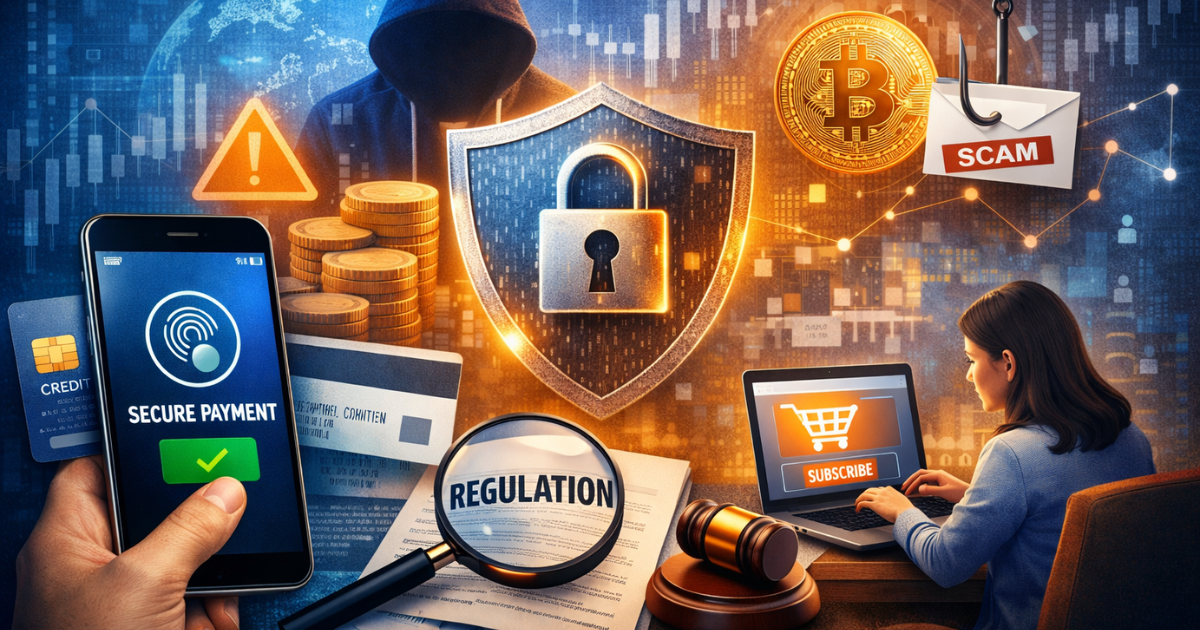
As digital payments and online commerce become central to everyday life, governments and regulators across the world are tightening rules to protect consumers from fraud, misuse of personal data, and unfair business practices. The updated guidelines for digital payments and online consumer protection mark a significant shift in how digital financial services are governed, with a stronger focus on transparency, accountability, and user safety.
Why Digital Payment Rules Are Being Updated
Over the past decade, mobile wallets, online payment apps, e-commerce platforms, and subscription-based digital services have grown at an unprecedented pace. While these technologies have improved convenience and financial inclusion, they have also exposed consumers to new risks, including phishing scams, unauthorised transactions, misleading pricing, and weak grievance redress mechanisms. Regulators now acknowledge that older legal frameworks are no longer adequate for a digital-first economy, prompting comprehensive updates to existing rules.
Focus on Stronger Security and Authentication
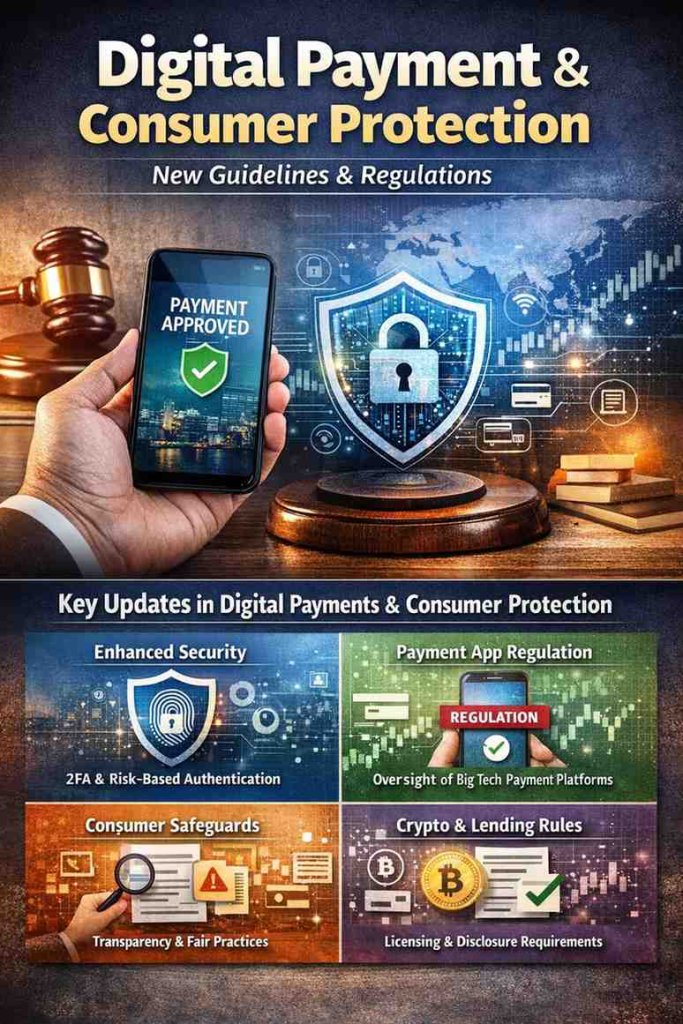
In India, the Reserve Bank of India has been at the forefront of strengthening the digital payments ecosystem. Recent regulatory updates place greater emphasis on transaction security, particularly as real-time payment systems such as UPI continue to expand rapidly. The new guidelines reinforce the use of stronger authentication mechanisms for online transactions, moving beyond reliance on single-factor verification. Banks and payment service providers are required to implement dynamic, transaction-specific authentication methods to reduce the risk of fraud and unauthorised access.
Risk-Based Approach to Prevent Digital Fraud
The updated framework also introduces a more risk-based approach to digital payments. Financial institutions are expected to assess transaction behaviour, device patterns, and user history to determine the level of security required for each payment. This adaptive model aims to strike a balance between user convenience and fraud prevention, ensuring that high-risk transactions receive additional scrutiny without disrupting routine payments.
Tighter Oversight of Payment Aggregators and Gateways
Payment aggregators and gateways, which act as intermediaries between merchants and consumers, are facing tighter oversight under the revised rules. Regulators have mandated clearer refund policies, time-bound dispute resolution processes, and stricter data protection standards. These entities must now demonstrate financial stability and maintain robust cybersecurity systems, reflecting their growing role in handling large volumes of consumer funds.
Expansion of Online Consumer Protection Measures
Beyond payments, the scope of online consumer protection has expanded to address broader digital market practices. Governments are increasingly concerned about opaque subscription models, hidden charges, and misleading online reviews that influence consumer decisions. Updated consumer protection rules require platforms to clearly disclose pricing, renewal terms, and cancellation options, ensuring that users are not locked into services without informed consent.
Global Push to Regulate Digital Financial Services
Internationally, similar regulatory trends are taking shape. In the United States, federal authorities have moved to bring major digital payment apps under formal supervision, subjecting them to standards traditionally applied to banks. These measures focus on safeguarding consumer data, preventing discriminatory account practices, and strengthening complaint handling systems. In Europe, new regulations governing crypto assets and digital marketplaces aim to protect consumers while providing legal clarity to emerging financial technologies.
Addressing Risks From Digital Lending and Crypto Platforms
The rise of digital lending apps and crypto-based services has further accelerated regulatory action. Authorities are seeking to curb misleading advertising, excessive risk-taking, and unregulated platforms that may expose users to financial losses. Updated guidelines increasingly require service providers to obtain licences, disclose risks transparently, and adhere to strict consumer grievance norms.
What the New Rules Mean for Consumers
For consumers, the updated guidelines translate into stronger rights and clearer remedies. Users are encouraged to remain vigilant, update payment apps regularly, and familiarise themselves with grievance redress mechanisms provided by banks, payment platforms, and regulators. Early reporting of suspicious activity remains critical in preventing financial losses.
The Road Ahead for Digital Payments Regulation
As digital transactions continue to grow in scale and complexity, experts believe that regulation will remain a dynamic process. Future updates are expected to address emerging risks linked to artificial intelligence, automated decision-making, and cross-border digital payments. The overarching objective, however, remains consistent: to create a digital payments ecosystem that is secure, transparent, and fair, while preserving innovation and consumer trust.
The updated guidelines for digital payments and online consumer protection represent a decisive step in that direction, signalling a shift from rapid adoption to responsible governance in the digital economy.
Also read : https://newsestate.in/how-recent-policy-decisions-could-influence-indias-economic-growth-outlook/
Add digitalherald.in as a preferred source on google – click here
Last Updated on: Friday, January 23, 2026 12:26 pm by Digital Herald Team | Published by: Digital Herald Team on Friday, January 23, 2026 12:26 pm | News Categories: News