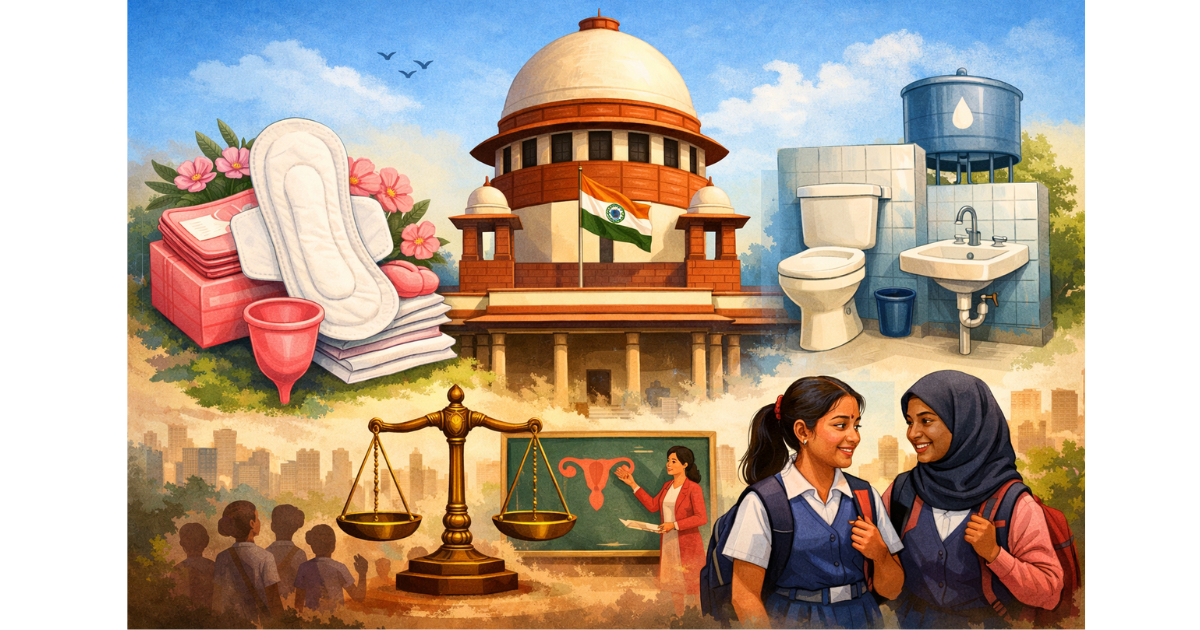
In a judgment that marks a turning point in India’s public health and gender equality discourse, the Supreme Court has firmly recognised menstrual hygiene as an intrinsic part of the fundamental right to life and dignity under Article 21 of the Constitution. The ruling goes beyond symbolism. It places menstruation, long treated as a private or social issue, squarely within the realm of enforceable constitutional rights, compelling the State to act with urgency and accountability.
By acknowledging that safe and dignified menstrual hygiene is essential to physical health, mental well-being and equal participation in education and work, the court has reframed a deeply gendered issue as a matter of constitutional obligation rather than charity or welfare.
How the Case Reached the Supreme Court
The judgment arose from petitions highlighting the persistent lack of access to affordable sanitary products, clean toilets, privacy and disposal facilities for menstruating persons, particularly in government schools, rural areas, prisons and shelters. Petitioners argued that these gaps were directly responsible for school dropouts, health complications and social exclusion, especially among adolescent girls and women from economically weaker sections.
After examining extensive data, expert submissions and international human rights standards, the court concluded that the absence of adequate menstrual hygiene infrastructure violates the rights to dignity, health, education and equality.
Menstrual Hygiene Within the Scope of Article 21
The Supreme Court’s reasoning rests on the expansive interpretation of Article 21, which guarantees not merely survival but a life of dignity. The court observed that menstruation is a natural biological process and that forcing individuals to manage it in unhygienic, unsafe or humiliating conditions strips them of dignity and bodily autonomy.
The judgment makes it clear that menstrual hygiene is inseparable from the right to health. Poor menstrual practices, the court noted, can lead to infections, reproductive health issues and long-term complications, placing an unfair burden on individuals simply because of systemic neglect.
Education, Equality and the Hidden Cost of Silence
A key focus of the ruling is the impact of inadequate menstrual hygiene on education. The court acknowledged evidence showing that lack of toilets, sanitary products and privacy causes millions of girls to miss school regularly or drop out altogether. This, it held, amounts to indirect discrimination and violates the right to education and equality under Articles 14 and 15.
By connecting menstrual hygiene to educational access, the court has underlined that gender equality cannot be achieved without addressing everyday realities that disproportionately affect menstruating students.
Clear Directions to Governments and Institutions
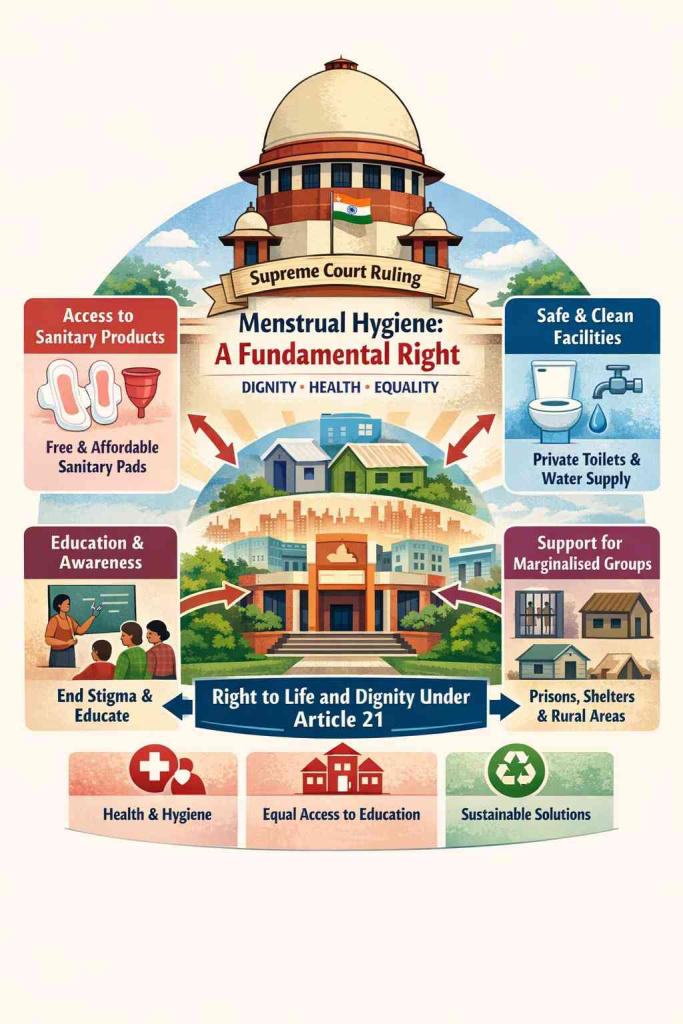
The judgment does not stop at declaring rights. It lays down concrete responsibilities for the Union and state governments. Authorities have been directed to ensure the availability of free or affordable sanitary products in government schools, colleges and public institutions. The court has also emphasised the need for functional, clean and private toilets with water facilities, along with safe and environmentally responsible mechanisms for disposal.
Special attention has been directed toward marginalised spaces such as prisons, juvenile homes, shelters and refugee camps, where menstruating persons are often entirely dependent on the State for basic necessities.
Breaking Taboos Through Awareness and Training
Recognising that infrastructure alone cannot solve the problem, the Supreme Court has called for sustained awareness campaigns to dismantle stigma and misinformation surrounding menstruation. The judgment highlights the role of teachers, healthcare workers and local administrators in creating safe, informed and non-discriminatory environments.
The court stressed that menstrual education should be framed in scientific and rights-based terms, ensuring that menstruation is normalised rather than hidden or shamed.
Environmental Responsibility and Sustainable Solutions
In a forward-looking move, the ruling also touches upon the environmental impact of menstrual waste. The court encouraged governments to promote sustainable and biodegradable menstrual products and to invest in safe disposal technologies that do not harm the environment or sanitation workers.
This approach balances public health needs with ecological responsibility, signalling a holistic understanding of the issue.
Why This Judgment Matters Beyond the Courtroom
The Supreme Court’s recognition of menstrual hygiene as a fundamental right elevates the issue from policy discretion to constitutional mandate. It empowers citizens to demand accountability and gives civil society a strong legal foundation to monitor implementation.
More importantly, the ruling sends a powerful message that dignity is not negotiable and that biological realities cannot be grounds for exclusion or disadvantage. It challenges long-standing silence around menstruation and places the responsibility for change squarely on institutions, not individuals.
A Step Toward Dignity for All
While the true impact of the judgment will depend on how effectively it is implemented on the ground, its significance is undeniable. By affirming menstrual hygiene as a fundamental right, the Supreme Court has taken a decisive step toward a more inclusive, equitable and humane understanding of public health and gender justice.
The ruling stands as a reminder that constitutional values are not abstract ideals but living principles meant to shape everyday life, ensuring that dignity, health and equality are realities for all.
Add digitalherald.in as a preferred source on google – click here
Last Updated on: Wednesday, February 4, 2026 6:11 pm by Digital Herald Team | Published by: Digital Herald Team on Wednesday, February 4, 2026 11:31 am | News Categories: News