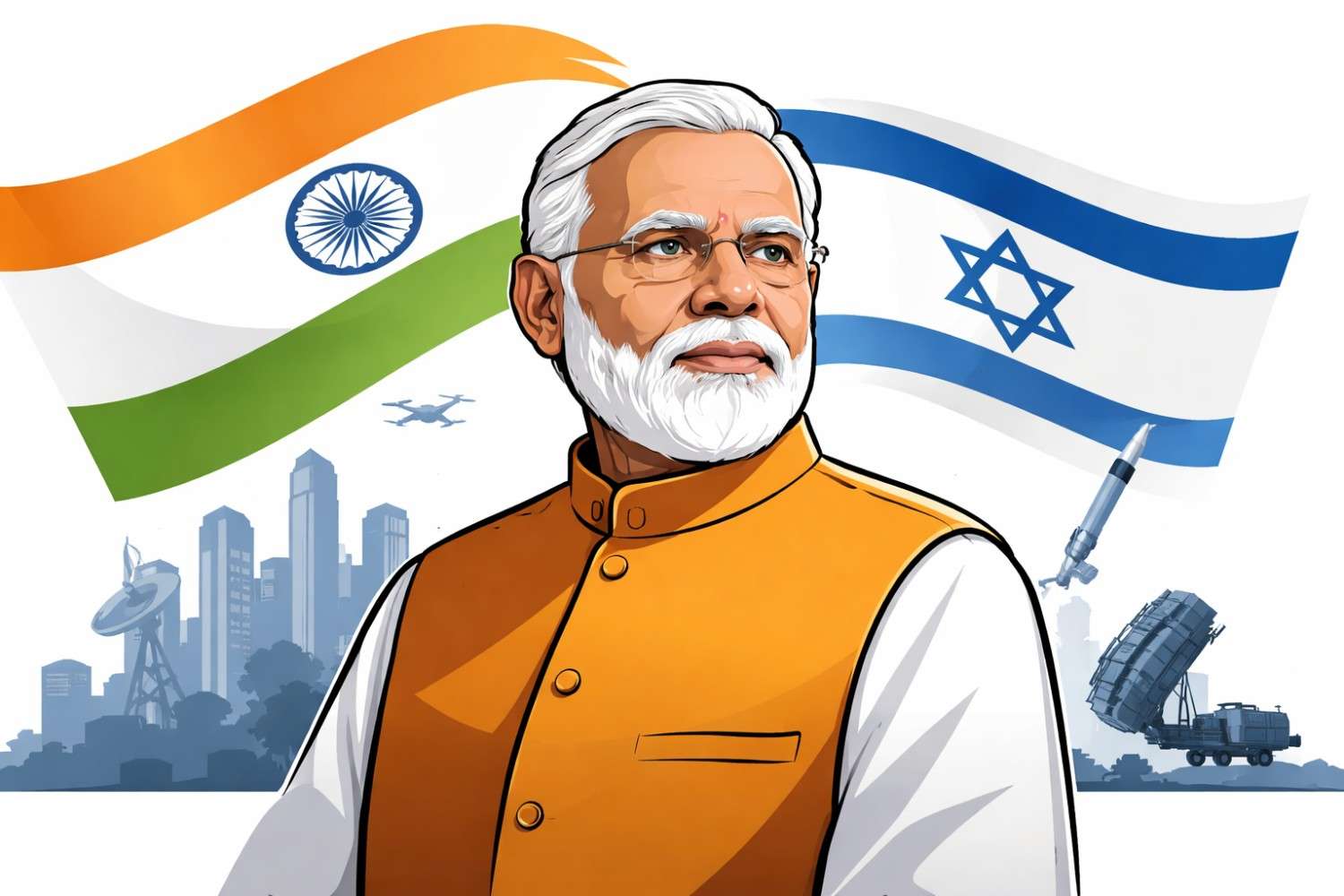
Prime Minister Narendra Modi has concluded a key strategic visit to Israel, reinforcing India’s growing partnership with the West Asian nation in technology, defence, agriculture, and innovation. The visit comes at a time when global geopolitics is shifting and countries are focusing more on technology-led growth and strategic cooperation.
For India, the visit is significant. Israel is one of India’s most trusted partners in defence and advanced technology. At the same time, India is emerging as a major innovation and digital economy hub. The renewed push in bilateral ties signals deeper collaboration in areas that directly impact India’s economic growth and national security.
Why PM Modi’s Israel Visit Matters Now
India and Israel established full diplomatic relations in 1992. Since then, ties have expanded rapidly across multiple sectors. In recent years, technology and defence cooperation have become central pillars of the relationship.
Israel is among India’s top defence suppliers. It is also a global leader in cybersecurity, water management, precision agriculture, and startup innovation. As India pushes for self-reliance under the “Make in India” and “Digital India” missions, Israeli expertise plays a key role.
PM Modi’s visit underlines three main goals:
- Strengthening defence and strategic cooperation
- Expanding technology and innovation partnerships
- Boosting trade and investment ties
The visit also reflects India’s balanced foreign policy approach in West Asia.
High-Level Engagement Between India and Israel
During the visit, PM Modi held talks with Israeli Prime Minister Benjamin Netanyahu. The discussions focused on strengthening bilateral cooperation in key sectors.
India and Israel have maintained close engagement at the leadership level over the past decade. PM Modi’s historic visit to Israel in 2017 was the first by an Indian Prime Minister. Since then, both nations have deepened collaboration across defence, agriculture, water technology, and innovation.
The latest visit builds on that foundation and signals continuity in strategic ties.
Defence Cooperation Remains a Core Pillar
Defence remains one of the strongest areas of India–Israel cooperation. Israel has supplied advanced defence systems, including missile defence and surveillance technology, to India over the years.
Both sides reviewed ongoing defence projects and explored ways to enhance joint production and technology sharing. India is keen to increase domestic manufacturing of defence equipment, and Israeli firms have shown interest in partnering with Indian companies.
The focus is now shifting from buyer-seller relationships to joint development and co-production.
This aligns with India’s long-term strategy of reducing import dependence while upgrading its military capabilities.
Technology Diplomacy Takes Centre Stage
One of the most important aspects of the visit was the focus on technology diplomacy.
Israel is known globally as the “Startup Nation.” It has one of the highest startup densities in the world. Its strengths lie in:
- Artificial Intelligence (AI)
- Cybersecurity
- Agritech
- Water technology
- Defence tech
India, with its large talent base and growing digital ecosystem, offers scale and market opportunities.
During the visit, discussions were held on expanding collaboration between startups, research institutions, and technology companies. Both sides are looking to create stronger links between innovation ecosystems.
India’s push for semiconductor manufacturing, advanced electronics, and cybersecurity also opens new areas of cooperation.
Agriculture and Water: Practical Cooperation That Impacts Farmers
Agriculture cooperation between India and Israel has been a success story over the past decade.
Under joint programmes, several Centres of Excellence have been established across Indian states. These centres focus on:
- Drip irrigation
- High-yield crop varieties
- Protected cultivation techniques
Israel’s expertise in water management is especially relevant for India, where water stress is a major issue in many regions.
The visit reviewed ongoing agriculture projects and explored expansion into more states and districts. This has direct benefits for Indian farmers by improving productivity and resource efficiency.
Trade and Investment Outlook
Bilateral trade between India and Israel has grown significantly since 1992. The trade basket includes:
- Defence equipment
- Chemicals
- Diamonds
- Agricultural products
- Technology services
Both countries are working toward expanding economic ties beyond defence.
There has been long-standing discussion on a Free Trade Agreement (FTA). While negotiations have faced delays in the past, economic cooperation remains a priority.
Indian IT companies are increasingly active in Israel. At the same time, Israeli startups and venture funds are exploring opportunities in India’s expanding digital market.
The visit sent a strong signal to businesses on both sides that strategic and economic engagement will continue to grow.
Geopolitical Context: India’s Balanced West Asia Policy
India maintains strong relations with multiple countries in West Asia, including Israel and key Arab nations. Over the years, New Delhi has carefully balanced its diplomatic approach.
The Israel visit reflects India’s independent foreign policy stance. It highlights that India’s partnerships are driven by national interest, technology cooperation, and economic priorities.
In a region that has witnessed political tensions and security challenges, India’s approach focuses on stability and development partnerships.
Focus on Innovation and Youth Collaboration
Another important aspect of the visit was strengthening innovation and academic partnerships.
Both countries have active research collaboration programmes. Universities and research institutions work together in science and technology projects.
India’s startup ecosystem, now among the largest in the world, can benefit from Israel’s deep-tech expertise. At the same time, Israeli companies see India as a large, fast-growing market.
Youth innovation exchanges and academic cooperation are expected to expand further in the coming years.
India–Israel Relations: Key Milestones
- 1992: Full diplomatic relations established
- 2017: PM Modi becomes the first Indian Prime Minister to visit Israel
- Expansion of cooperation in defence, agriculture, water technology, and innovation
The latest visit adds another chapter to this growing partnership.
What This Means for India
For Indian readers, the impact of this visit goes beyond diplomatic symbolism.
Stronger ties with Israel can help India in:
- Accessing advanced defence technology
- Improving farm productivity
- Enhancing water management
- Boosting cybersecurity capabilities
- Strengthening startup and innovation networks
As India aims to become a $5 trillion economy, technology partnerships will play a critical role.
Israel, despite its small size, offers cutting-edge expertise in sectors that directly support India’s growth ambitions.
The Road Ahead
PM Modi’s visit to Israel reinforces a relationship that has matured over more than three decades.
The focus is clearly shifting toward deeper technology collaboration, joint manufacturing, and innovation-driven growth. Defence cooperation remains strong, but economic and startup engagement is gaining equal importance.
Both countries appear committed to long-term strategic cooperation built on trust and shared interests.
As global supply chains evolve and nations compete in advanced technologies, India–Israel ties are likely to expand further.
The visit signals that technology diplomacy is now central to India’s foreign policy. For India, partnerships that combine security, innovation, and economic growth will define the next phase of global engagement.
With this visit, India and Israel have reaffirmed that their strategic partnership is not only stable but also future-ready.
Disclaimer: The information presented in this article is intended for general informational purposes only. While every effort is made to ensure accuracy, completeness, and timeliness, data such as prices, market figures, government notifications, weather updates, holiday announcements, and public advisories are subject to change and may vary based on location and official revisions. Readers are strongly encouraged to verify details from relevant official sources before making financial, investment, career, travel, or personal decisions. This publication does not provide financial, investment, legal, or professional advice and shall not be held liable for any losses, damages, or actions taken in reliance on the information provided.
Edited by Mantena sasank
Last Updated on: Wednesday, February 25, 2026 10:29 am by Digital Herald Team | Published by: Digital Herald Team on Wednesday, February 25, 2026 10:29 am | News Categories: India