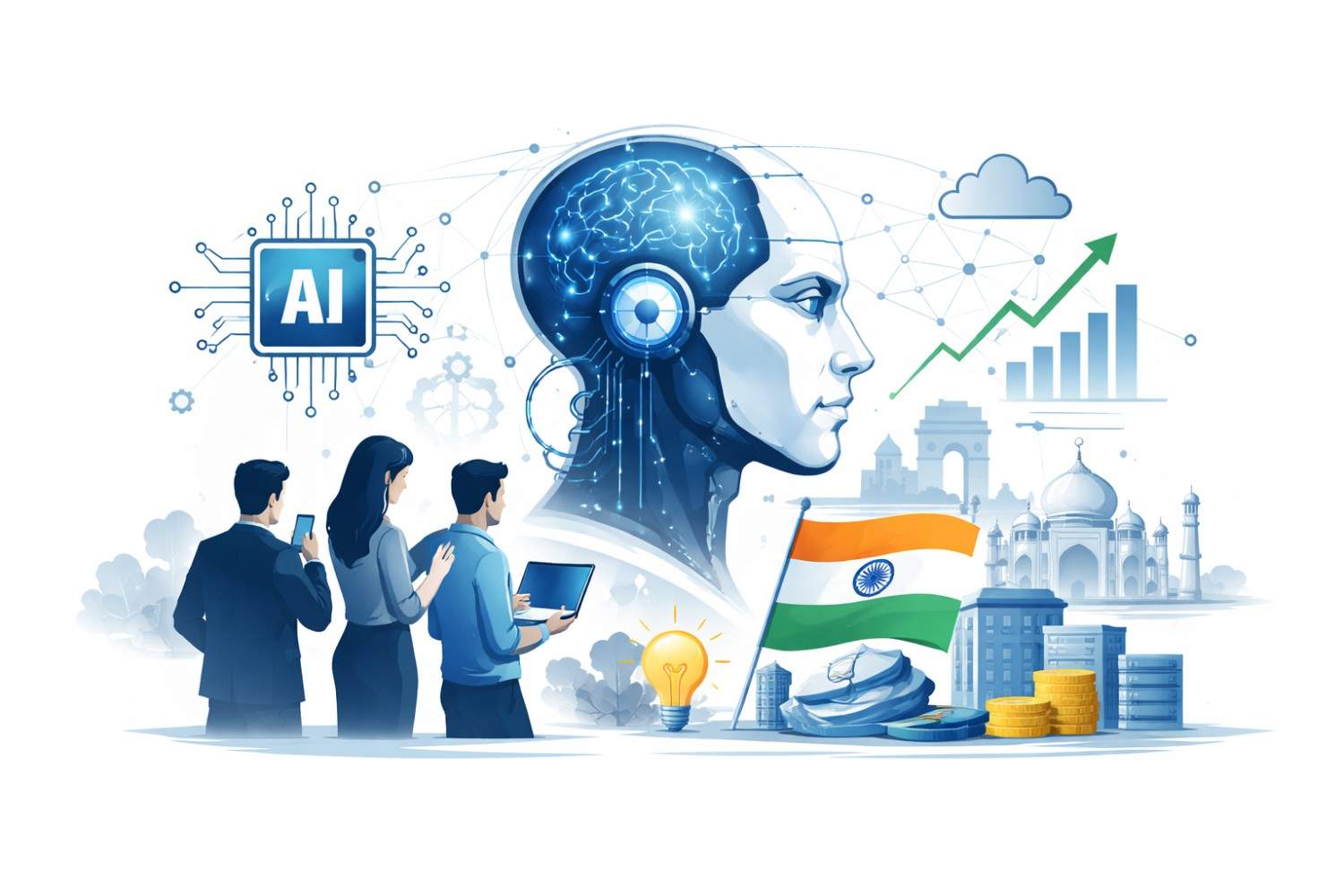
Why the India AI Impact Summit 2026 Matters Now
The India AI Impact Summit 2026 has placed artificial intelligence at the centre of India’s digital growth story. As the country pushes ahead with large-scale digital transformation, discussions at the summit focused on how AI can support governance, healthcare, education, agriculture, and startups.
India is already one of the fastest-growing digital economies in the world. With government-backed programmes such as Digital India, expanding public digital infrastructure, and strong startup activity, AI is no longer a future concept. It is becoming part of daily life.
The summit highlighted how new AI innovations could shape India’s economy in the coming years. For policymakers, businesses, and citizens, the developments discussed this week signal where the country’s digital future is heading.
India’s AI Push: Building on a Strong Digital Base
India’s AI strategy builds on existing digital systems. Over the past decade, the country has launched key platforms under the Digital India mission. Public infrastructure like Aadhaar, UPI, and other digital identity and payment systems have laid the foundation for AI-driven services.
Government bodies such as the Ministry of Electronics and Information Technology (MeitY) continue to play a central role in shaping AI policy and infrastructure. The summit discussions reflected ongoing efforts to build safe, scalable, and inclusive AI tools for Indian users.
Key Tech Innovations Highlighted at the Summit
1. AI for Governance and Public Services
One of the main focus areas was the use of AI in governance.
AI-powered systems are being explored to:
- Improve service delivery
- Detect fraud in welfare schemes
- Speed up document processing
- Support data-driven decision-making
With millions of citizens interacting with digital services every day, AI tools can help government departments manage data more efficiently. However, discussions also stressed the need for transparency and privacy safeguards.
India’s recently implemented Digital Personal Data Protection Act, 2023 remains central to how AI systems handle user information.
2. AI in Healthcare and Diagnostics
Healthcare was another major theme.
AI-based diagnostic tools are increasingly being tested to:
- Assist in early disease detection
- Analyse medical scans
- Support rural telemedicine networks
With a large population and uneven access to doctors, AI can help bridge gaps in healthcare delivery. Experts at the summit noted that AI must assist doctors, not replace them. Responsible use remains a key priority.
Government health platforms like Ayushman Bharat Digital Mission were cited as examples of how digital records can support smarter healthcare systems.
3. Education and Skill Development Through AI
Education technology is evolving quickly in India.
AI-driven tools are now being used for:
- Personalised learning
- Language translation
- Skill assessment
- Online tutoring support
With India’s diverse linguistic landscape, AI-based translation tools are helping make content accessible in multiple regional languages. This is important for improving digital access in rural and semi-urban areas.
The summit also focused on AI skill training. As automation grows, the need for reskilling and upskilling is increasing. Institutions are expanding AI-related courses to prepare students for emerging roles.
4. AI for Agriculture and Rural Development
Agriculture remains a large part of India’s economy.
AI solutions discussed at the summit included:
- Crop health monitoring
- Weather prediction models
- Yield estimation tools
- Smart irrigation systems
By using satellite data and machine learning, farmers can receive better advisory support. These tools aim to reduce crop losses and improve productivity.
The focus was on affordable and accessible AI solutions that can reach small farmers, not just large agribusinesses.
5. Growth of India’s AI Startup Ecosystem
India’s startup ecosystem continues to expand in the AI space.
Companies working in areas such as generative AI, fintech automation, cybersecurity, and language models are gaining investor interest. The summit highlighted collaboration between startups, large technology firms, and research institutions.
Public policy discussions also centred on how to ensure startups get access to computing infrastructure and datasets without compromising data security.
AI Regulation and Responsible Innovation
A major part of the India AI Impact Summit 2026 focused on responsible AI development.
India does not currently have a standalone AI law. Instead, regulatory discussions are guided by:
- The Digital Personal Data Protection Act, 2023
- IT rules under the Information Technology Act, 2000
- Sector-specific guidelines
Experts emphasised the need for:
- Clear accountability in AI decision-making
- Bias reduction in algorithms
- Transparency in automated systems
- Strong cybersecurity frameworks
The goal is to balance innovation with user safety.
What This Means for India’s Digital Economy
India’s digital economy is projected to grow steadily over the coming decade. AI is expected to contribute across sectors, including finance, logistics, retail, and public services.
Here is what the summit outcomes signal:
1. Faster Digital Services
AI can reduce processing time for government applications and banking services.
2. More Efficient Businesses
Automation tools can improve productivity in small and large enterprises.
3. New Job Roles
While some routine tasks may be automated, demand for AI engineers, data analysts, cybersecurity experts, and digital policy specialists is rising.
4. Greater Global Positioning
India aims to become a global AI development hub, supported by its large pool of technology talent.
Challenges That Remain
Despite strong progress, challenges remain.
Data Privacy Concerns
With more AI systems using large datasets, data protection remains critical. Compliance with existing laws will be closely monitored.
Infrastructure Gaps
Advanced AI requires high computing power and reliable internet connectivity. While urban centres are well connected, rural areas still face challenges.
Skill Gaps
India produces a large number of engineering graduates, but specialised AI research skills require continuous training and industry collaboration.
Public-Private Collaboration: The Way Forward
The summit reinforced the importance of collaboration between:
- Government bodies
- Private technology companies
- Academic institutions
- Startups
Public digital infrastructure has already shown success in areas like digital payments. Similar models may be used for AI infrastructure, including shared computing platforms and open innovation frameworks.
How AI Will Shape Everyday Life in India
For ordinary citizens, AI may not always be visible, but its impact will be felt in:
- Faster online services
- Smarter banking apps
- Improved healthcare access
- Personalised education tools
- More secure digital platforms
Over time, AI could become as common as digital payments are today.
Key Takeaways from the India AI Impact Summit 2026
- AI is now central to India’s digital growth strategy
- Public digital infrastructure supports AI expansion
- Responsible regulation remains a priority
- Startups and research institutions are playing a growing role
- Skill development is critical for long-term success
Conclusion: India’s AI Moment Has Begun
The discussions at the India AI Impact Summit 2026 show that artificial intelligence is no longer an experimental field in the country. It is becoming part of national development plans.
India’s approach focuses on scale, inclusion, and safety. With strong digital foundations and a large technology workforce, the country is positioning itself as a key player in the global AI landscape.
However, the real test will lie in implementation. Ensuring ethical use, protecting data, and making AI benefits accessible across urban and rural India will determine how strong the digital future truly becomes.
As India moves forward, AI will not only shape industries but also influence how citizens interact with technology every day.
Disclaimer: The information presented in this article is intended for general informational purposes only. While every effort is made to ensure accuracy, completeness, and timeliness, data such as prices, market figures, government notifications, weather updates, holiday announcements, and public advisories are subject to change and may vary based on location and official revisions. Readers are strongly encouraged to verify details from relevant official sources before making financial, investment, career, travel, or personal decisions. This publication does not provide financial, investment, legal, or professional advice and shall not be held liable for any losses, damages, or actions taken in reliance on the information provided.
Last Updated on: Tuesday, March 3, 2026 12:33 pm by Digital Herald Team | Published by: Digital Herald Team on Tuesday, March 3, 2026 12:33 pm | News Categories: Technology