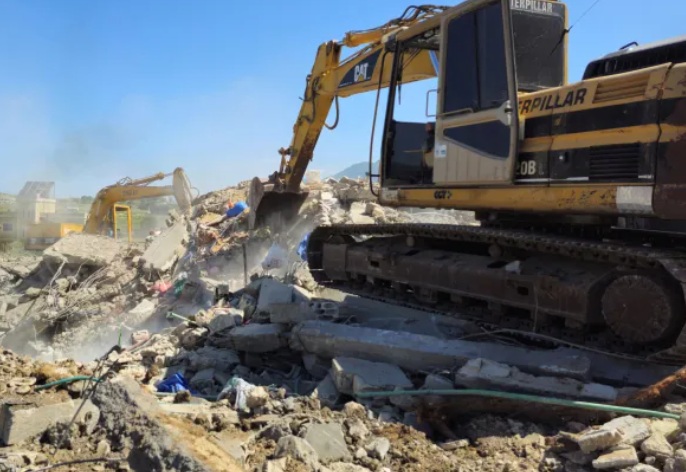
A sharp escalation in Israeli military operations in southern Lebanon has raised new concerns over the stability of a recently declared truce, as heavy airstrikes and drone activity reportedly killed dozens and displaced civilians across multiple towns.
Southern Lebanon faces renewed bombardment amid ceasefire concerns
Despite a military truce reportedly in effect since mid-April, southern Lebanon has seen a major increase in Israeli airstrikes over the past 24 hours, according to regional media and local sources.
Reports indicate that Israeli forces carried out dozens of air raids across southern Lebanese territory, targeting multiple locations as drones continued surveillance operations overhead.
Local casualty figures suggest significant loss of life, though independent verification may vary as the situation develops.
Key developments on the ground
Airstrikes across multiple towns
Heavy bombardment has been reported in several parts of southern Lebanon, including densely affected communities where explosions damaged infrastructure and intensified civilian displacement.
Drone surveillance continues
Israeli drones reportedly remain active over parts of Lebanon, contributing to heightened fear among residents and ongoing security concerns.
Civilian displacement rises
Families in affected regions are reportedly fleeing homes in search of safer areas as cross-border tensions continue.
Why this escalation matters
The renewed military activity threatens to undermine fragile diplomatic efforts aimed at containing conflict along the Israel-Lebanon border.
Southern Lebanon remains strategically sensitive due to Hezbollah’s presence, Israel’s security concerns, and the broader regional fallout from ongoing Middle East hostilities.
Any sustained breakdown in ceasefire conditions could increase:
- Regional military escalation
- Civilian casualties
- Refugee displacement
- International diplomatic pressure
Historical context: A long-running conflict
Israel and Lebanon have faced repeated military confrontations for decades.
Major milestones include:
- 1948: Lebanon joined Arab opposition during Israel’s founding conflict
- 1978: Israel launched Operation Litani in southern Lebanon
- 1982: Israel invaded Lebanon during the First Lebanon War
- 2000: Israeli withdrawal from most of southern Lebanon
- 2006: Hezbollah-Israel war following the capture of Israeli soldiers
- 2023 onward: Border tensions escalated after Hezbollah attacks linked to the Gaza conflict
Hezbollah, backed by Iran, remains a central factor in Israeli security calculations.
Strategic concerns for Israel and Lebanon
Israel has consistently argued that Hezbollah’s military infrastructure near its northern border poses a direct national security threat.
Lebanon, meanwhile, continues to face internal political strain, economic hardship, and repeated conflict spillover.
This latest escalation could further destabilize border communities already affected by years of intermittent violence.
International response and legal concerns
A renewed escalation despite truce arrangements may attract increased scrutiny from:
- United Nations observers
- U.S. mediators
- Regional powers
- Humanitarian organizations
Questions are also likely to intensify over proportionality, civilian safety, and compliance with international humanitarian law.
Humanitarian impact
For civilians in southern Lebanon, the immediate consequences include:
- Loss of shelter
- Damage to infrastructure
- Interrupted healthcare access
- Increased fear and instability
Children and families are often the most vulnerable during rapid displacement events.
What comes next?
The trajectory of the conflict may depend on:
- Whether ceasefire mechanisms can be restored
- Hezbollah’s military response
- Israeli strategic objectives
- Diplomatic intervention from global powers
For now, the renewed strikes signal that the Israel-Lebanon front remains one of the most volatile flashpoints in the Middle East, with potential consequences extending far beyond the immediate border.
Input & Images: Hindusthan Samachar
Edited by Manten Sasank
Add Digital Herald as preferred source on google – click here
Also read – Iran Considers New Strait of Hormuz Law That Could Restrict Israeli-Linked Ships
Last Updated on: Sunday, May 3, 2026 2:17 pm by Mantena Sasank | Published by: Mantena Sasank on Sunday, May 3, 2026 2:17 pm | News Categories: News