Workshop focuses on closing gaps in testing, treatment, and prevention as India targets HIV epidemic control by 2027
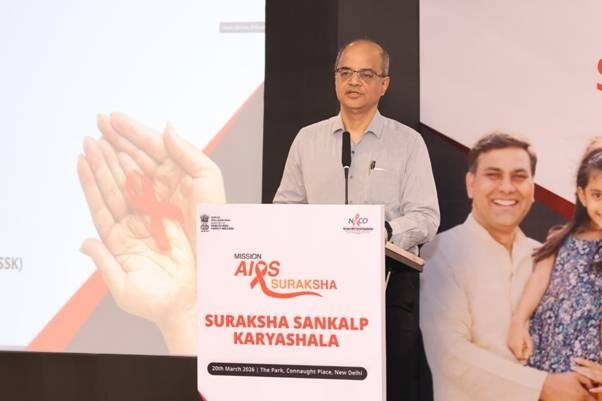
The Union Ministry of Health and Family Welfare, through the National AIDS Control Organisation (NACO), on Friday convened a ‘Suraksha Sankalp Karyashala’ in Delhi to strengthen district-level HIV/AIDS response in Delhi and Haryana.
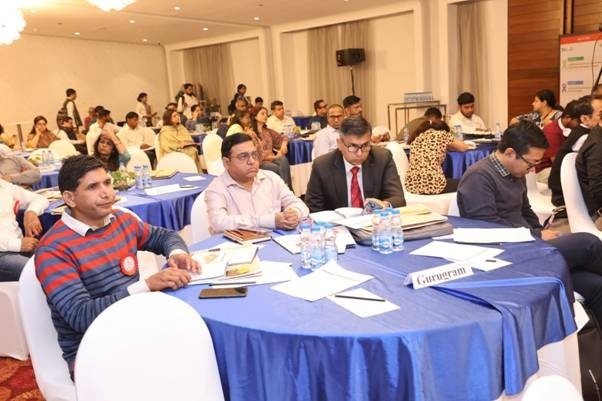
The workshop brought together officials and programme teams from priority districts to review progress, identify gaps, and develop targeted strategies to improve testing, treatment, and prevention services.
Key Highlights
- 219 districts across India identified for intensified HIV/AIDS interventions
- 11 districts in Haryana and 7 in Delhi marked as priority areas
- Focus on improving diagnosis, treatment access, and viral suppression
- India aims to control HIV/AIDS epidemic by 2027
- Workshop promotes data-driven and coordinated response
Official Statement
Chairing the workshop, Dr. Rakesh Gupta, Additional Secretary and Director General of NACO, said HIV/AIDS remains a significant public health challenge that requires coordinated action across all levels of governance.
He emphasised the importance of achieving global treatment targets, which aim to ensure that most people living with HIV are diagnosed, receive sustained treatment, and achieve viral suppression—reducing transmission and improving quality of life.
Gupta also highlighted the need for stronger coordination between national, state, and district teams to address gaps in awareness, testing, and treatment adherence.
Understanding the 95:95:95 Targets
The global HIV response is guided by the “95:95:95” targets:
- 95% of people living with HIV should know their status
- 95% of diagnosed individuals should receive antiretroviral therapy (ART)
- 95% of those on treatment should achieve viral suppression
India is now working towards an expanded target of 95:95:99, with a greater focus on ensuring long-term treatment success.
Current Situation in Delhi and Haryana
Data presented during the workshop highlighted uneven progress across regions.
- Delhi: Around 70% of identified individuals are currently linked to treatment, indicating gaps in treatment coverage and retention
- Haryana: Shows better progress with a treatment cascade of approximately 81:83:95, though further improvement is needed in diagnosis and treatment linkage
In terms of prevalence:
- Delhi has an adult HIV prevalence of about 0.33%, with over 59,000 people living with HIV
- Haryana reports a prevalence of 0.24%, with a similar number of cases
Priority Districts Identified
To improve outcomes, specific districts have been flagged for intensified action.
- Delhi (7 districts): North, New Delhi, Shahdara, Central, South East, South, North West
- Haryana (11 districts): Panipat, Rohtak, Sirsa, Jhajjar, Gurugram, Faridabad, Bhiwani, Hisar, Sonipat, Kaithal, Fatehabad
Teams from these districts are participating in the workshop to present local challenges and design targeted interventions.
Focus on Prevention and Maternal Health
Officials also stressed the importance of eliminating mother-to-child transmission of HIV, which can occur during pregnancy, childbirth, or breastfeeding.
Health authorities noted that such transmission is preventable through early testing, counselling, and timely treatment, and called for expanded antenatal screening and access to preventive services.
Public Impact: Why This Matters
Strengthening HIV services at the district level can have a direct impact on public health outcomes.
The initiative aims to:
- Increase early detection of HIV cases
- Improve access to free antiretroviral therapy (ART)
- Reduce transmission rates through viral suppression
- Expand outreach to vulnerable and high-risk populations
- Address stigma and discrimination associated with HIV
By focusing on high-burden districts, the government seeks to ensure more efficient use of resources and better healthcare delivery.
Conclusion
The ‘Suraksha Sankalp Karyashala’ reflects a targeted and data-driven approach to tackling HIV/AIDS in India. With a national goal of bringing the epidemic under control by 2027 and aligning with the global aim of ending AIDS as a public health threat by 2030, officials say sustained coordination and local-level action will be critical.
The outcomes of the workshop are expected to guide future interventions, with a focus on improving treatment coverage, strengthening monitoring systems, and ensuring equitable access to HIV care services.
Source – PIB
Edited by Mantena Sasank
Last Updated on: Friday, March 20, 2026 3:51 pm by Mantena Sasank | Published by: Mantena Sasank on Friday, March 20, 2026 3:51 pm | News Categories: Mumbai