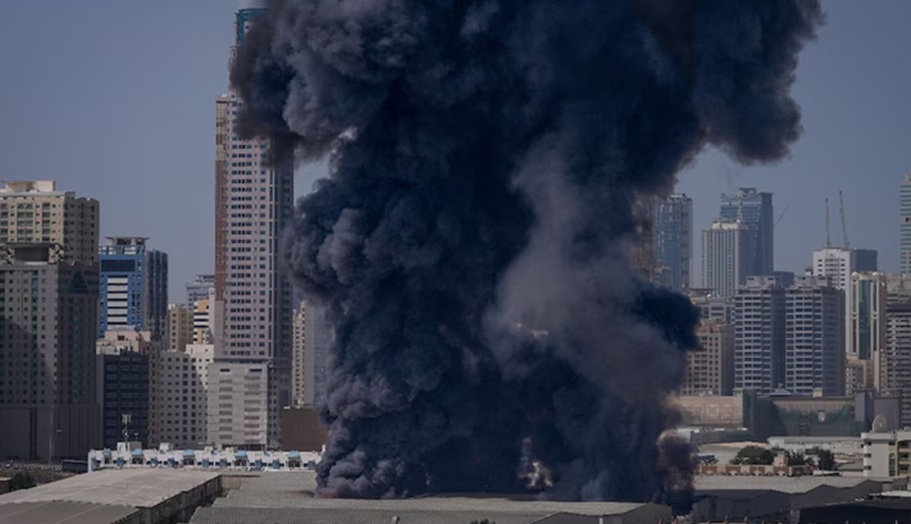
Attack on critical facility highlights growing risks to civilian infrastructure as regional conflict intensifies
An Iranian strike has hit a key power and water desalination facility in Kuwait, killing an Indian worker and causing significant structural damage, Kuwaiti authorities confirmed on Monday. The incident marks a further escalation in the widening conflict involving Iran, the United States, and Israel, now entering its seventh week.
Key Developments
Kuwait’s Ministry of Electricity and Water reported that a service building within the facility was struck during what it described as an act of aggression against the country. Emergency response teams were dispatched to secure the area and maintain operations under contingency protocols.
The ministry confirmed one fatality—an Indian national working at the plant—while noting that the broader facility sustained considerable damage. Authorities have not yet indicated the full extent of operational disruption. Iran has not issued an official response regarding the incident.
Missile and Drone Activity Over Kuwait
The strike followed a broader wave of aerial threats targeting Kuwaiti airspace. According to the Defense Ministry, 14 ballistic missiles and 12 drones were detected on Sunday evening. Several drones reportedly aimed at a military installation.
Air defense systems intercepted most of the incoming threats, but the operation left 10 Kuwaiti soldiers injured. Military officials said repeated attacks are increasingly testing the limits of the country’s defensive capabilities.
Official Response
Kuwaiti officials emphasized that emergency measures are in place to ensure continuity of essential services. While avoiding direct escalation in rhetoric, authorities underscored the seriousness of attacks on civilian infrastructure.
Regional tensions remain high, with leaders across the Gulf warning that continued strikes could destabilize essential services and civilian life.
Broader Regional Context
The latest incident reflects a broader shift in the ongoing conflict, which began on February 28. Since then, Iran has increasingly targeted infrastructure across the Gulf, including fuel storage and desalination facilities in neighboring countries.
At the same time, Israeli Prime Minister Benjamin Netanyahu has indicated plans to expand military operations into southern Lebanon, signaling a widening geographic scope of the conflict.
Iranian officials have also warned the United States against launching ground operations, suggesting that any escalation could trigger further attacks on allied nations in the region.
Why Desalination Plants Matter
Desalination plants are critical to Gulf countries like Kuwait, where freshwater resources are limited. These facilities convert seawater into potable water and are often integrated with power generation systems.
Damage to such infrastructure can disrupt both electricity and water supplies, amplifying the humanitarian and economic impact. Experts note that targeting these facilities increases risks not just for governments, but for millions of civilians dependent on them.
Impact on Foreign Workers
The death of the Indian worker highlights the growing risks faced by expatriates in the region. Gulf economies rely heavily on foreign labor, particularly in technical and industrial sectors.
India, which has a large workforce in the Middle East, is closely monitoring the situation as the number of its nationals affected by the conflict rises.
What Comes Next
With tensions continuing to escalate and critical infrastructure increasingly in the line of fire, international efforts—led by organizations such as the United Nations—are intensifying calls for restraint.
However, with no immediate signs of de-escalation, analysts warn that further attacks on civilian infrastructure could deepen the crisis and extend its impact beyond traditional military targets.
Input & Images: Hindusthan Samachar
Edited by Manten Sasank
Add Digital Herald as preferred source on google – click here
Also read – Trump Signals Iran Oil Seizure as ‘Option’ While Extending Pause on Energy Strikes
Last Updated on: Monday, March 30, 2026 10:37 am by Mantena Sasank | Published by: Mantena Sasank on Monday, March 30, 2026 10:37 am | News Categories: Politics