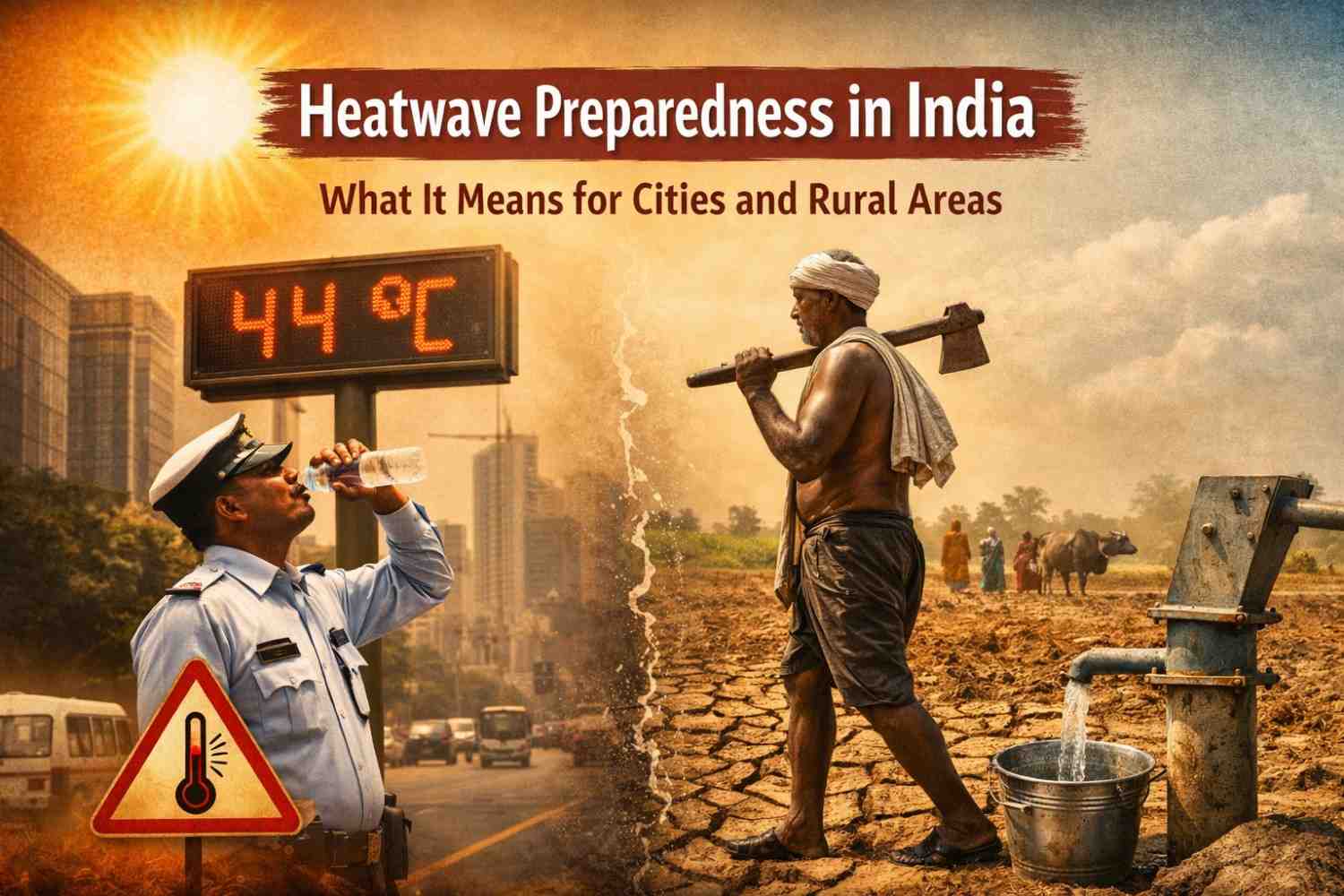
As India enters another intense summer season, heatwaves are no longer treated as short-term weather events but as recurring climate risks with serious public health, economic, and social consequences. In response, authorities at the central, state, and local levels have rolled out updated heatwave preparedness measures aimed at reducing heat-related deaths, safeguarding livelihoods, and strengthening local resilience. These steps are especially significant for a country where urban density and rural vulnerability present very different challenges.
Why Heatwaves Are Becoming a National Concern
Heatwaves in India have grown more frequent, longer in duration, and more severe in intensity over the past decade. Rising average temperatures, changing rainfall patterns, and rapid urbanisation have increased exposure to extreme heat. For millions of outdoor workers, elderly citizens, children, and people with pre-existing health conditions, prolonged heat can be life-threatening.
The government now treats heatwaves as a public health emergency rather than a routine seasonal issue. This shift in approach underpins the latest preparedness measures, which focus on early warnings, coordinated response systems, and long-term adaptation strategies.
Early Warning Systems and Real-Time Alerts
One of the most critical components of the new preparedness framework is the strengthening of heatwave early warning systems. Weather agencies now issue more granular forecasts, often at the district or city level, allowing local administrations to act in advance.
These warnings are increasingly linked to public alert systems. Messages are disseminated through mobile phones, local radio, community networks, and digital platforms to inform people about upcoming extreme heat days, recommended precautions, and changes in work or school schedules. For cities, this means traffic police, municipal workers, and healthcare facilities can prepare in advance. In rural areas, timely alerts help farmers and daily-wage workers adjust their working hours to avoid peak heat.
Heat Action Plans in Urban India
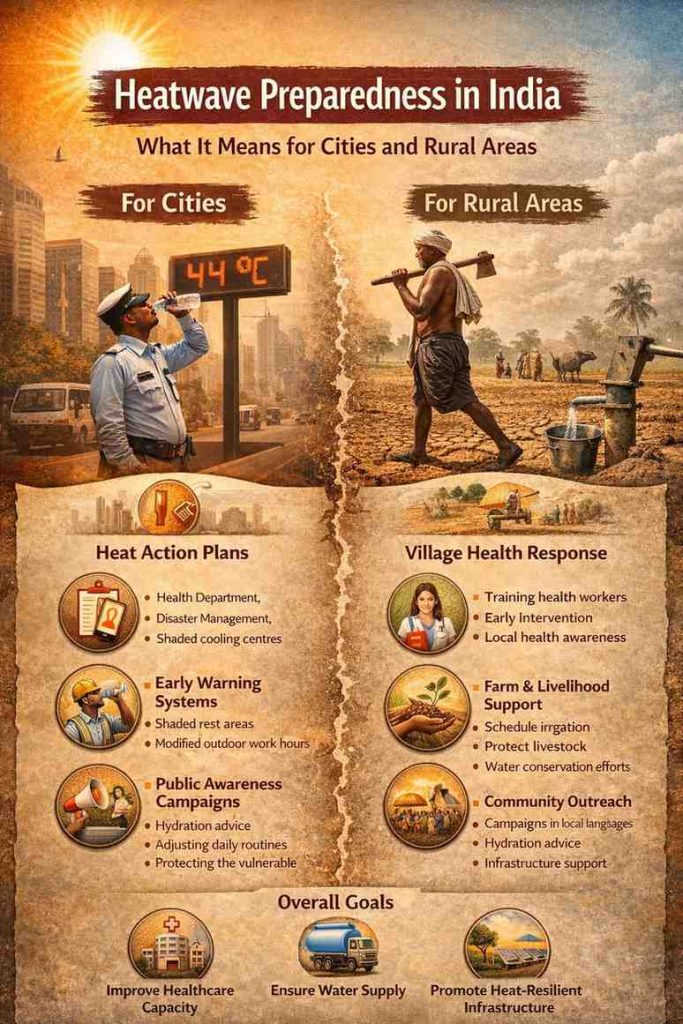
Cities remain at the forefront of heatwave risk due to the urban heat island effect, where concrete surfaces and limited green cover trap heat. The latest measures emphasise city-level Heat Action Plans that bring together health departments, disaster management authorities, water supply agencies, and labour offices.
Urban preparedness now includes identifying high-risk neighbourhoods, setting up temporary cooling centres, ensuring uninterrupted water supply, and advising employers to modify outdoor work timings. Public hospitals and clinics are trained to recognise and treat heat-related illnesses quickly, while ambulance services are put on alert during extreme heat periods.
Municipal bodies are also encouraged to adopt long-term solutions such as increasing tree cover, promoting cool roofs, and improving building design to reduce indoor heat stress.
What Heatwave Preparedness Means for Rural Areas
While cities receive much of the attention, rural India often faces greater vulnerability due to limited healthcare access, dependence on manual labour, and water scarcity. The updated preparedness measures aim to bridge this gap by strengthening village-level awareness and response.
Primary health centres and frontline health workers play a key role in identifying early symptoms of heat exhaustion and heatstroke. Awareness campaigns focus on simple but effective practices such as staying hydrated, avoiding strenuous work during peak afternoon hours, and recognising warning signs in children and the elderly.
For farmers, advisories linked to heat forecasts help in planning irrigation schedules and protecting livestock. In drought-prone regions, heat preparedness is increasingly aligned with water conservation efforts and employment schemes to ensure income security during extreme weather periods.
Protecting Workers and Livelihoods
Outdoor workers are among the most affected by extreme heat. Construction labourers, street vendors, agricultural workers, sanitation staff, and delivery personnel face prolonged exposure during peak summer months. The latest measures stress the responsibility of employers and local authorities to ensure safer working conditions.
This includes flexible work hours, shaded rest areas, access to drinking water, and temporary suspension of heavy outdoor work during severe heat alerts. By framing heat safety as a labour and occupational health issue, policymakers aim to reduce preventable illnesses while maintaining productivity.
Public Awareness and Behavioural Change
A key lesson from previous summers is that preparedness measures only work when people understand and trust them. Public communication campaigns now focus on clear, practical guidance rather than technical warnings. Schools, community groups, and local leaders are involved in spreading awareness, especially in regions with low digital access.
Simple messages about hydration, appropriate clothing, home cooling practices, and care for vulnerable family members are repeated across platforms. Over time, these campaigns are intended to build a culture of heat safety similar to how cyclone or flood preparedness has evolved in parts of the country.
Long-Term Climate Resilience Beyond Emergency Response
While immediate preparedness saves lives, policymakers increasingly recognise that heatwaves are a long-term climate reality. The current measures therefore also point towards broader adaptation goals. Urban planning, water management, housing design, and energy use are all being re-evaluated through a heat resilience lens.
Investments in green infrastructure, decentralised cooling solutions, and climate-sensitive agriculture are seen as essential for reducing future risks. By integrating heatwave preparedness into development planning, India aims to protect both economic growth and public health in a warming world.
The Road Ahead
India’s latest heatwave preparedness measures reflect a more coordinated and proactive approach to extreme heat. For cities, the focus is on managing dense populations and infrastructure stress, while for rural areas, the emphasis lies on awareness, healthcare access, and livelihood protection.
As temperatures continue to rise, the effectiveness of these measures will depend on consistent implementation, local capacity, and public cooperation. What is clear is that heatwaves are no longer a seasonal inconvenience but a defining challenge of India’s climate future, demanding sustained attention well beyond the summer months.
Add digitalherald.in as preferred source on google – clickhere
Last Updated on: Thursday, January 22, 2026 10:56 am by Digital Herald Team | Published by: Digital Herald Team on Thursday, January 22, 2026 10:56 am | News Categories: News