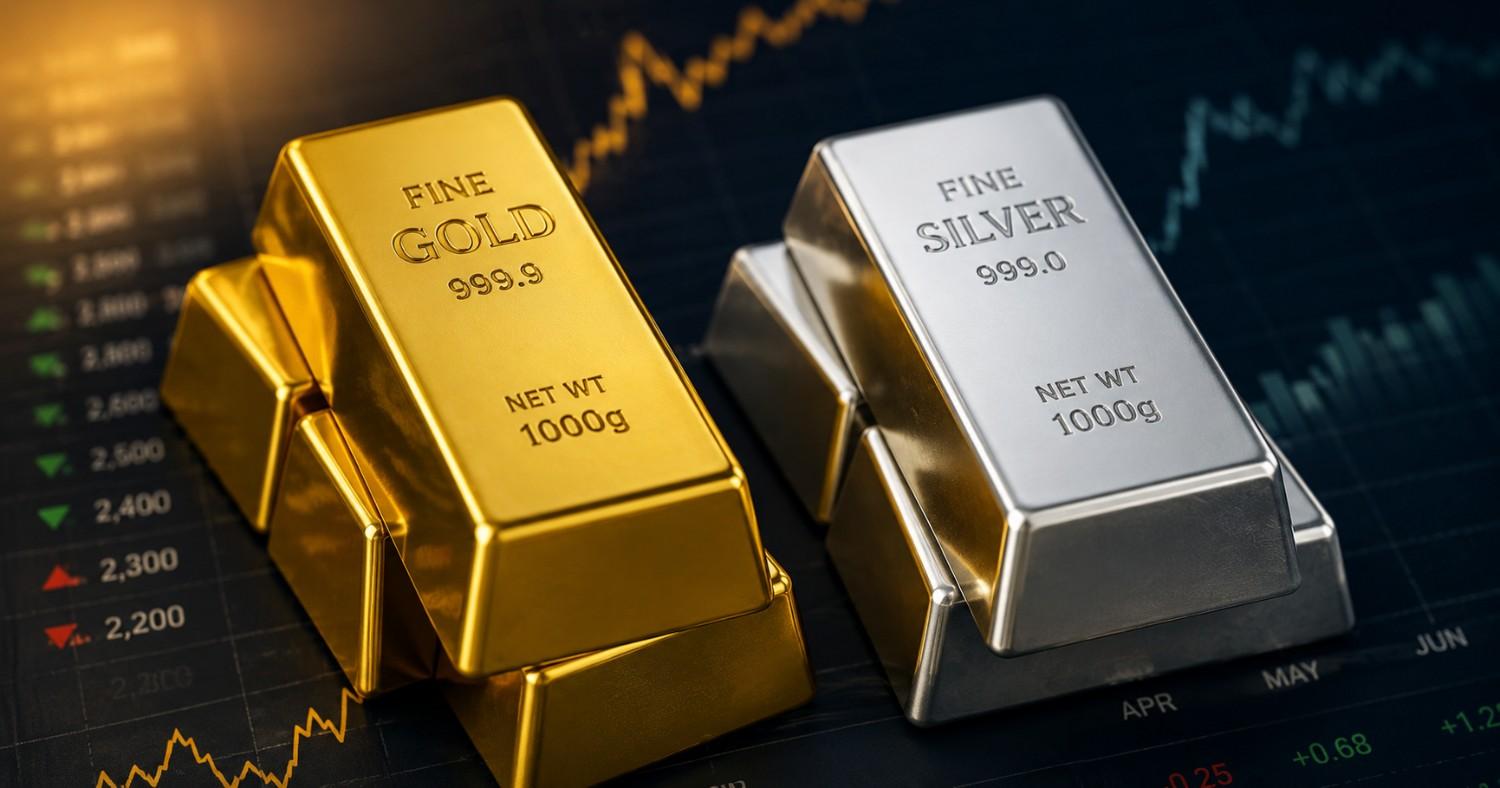
Gold prices edged lower in domestic bullion markets on Thursday, extending a recent phase of consolidation in precious metals trading. While the decline was modest, it reflected a cautious sentiment among traders as investors continued to assess global economic signals, currency movements, and expectations surrounding interest rates. Silver, meanwhile, remained unchanged, underscoring relative stability in the broader bullion market.
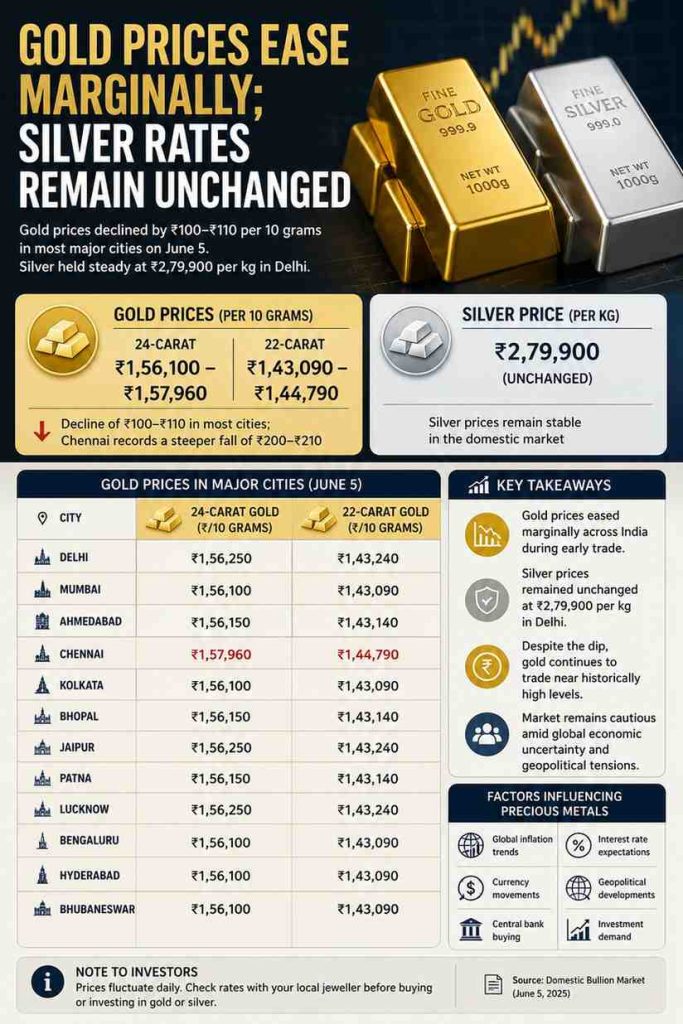
The latest movement saw gold prices ease by around ₹100 to ₹110 per 10 grams in most major markets, with Chennai witnessing a comparatively steeper decline. Despite the pullback, gold continues to trade near historically elevated levels, suggesting that demand for safe-haven assets remains intact even as short-term profit-taking influences prices.
Gold Remains Near Record Territory
Market participants noted that the decline was relatively minor compared with the substantial gains witnessed in precious metals over recent months. Gold has benefited from persistent geopolitical uncertainty, central bank purchases, and investor demand for assets perceived as stores of value during periods of economic volatility.
Following Thursday’s adjustment, 24-carat gold continued to trade above ₹1.56 lakh per 10 grams in most major cities, while 22-carat gold remained above ₹1.43 lakh. These levels remain significantly higher than those seen a year ago, highlighting the strength of the longer-term trend.
Analysts say that although prices may fluctuate in the short term, broader market conditions continue to provide support for bullion.
Silver Shows Signs of Stability
Unlike gold, silver prices remained unchanged during early trading, maintaining recent levels in key bullion markets.
The stability in silver reflects a balance between industrial demand and investment interest. Silver occupies a unique position among precious metals because it is influenced not only by investor sentiment but also by manufacturing activity, renewable energy projects, electronics production, and industrial consumption.
The absence of significant movement suggests that traders are waiting for fresh economic data before taking stronger positions.
Global Factors Driving Bullion Markets
International developments continue to play a central role in determining precious metal prices.
Investors worldwide are closely monitoring inflation trends, central bank policy decisions, bond yields, and geopolitical developments. Expectations regarding future interest rates often have a direct impact on gold prices, as lower borrowing costs can increase the appeal of non-yielding assets such as bullion.
Currency movements also remain important. A stronger U.S. dollar can weigh on gold prices internationally, while weakness in the dollar often provides support for precious metals.
Impact on Consumers and Investors
For consumers planning jewellery purchases, the modest decline may provide limited relief after months of elevated prices. However, gold remains expensive by historical standards, keeping wedding-season and festive demand under close watch.
For investors, the current market environment reflects a period of consolidation rather than a major trend reversal. Financial advisors continue to view gold as an important diversification asset, particularly during periods of economic and geopolitical uncertainty.
At the same time, experts caution that short-term price movements can be volatile and that investment decisions should be based on broader financial goals rather than daily fluctuations.
Outlook for the Precious Metals Market
Looking ahead, bullion traders expect prices to remain sensitive to international developments, particularly economic indicators from major economies and central bank commentary on inflation and interest rates.
While Thursday’s decline was modest, market participants will continue monitoring whether the move develops into a broader correction or remains a temporary pause within a longer-term upward trend.
For now, gold has eased slightly, silver remains steady, and the precious metals market continues to navigate a complex mix of global economic uncertainty and investor demand for safe-haven assets.
Key Highlights
- Gold prices declined marginally by ₹100–₹110 per 10 grams in most major cities during early trade.
- Chennai witnessed a steeper fall, with gold prices dropping by ₹200–₹210 per 10 grams.
- 24-carat gold traded between ₹1,56,100 and ₹1,57,960 per 10 grams across key bullion markets.
- 22-carat gold was priced between ₹1,43,090 and ₹1,44,790 per 10 grams.
- Silver prices remained unchanged at ₹2,79,900 per kilogram in the Delhi bullion market.
- In Delhi, 24-carat gold was quoted at ₹1,56,250 per 10 grams, while 22-carat gold stood at ₹1,43,240 per 10 grams.
- Mumbai, Kolkata, Bengaluru, Hyderabad, and Bhubaneswar recorded similar rates, with 24-carat gold at around ₹1,56,100 per 10 grams.
- The decline reflects a mild correction in bullion prices, while silver’s stability suggests a balanced precious metals market.
- Despite the pullback, gold continues to trade near historically high levels, supported by safe-haven demand and global economic uncertainty.
- Traders remain focused on global economic data, interest-rate expectations, currency movements, and geopolitical developments for further direction in bullion prices.
Input & Images: Hindusthan Samachar
Edited by Manten Sasank
Add Digital Herald as preferred source on google – click here
Also read – US Declares Iran Military Operation Complete, but Gulf Security Risks Persist
Last Updated on: Friday, June 5, 2026 3:23 pm by Mantena Sasank | Published by: Mantena Sasank on Friday, June 5, 2026 3:23 pm | News Categories: Business