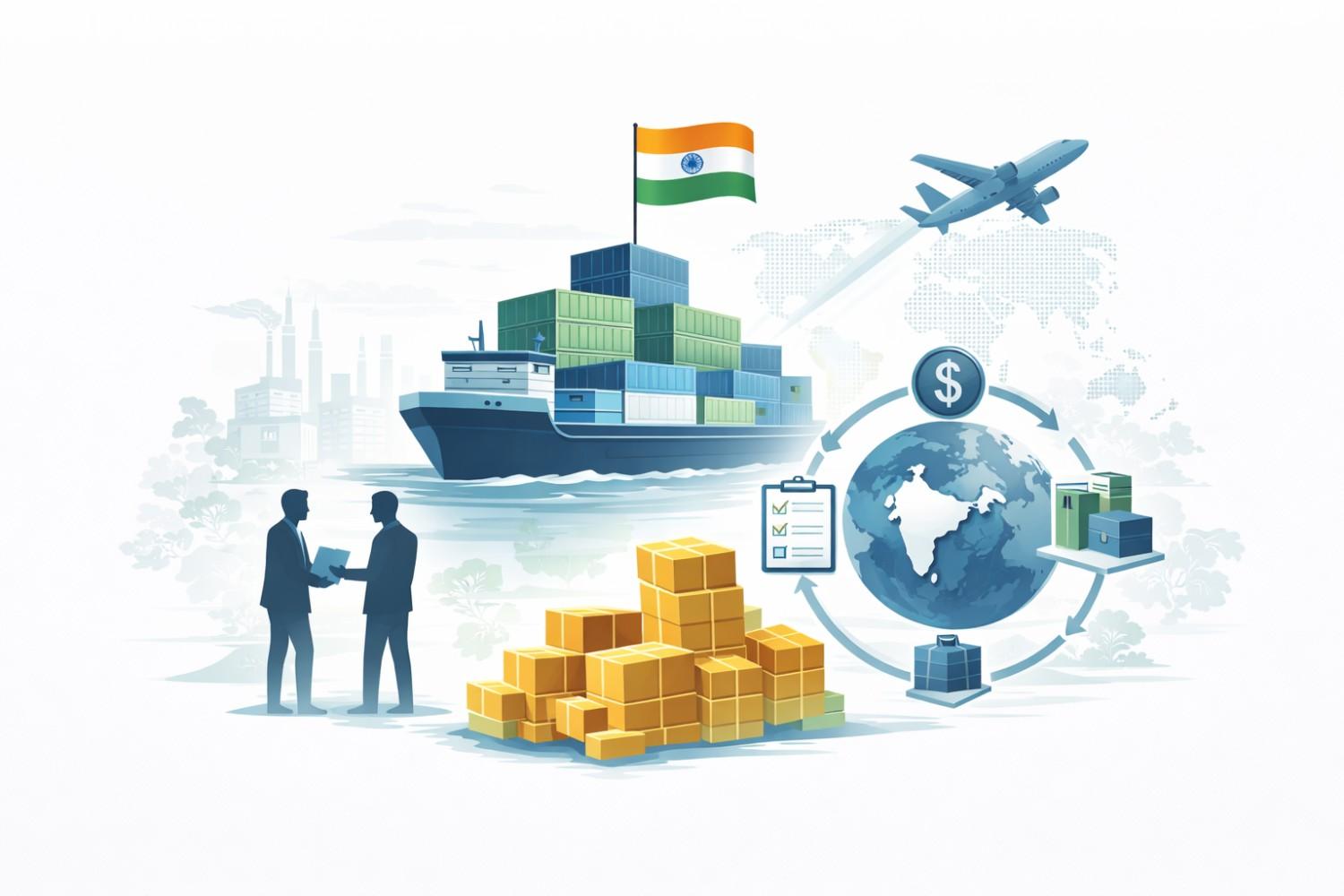
India has unveiled a new seven-point export mission aimed at strengthening global sales for Micro, Small and Medium Enterprises (MSMEs). The initiative is designed to improve export competitiveness, simplify compliance, expand market access, and support small businesses in reaching international buyers.
The move comes at a time when global trade conditions are evolving and Indian MSMEs are seeking stronger integration into global supply chains. Policymakers believe the mission can help increase exports, generate employment, and improve India’s trade performance.
Why the Seven-Point Export Mission Matters
MSMEs contribute significantly to India’s economy and employment. They account for a major share of manufacturing output and provide jobs to millions of people across the country.
However, many small businesses face barriers when entering international markets. These include complex documentation, high logistics costs, limited market knowledge, and access to finance challenges.
The new seven-point export mission aims to address these issues systematically.
Strengthening Export Infrastructure
One key focus of the mission is improving export-related infrastructure.
Efficient ports, faster customs clearance, and improved digital documentation systems can reduce delays and costs for exporters. Streamlining processes is expected to help MSMEs compete with global peers.
Digital platforms will play a major role in improving transparency and reducing paperwork.
Expanding Access to Global Markets
The export mission places strong emphasis on market diversification.
India is seeking to expand access to new trade corridors and strengthen ties with emerging economies. MSMEs will receive support in identifying export opportunities across sectors such as textiles, engineering goods, pharmaceuticals, electronics, and food products.
Better market intelligence is expected to help businesses identify demand trends abroad.
Easier Access to Export Credit
Access to finance remains a major hurdle for small exporters.
The seven-point mission includes measures to strengthen export credit support. Easier loan access, improved credit guarantees, and faster processing systems are expected to provide working capital relief for MSMEs.
Improved liquidity can enable small firms to scale production for overseas orders.
Support for Digital Trade and E-Commerce
Digital exports are emerging as a key growth area.
The mission highlights support for e-commerce platforms that connect MSMEs directly with international buyers. Simplified digital compliance procedures and online export facilitation tools aim to encourage smaller enterprises to participate in cross-border trade.
Technology-driven export models can reduce dependence on intermediaries.
Capacity Building and Skill Development
Skill development is a central pillar of the new export strategy.
Training programmes will focus on improving product quality, packaging standards, branding, and international compliance awareness. MSMEs often struggle with global quality certifications, and targeted capacity building can bridge this gap.
Better-trained exporters are more likely to succeed in competitive markets.
Promoting Sector-Specific Export Clusters
The mission also encourages the development of sector-specific export clusters.
Cluster-based models can improve economies of scale, reduce logistics costs, and enhance collaboration among small manufacturers. Regions known for specific industries may receive focused policy support to boost exports.
This approach strengthens regional economic development alongside national trade goals.
Encouraging Innovation and Value Addition
Moving up the value chain is a key objective.
Instead of exporting raw materials or low-value goods, MSMEs are being encouraged to focus on value-added products. Innovation in design, packaging, and technology integration can increase global competitiveness.
Higher value exports contribute more to overall trade growth.
Boosting India’s Share in Global Trade
India has been working to increase its share in global merchandise and services exports.
The seven-point mission is aligned with long-term goals of expanding export volumes and reducing trade deficits. Strong MSME participation is essential for achieving these targets.
Small businesses often form the backbone of export growth in developing economies.
Reducing Compliance Burden
Complex compliance requirements have historically discouraged small exporters.
The mission aims to simplify regulatory frameworks, reduce documentation burdens, and integrate digital clearance systems. Faster approvals and transparent procedures can improve ease of doing business.
Simplified compliance is expected to encourage more MSMEs to explore export markets.
Strengthening Trade Facilitation
Trade facilitation measures are being expanded under the mission.
Improved coordination between customs, logistics providers, and trade bodies can reduce shipment delays. Efficient trade corridors enhance reliability and build trust among global buyers.
Reliable delivery timelines are crucial for sustained export relationships.
Focus on Sustainable and Green Exports
Sustainability standards are increasingly important in global trade.
MSMEs are being encouraged to adopt environmentally responsible production practices. Compliance with global environmental norms can improve market access and attract premium buyers.
Green manufacturing can become a competitive advantage.
Impact on Employment and Economic Growth
The export mission is expected to create new employment opportunities across manufacturing and services sectors. As MSMEs expand production for international markets, demand for skilled labour may increase.
Stronger export growth contributes to foreign exchange earnings and overall economic stability.
Challenges Ahead
While the mission sets a strong framework, challenges remain.
Global economic uncertainties, geopolitical tensions, and changing trade regulations can affect export performance. MSMEs will need continuous support and adaptability to succeed.
Policy implementation and monitoring will be critical for long-term success.
Outlook for MSME Export Growth
If effectively implemented, the seven-point export mission could strengthen India’s position in global trade.
Industry observers expect improved export data in sectors where MSMEs are dominant. Consistent policy backing, infrastructure upgrades, and financial support will determine the pace of progress.
The initiative signals a renewed push to integrate small businesses into international supply chains.
Bottom Line
India’s seven-point export mission aims to boost MSME global sales by improving infrastructure, access to credit, digital trade facilitation, and market access. By focusing on competitiveness and ease of doing business, the government is seeking to strengthen small exporters’ participation in global markets.
If sustained, the strategy could enhance export growth, support job creation, and reinforce India’s long-term trade ambitions.
Disclaimer: The information presented in this article is intended for general informational purposes only. While every effort is made to ensure accuracy, completeness, and timeliness, data such as prices, market figures, government notifications, weather updates, holiday announcements, and public advisories are subject to change and may vary based on location and official revisions. Readers are strongly encouraged to verify details from relevant official sources before making financial, investment, career, travel, or personal decisions. This publication does not provide financial, investment, legal, or professional advice and shall not be held liable for any losses, damages, or actions taken in reliance on the information provided.
Last Updated on: Friday, February 20, 2026 4:27 pm by Digital Herald Team | Published by: Digital Herald Team on Friday, February 20, 2026 4:27 pm | News Categories: India