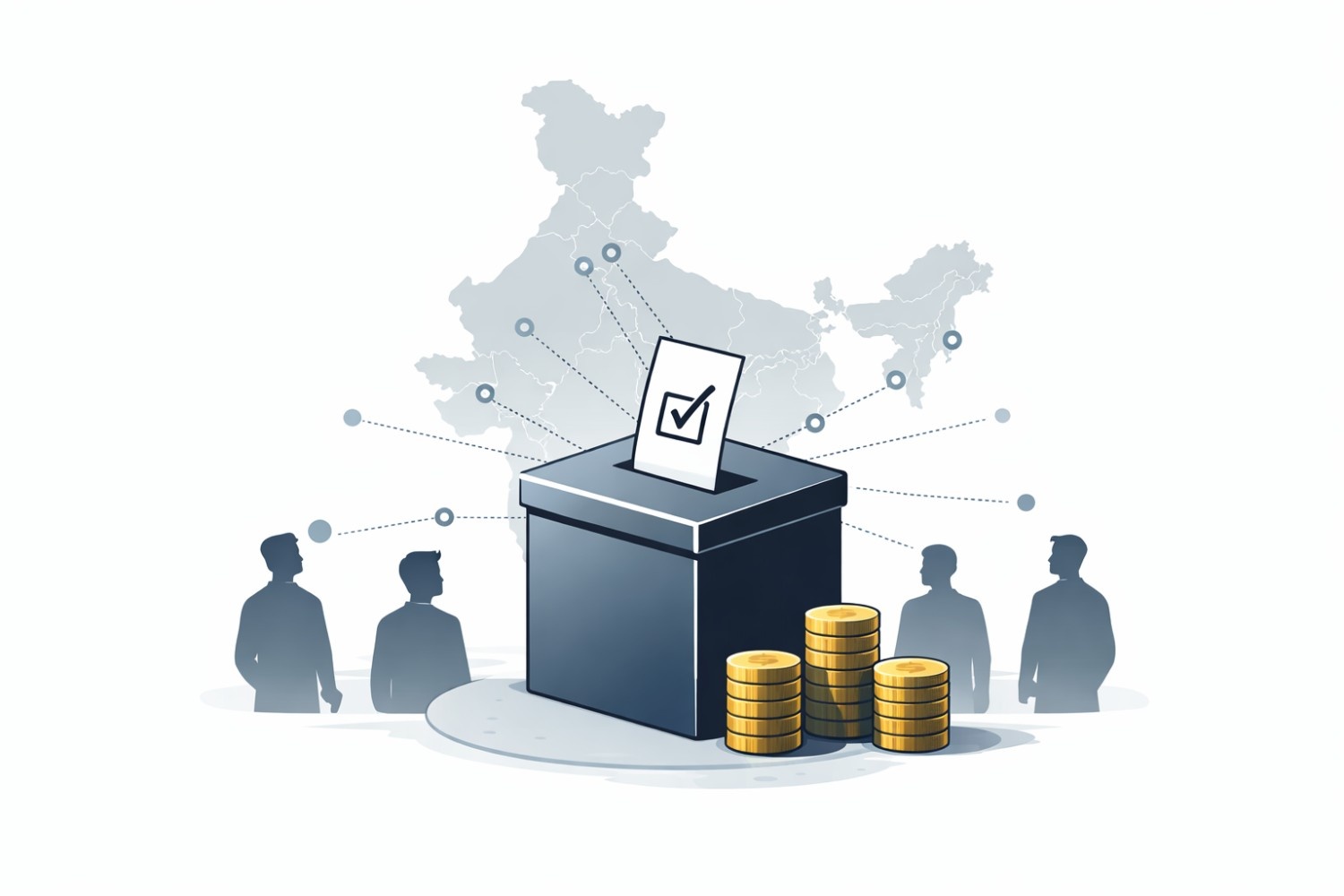
The Election Commission of India has announced Rajya Sabha elections for 37 seats across 10 states, setting the stage for an important political contest in the coming weeks. These elections are crucial because they will decide the balance of power in the Upper House of Parliament, where several key bills and reforms depend on majority support.
The seats are falling vacant due to the retirement of members whose terms are ending soon. The outcome of these elections could influence legislative priorities, coalition strategies, and the passage of major policy measures in Parliament.
Key Details of the Rajya Sabha Elections
A total of 37 Rajya Sabha seats across 10 states will go to polls. These elections are being held as the terms of sitting members expire in the coming months.
The Election Commission has scheduled the voting process according to the standard Rajya Sabha election cycle. Members of Legislative Assemblies in the respective states will cast their votes to elect the new members.
The Rajya Sabha is the Upper House of India’s Parliament, and its members are elected indirectly by elected MLAs from state assemblies.
States Where Elections Will Be Held
The 37 seats are spread across 10 states, including major political battlegrounds and states with changing legislative dynamics.
These states include Uttar Pradesh, Maharashtra, Bihar, West Bengal, Tamil Nadu, Madhya Pradesh, Gujarat, Karnataka, Odisha, and Telangana. The number of seats from each state varies depending on how many members are retiring.
Why These Elections Matter
Rajya Sabha elections are important because the Upper House plays a critical role in passing laws, constitutional amendments, and major policy decisions.
Unlike the Lok Sabha, where the ruling party or coalition often holds a majority, the Rajya Sabha can have a different political balance. This makes it a key arena for negotiations and alliances.
The results of these elections could impact the ruling coalition’s legislative strength, the opposition’s ability to block or amend bills, the passage of major reforms and constitutional changes, and parliamentary strategies. Even small shifts in seat numbers can influence voting outcomes on key legislation.
How Rajya Sabha Members Are Elected
Rajya Sabha members are not elected directly by the public. Instead, they are chosen through an indirect voting system.
MLAs from each state vote to elect members to the Rajya Sabha using a proportional representation system with a single transferable vote.
This means parties with more MLAs have a higher chance of winning seats, smaller parties can also secure seats depending on numbers and alliances, and cross-voting can sometimes change results.
The process is conducted through an open ballot, where MLAs show their marked ballots to party representatives.
Current Political Context
The upcoming elections come at a time of active political competition across several states.
In some states, the ruling party at the Centre holds strong legislative numbers, which could help it secure more seats. In others, regional parties or opposition alliances dominate the assemblies, making the contests more competitive.
States like Uttar Pradesh, Maharashtra, and West Bengal are particularly significant because they send a larger number of members to the Rajya Sabha.
Key States to Watch
Uttar Pradesh
Uttar Pradesh sends the highest number of members to the Rajya Sabha. Any change in seat distribution here can have a major impact on the overall balance in the Upper House.
With a strong majority in the state assembly, the ruling party is expected to perform well.
Maharashtra
Maharashtra remains politically sensitive due to recent shifts in alliances and government formations. Rajya Sabha contests here could become closely fought.
West Bengal
West Bengal is dominated by a strong regional party, which is expected to retain most of its seats. However, opposition parties will attempt to increase their presence.
Tamil Nadu and Karnataka
Both southern states have strong regional parties and coalition politics. The outcomes here could reflect local political equations and alliance strategies.
Timeline for the Election Process
The Election Commission has laid out the standard timeline for Rajya Sabha polls.
The notification date has been announced by the Election Commission, followed by the last date for nominations a few days later. Scrutiny of nominations will be conducted by election officials, and candidates will have a fixed deadline to withdraw their nominations.
Polling will take place on the scheduled date for all 37 seats, and counting of votes will be conducted on the same day. In many cases, candidates are elected unopposed if the number of nominees equals the number of seats.
Possible Political Scenarios
The outcome of the elections will depend largely on the strength of parties in state assemblies.
Possible scenarios include the ruling alliance increasing its seat share in the Rajya Sabha, opposition parties retaining control in certain states, regional parties playing a key role in close contests, and cross-voting affecting results in closely balanced assemblies.
Political analysts expect most results to follow party strength in assemblies, though surprises are always possible.
Impact on Parliament’s Functioning
The Rajya Sabha plays a crucial role in India’s legislative process. Unlike the Lok Sabha, it is a permanent body and is not dissolved.
Every two years, one-third of its members retire, and new members are elected.
The results of the current elections could affect the passage of government bills, constitutional amendment votes, leadership positions in parliamentary committees, and debate outcomes on major policies.
A stronger presence in the Rajya Sabha makes it easier for the ruling coalition to pass legislation without delays.
Role of Regional Parties
Regional parties are expected to remain influential in these elections.
In states like Tamil Nadu, West Bengal, Telangana, and Odisha, regional parties hold strong assembly numbers. This gives them a significant share of Rajya Sabha seats.
These parties often play a decisive role in national politics, especially when major bills require broader support.
What Happens After the Elections
Once elected, new members will serve a six-year term in the Rajya Sabha.
They will participate in legislative debates, committee work, policy discussions, and voting on bills and constitutional amendments.
The new composition of the Rajya Sabha will shape parliamentary dynamics for the next several years.
Bottom Line
The Rajya Sabha elections for 37 seats across 10 states are a key political event that could influence the balance of power in the Upper House. The results will depend on party strength in state assemblies and could affect the passage of major legislation.
With important states like Uttar Pradesh, Maharashtra, and West Bengal involved, the elections are expected to draw close political attention.
The outcome will play a significant role in shaping Parliament’s legislative agenda in the months ahead.
Disclaimer: The information presented in this article is intended for general informational purposes only. While every effort is made to ensure accuracy, completeness, and timeliness, data such as prices, market figures, government notifications, weather updates, holiday announcements, and public advisories are subject to change and may vary based on location and official revisions. Readers are strongly encouraged to verify details from relevant official sources before making financial, investment, career, travel, or personal decisions. This publication does not provide financial, investment, legal, or professional advice and shall not be held liable for any losses, damages, or actions taken in reliance on the information provided.
Last Updated on: Wednesday, February 18, 2026 12:00 pm by Digital Herald Team | Published by: Digital Herald Team on Wednesday, February 18, 2026 12:00 pm | News Categories: India