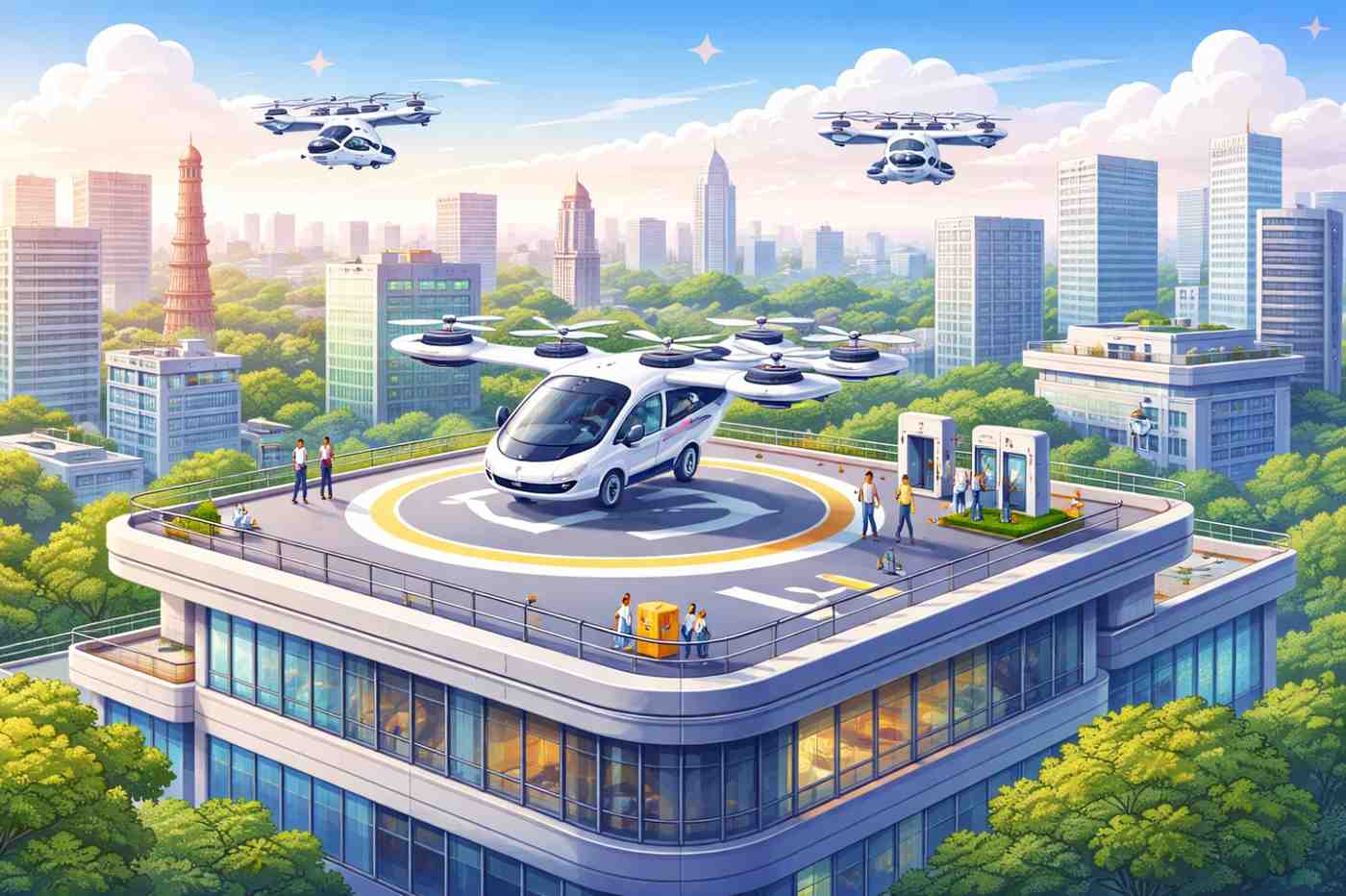
India is moving closer to a new era of urban transport, with plans to introduce electric air taxis in major cities by 2027. Authorities and private companies are now exploring rooftop vertiports in cities like Delhi and Bengaluru, which could become the first hubs for this new mode of travel.
Electric air taxis, also known as eVTOLs (electric vertical take-off and landing aircraft), are designed to reduce travel time in crowded cities. They can take off like helicopters but operate more quietly and with lower emissions. If the plan moves ahead on schedule, India could join a small group of countries testing urban air mobility within the next two to three years.
What Are Rooftop Vertiports?
Vertiports are special landing and take-off zones designed for electric air taxis. Unlike traditional airports, these facilities can be built on rooftops of commercial buildings, parking structures, transport hubs, and business districts. A typical vertiport may include landing pads, passenger waiting areas, charging stations for electric aircraft, and safety and control systems. These compact hubs are designed for short-distance urban flights.
Why Delhi and Bengaluru Are Leading the Plan
Delhi and Bengaluru are among the first cities being considered for rooftop vertiports. Both cities face heavy traffic congestion, long travel times, and high demand for faster transport options. Bengaluru, often called India’s tech capital, has long struggled with daily traffic jams, where travel between the airport and city centre can take two to three hours during peak time. Delhi also faces similar issues, especially during rush hours and major events. Electric air taxis could cut these journeys to 20–30 minutes, depending on the route.
Target Timeline: Commercial Launch by 2027
Authorities and industry players are working toward a commercial launch by 2027. The plan includes testing air taxi routes in major cities, setting up rooftop vertiports, creating safety and air traffic rules, and running pilot projects before full launch. The initial phase is expected to focus on short routes such as airport-to-business districts, key tech hubs, and major transport interchanges. Full public operations will depend on safety approvals and infrastructure readiness.
How Electric Air Taxis Work
Electric air taxis use vertical take-off technology powered by batteries instead of fuel. They look like a mix of a drone and a small helicopter. These aircraft are designed to carry 2 to 6 passengers, travel short distances within cities, produce lower noise than helicopters, and run on electric power. Many models can fly between 80 and 200 kilometres on a single charge, depending on design and payload.
Expected Ticket Prices in Early Stages
Air taxi rides may start at premium prices during the initial years. Early estimates suggest fares could be similar to high-end ride-hailing services. Airport routes may cost several thousand rupees per trip, but prices are expected to drop as the network expands. Experts believe that once operations scale up, prices could become more affordable for regular commuters.
Infrastructure Challenges India Must Solve
Building a working air taxi network will require major infrastructure changes. Cities will need new systems to manage low-altitude air traffic safely. Authorities must create strict rules for aircraft certification, pilot or autonomous systems, and emergency procedures. Vertiports will also need fast-charging stations for electric aircraft. In addition, rooftop vertiports will require structural safety checks, fire safety systems, and noise and zoning approvals before they can operate.
Who Is Working on India’s Air Taxi Plans
Several aviation and technology companies are exploring the Indian market. Local startups and global manufacturers are testing electric aircraft, studying Indian city routes, and partnering with infrastructure developers. Government agencies are also working on policies to support urban air mobility and create the regulatory framework needed for commercial operations.
Benefits of Electric Air Taxis
Air taxis could solve some of the biggest problems in urban transport. They can reduce travel time across crowded cities, as short flights between major hubs could save hours during peak traffic. Electric aircraft also produce fewer emissions than fuel-powered helicopters, which could help cities reduce pollution over time. Another advantage is better connectivity, as areas with poor road access could become easier to reach through air routes.
Concerns Around Safety and Noise
Despite the excitement, several concerns remain. Public safety is the biggest priority. Authorities must ensure strict certification of aircraft, reliable battery systems, and emergency landing protocols. Noise is another issue. While eVTOLs are quieter than helicopters, large-scale operations in dense cities could still raise concerns among residents.
Global Race for Urban Air Mobility
India is not alone in planning electric air taxis. Several countries are testing similar systems. Pilot projects are underway or planned in the United States, the United Arab Emirates, Japan, and parts of Europe. Many cities aim to launch commercial air taxi services between 2026 and 2028. If India meets its 2027 target, it could become one of the early adopters in Asia.
How This Could Change Daily Travel
Air taxis could transform how people move inside big cities. Short flights may replace long car rides on congested roads. Possible future uses include airport transfers, office-to-office travel, emergency transport, and VIP or business travel. Over time, if costs drop, air taxis could become part of regular urban transport networks.
What Happens Next
The next two years will be crucial for India’s air taxi plans. Authorities and companies will focus on testing aircraft in Indian conditions, building the first vertiports, finalising regulations, and running pilot passenger flights. If these steps move smoothly, commercial services could begin by 2027 in select city routes.
The Bottom Line
Rooftop vertiports in Delhi and Bengaluru could soon become a reality as India prepares for electric air taxis. The plan reflects a broader push toward faster, cleaner urban transport. While several technical and regulatory challenges remain, the idea of flying across the city in under 30 minutes is no longer just a concept. If the timeline holds, 2027 could mark the start of a new chapter in India’s urban mobility story.
Disclaimer: The information presented in this article is intended for general informational purposes only. While every effort is made to ensure accuracy, completeness, and timeliness, data such as prices, market figures, government notifications, weather updates, holiday announcements, and public advisories are subject to change and may vary based on location and official revisions. Readers are strongly encouraged to verify details from relevant official sources before making financial, investment, career, travel, or personal decisions. This publication does not provide financial, investment, legal, or professional advice and shall not be held liable for any losses, damages, or actions taken in reliance on the information provided.
Last Updated on: Monday, February 9, 2026 2:50 pm by Digital Herald Team | Published by: Digital Herald Team on Monday, February 9, 2026 2:50 pm | News Categories: Technology