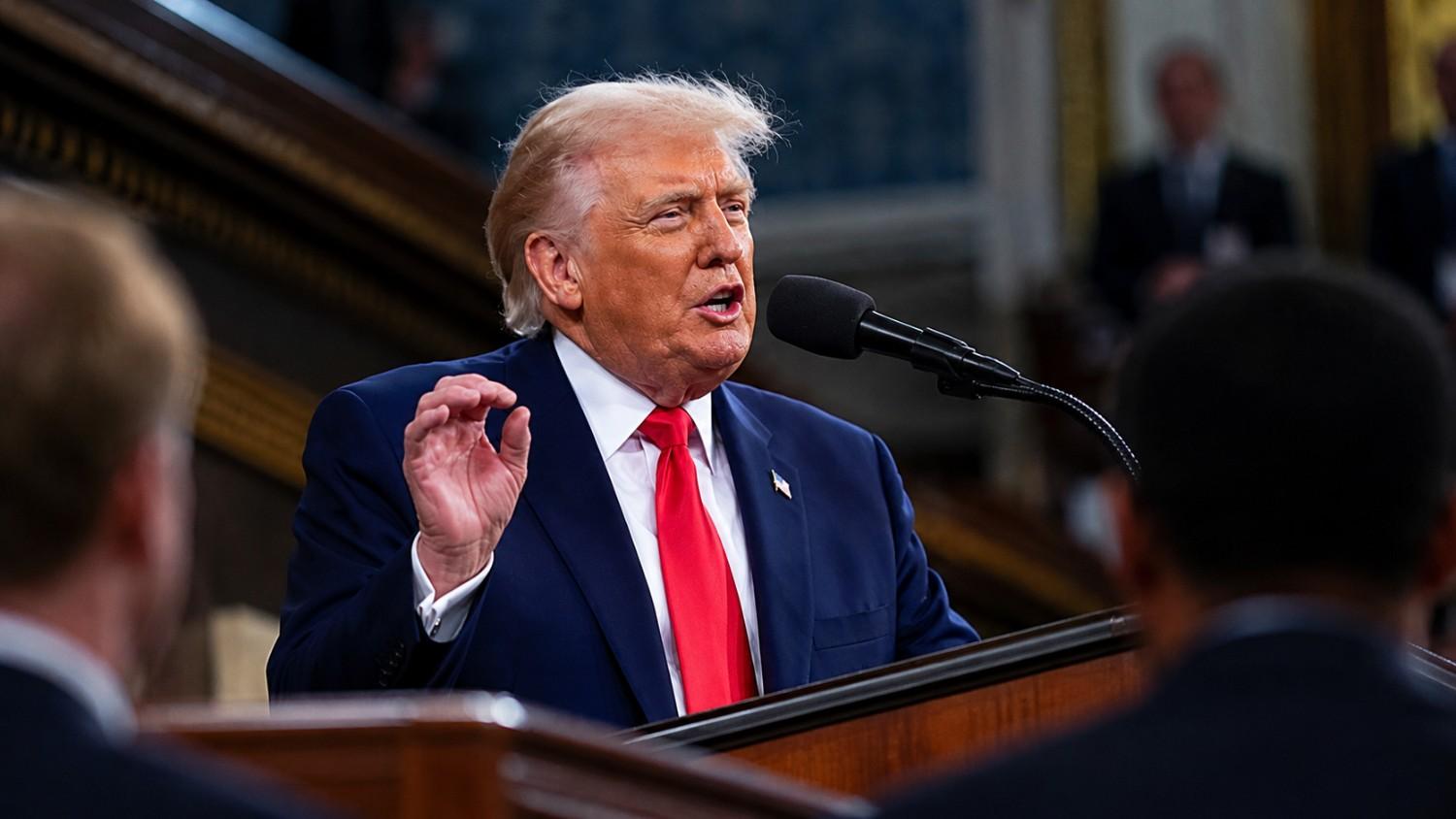
Former U.S. President Donald Trump has publicly outlined some of the toughest conditions yet proposed in ongoing discussions surrounding Iran’s nuclear programme, insisting that Tehran must either surrender or destroy its stockpile of highly enriched uranium as part of any future agreement with Washington.
The remarks, posted on Trump’s social media platform, have injected fresh uncertainty into already delicate diplomatic efforts between the United States and Iran, while also underscoring how the issue of uranium enrichment remains the central obstacle in attempts to revive a broader framework for regional stability and nuclear oversight.
Trump’s comments come at a time when indirect negotiations, international mediation efforts, and backchannel diplomatic activity involving Tehran and Western powers have intensified amid fears of escalating tensions in the Middle East.
Uranium Stockpile Emerges as Core Dispute
At the center of the latest debate is Iran’s growing stockpile of enriched uranium, particularly material enriched to levels far beyond what is typically required for civilian nuclear energy production.
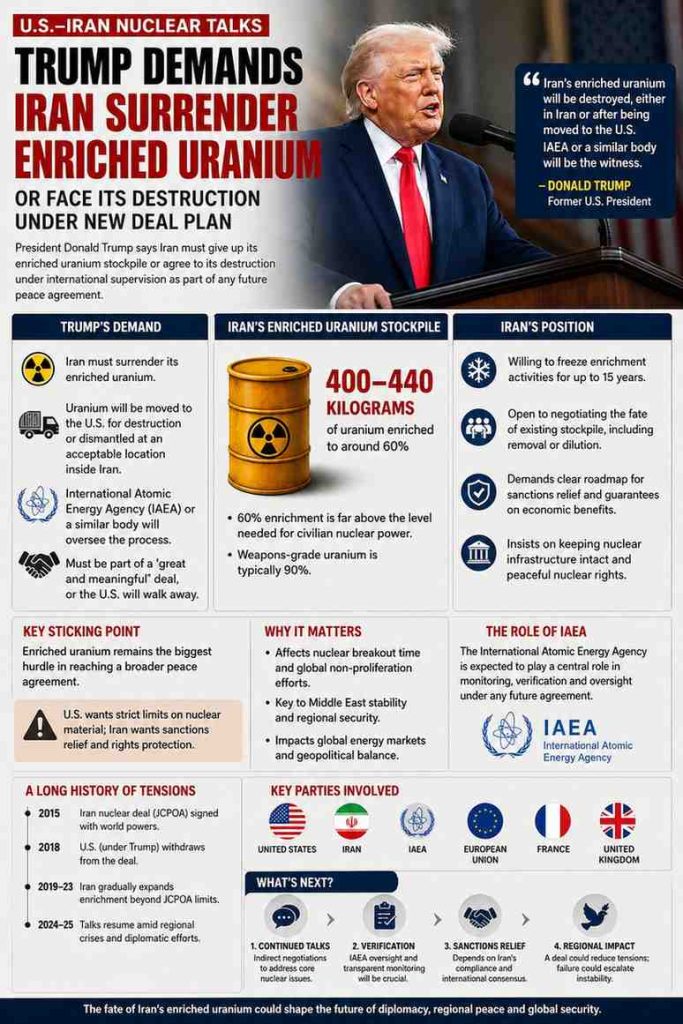
According to international monitoring assessments and Western officials, Iran is believed to possess roughly 400 to 440 kilograms of uranium enriched to approximately 60 percent purity. While that level remains below the roughly 90 percent enrichment generally associated with weapons-grade material, it is significantly above the limits established under the 2015 Joint Comprehensive Plan of Action (JCPOA).
Trump argued that such material should not remain under Iranian control under any future arrangement.
He said the uranium would either be transferred out of Iran — potentially to the United States — for destruction or dismantled at an internationally supervised site acceptable to both sides. Trump described the enriched material as “nuclear dust,” emphasizing that Washington views the stockpile as a major proliferation concern.
He also suggested that the International Atomic Energy Agency (IAEA), or another internationally recognized body, would oversee the destruction or transfer process.
Tehran Signals Openness — But With Conditions
Iran has not formally endorsed Trump’s characterization of the negotiations or publicly confirmed any agreement involving the transfer of enriched uranium outside the country.
However, Iranian officials have recently indicated a willingness to discuss temporary limits on enrichment activities, potential dilution of existing uranium stockpiles, and expanded international monitoring mechanisms — provided sanctions relief and economic guarantees are clearly defined.
Tehran continues to maintain that its nuclear programme is intended for peaceful civilian purposes and insists that it has the sovereign right to maintain nuclear infrastructure under international law.
Iranian negotiators have repeatedly argued that previous agreements failed because sanctions relief mechanisms proved unreliable and vulnerable to political changes in Washington.
That concern remains especially significant given Trump’s 2018 decision to withdraw the United States from the original JCPOA agreement during his first presidential term, a move that triggered years of escalating tensions and reciprocal nuclear expansion by Iran.
Nuclear Diplomacy Returns to the Forefront
The renewed debate reflects how nuclear diplomacy has once again become a major geopolitical issue amid wider instability across the Middle East.
The region has faced mounting tensions involving maritime security, proxy conflicts, energy infrastructure threats, and broader concerns surrounding Israel-Iran relations. Diplomatic observers say any future agreement involving Iran’s nuclear activities could significantly influence regional security calculations and global energy markets.
Analysts note that the enriched uranium issue is especially sensitive because it directly affects so-called “breakout time” — the period theoretically required for a country to accumulate sufficient fissile material for a nuclear weapon if it chose to pursue one.
Western governments have increasingly focused on reducing that risk through stricter enrichment caps, enhanced inspections, and limitations on uranium stockpiles.
Iran, meanwhile, has sought guarantees that sanctions relief would produce tangible long-term economic benefits before agreeing to major concessions.
Sanctions Relief Remains a Key Bargaining Tool
Economic sanctions continue to dominate the broader negotiations.
Iran’s economy has faced years of pressure from restrictions targeting oil exports, banking access, shipping, and international financial transactions. Although Tehran has developed alternative trade arrangements and expanded regional commercial partnerships, sanctions remain a major constraint on economic growth and foreign investment.
Iranian officials have repeatedly emphasized that any new agreement must include credible mechanisms preventing future unilateral withdrawal by the United States or the reimposition of sanctions without international consensus.
For Washington, however, limiting Iran’s nuclear capabilities remains a primary strategic objective.
Trump reiterated that any agreement must be “meaningful” and warned that the United States would walk away from negotiations if Iran failed to accept strict nuclear conditions.
International Oversight Could Become Central
The IAEA is expected to play a central role in any potential agreement.
International inspectors have monitored Iran’s nuclear facilities for years, though tensions between Tehran and the agency have periodically escalated over inspection access, transparency concerns, and verification procedures.
Diplomatic experts say future negotiations will likely depend heavily on the scope of international inspections, uranium accounting mechanisms, and long-term verification guarantees.
The challenge for negotiators will be balancing Iran’s insistence on preserving parts of its nuclear infrastructure with Western demands for strict limitations capable of rebuilding international confidence.
Broader Implications for Global Security
The outcome of the negotiations could carry consequences far beyond Washington and Tehran.
Any durable agreement could help stabilize regional tensions, reduce risks of military escalation, and influence global oil markets already affected by geopolitical volatility. Conversely, failure in negotiations could deepen uncertainty surrounding nuclear proliferation and regional security dynamics.
The discussions also reflect the broader shift in international diplomacy toward increasingly transactional negotiations involving sanctions, strategic deterrence, and economic leverage.
For now, both sides appear to be signaling cautious openness to continued dialogue while maintaining firm public positions on their respective red lines.
Whether those positions can eventually be reconciled remains one of the most consequential geopolitical questions currently facing international diplomacy.
Key Highlights
- Donald Trump said any future agreement with Iran must include the removal or destruction of Tehran’s enriched uranium stockpile under international supervision.
- Trump described Iran’s enriched uranium as a major security concern and warned the United States would reject any deal lacking strict nuclear restrictions.
- International estimates suggest Iran currently possesses roughly 400–440 kilograms of uranium enriched to around 60%, well above civilian-use levels.
- Iran has signaled openness to discussing limits on enrichment and possible dilution of uranium stockpiles, but insists sanctions relief and security guarantees remain essential.
- The future of Iran’s nuclear infrastructure and sanctions policy continues to be one of the biggest obstacles in ongoing diplomatic negotiations.
- The International Atomic Energy Agency (IAEA) is expected to play a key role in monitoring any future agreement involving uranium oversight or dismantlement.
- Analysts say the outcome of the talks could significantly affect Middle East stability, global energy markets, and wider international non-proliferation efforts.
Input & Images: Hindusthan Samachar
Edited by Manten Sasank
Add Digital Herald as preferred source on google – click here
Also read – Delhi Capitals Finish IPL 2026 Campaign With Convincing Win Over Kolkata Knight Riders
Last Updated on: Tuesday, May 26, 2026 10:57 am by Mantena Sasank | Published by: Mantena Sasank on Tuesday, May 26, 2026 10:46 am | News Categories: News