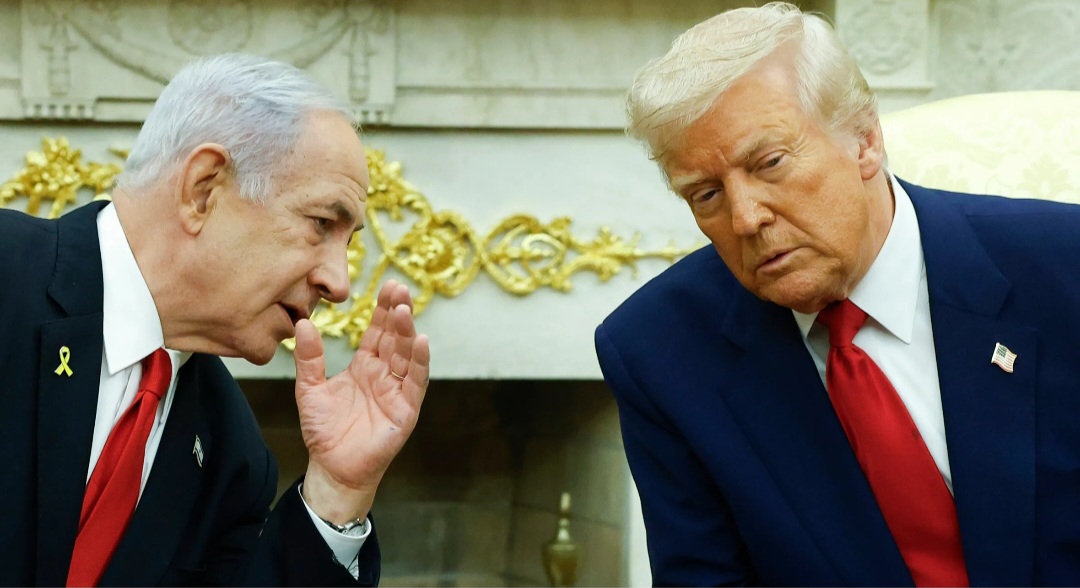
U.S. President Donald Trump has publicly emphasized diplomacy over military escalation in the latest phase of tensions involving Iran and Israel, signaling that Washington remains focused on securing a broader agreement with Tehran despite renewed hostilities across the Middle East.
The remarks come at a delicate moment for regional security, with ceasefire arrangements facing pressure following recent missile exchanges and growing concerns that a wider conflict could emerge if diplomatic efforts falter. Trump’s comments suggest the White House is attempting to preserve negotiations even as security challenges continue to test the fragile stability achieved in recent months.
Diplomacy Takes Center Stage
Speaking about ongoing contacts with Iran, Trump indicated that negotiations remain active and that progress is still possible despite recent military incidents. He suggested that retaliatory actions by regional actors could complicate efforts to reach a broader understanding designed to reduce tensions and prevent a return to large-scale confrontation.
The president’s position reflects a familiar strategic calculation in international diplomacy: avoiding actions that could derail talks during critical phases of negotiation. While acknowledging the seriousness of recent attacks, Trump argued that diplomatic channels should remain open and that negotiations should not be abandoned because of a single escalation.
The approach places renewed emphasis on dialogue at a time when many observers had feared that recent events could push the region back toward sustained conflict.
A Delicate U.S.-Israel Dynamic
Trump’s comments also drew attention to differences in emphasis between Washington and Israeli leadership regarding how to respond to Iranian actions.
Israel has consistently argued that it must retain the ability to respond decisively to perceived threats, particularly those involving missile capabilities and regional proxy networks. Israeli security officials have repeatedly stated that deterrence remains central to the country’s defense strategy.
The United States, while maintaining strong support for Israel’s security, appears increasingly focused on balancing military deterrence with diplomatic engagement. Analysts note that such differences are not uncommon between allies, particularly when negotiations involving regional adversaries are underway.
The latest developments highlight the challenge of coordinating security priorities while pursuing broader diplomatic objectives.
What Is at Stake in the Negotiations?
Although details of the discussions remain limited, the talks are believed to involve several long-standing points of contention between Washington and Tehran.
Among the most sensitive issues are Iran’s nuclear activities, regional security arrangements, sanctions relief, maritime security, and mechanisms designed to prevent future military confrontations.
Diplomatic efforts are also being closely watched by governments across the Gulf region, many of which have called for de-escalation while expressing concern about the impact of instability on trade, investment, and energy markets.
The outcome of the negotiations could influence security dynamics far beyond the immediate participants.
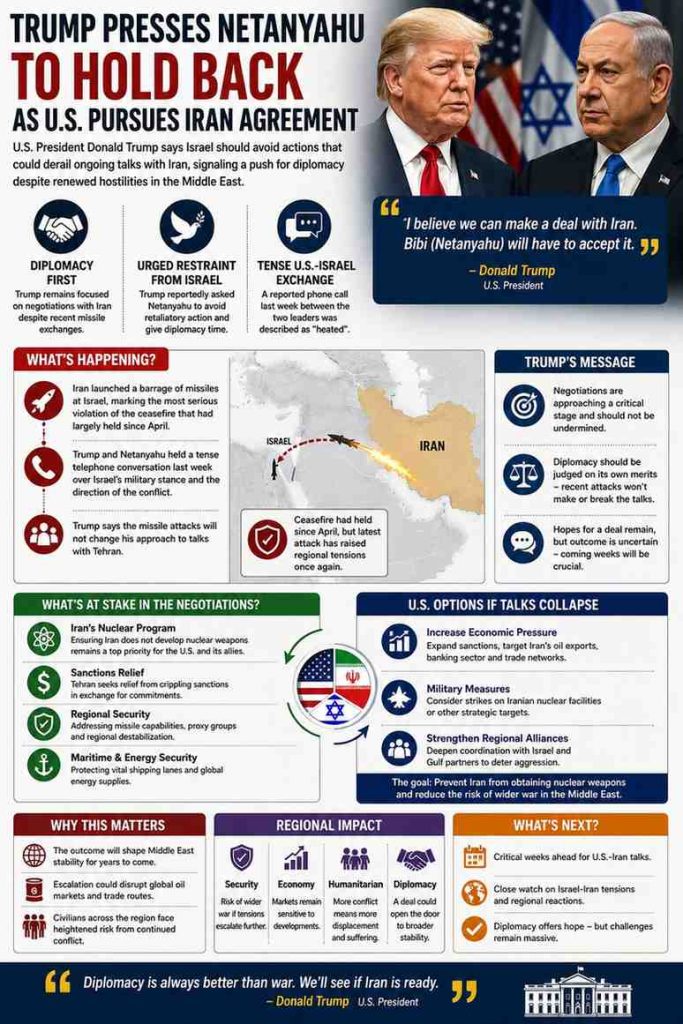
Regional Stability Remains Fragile
The Middle East continues to face a complex security environment shaped by overlapping conflicts, geopolitical rivalries, and competing strategic interests.
Recent missile attacks have demonstrated how quickly localized incidents can create wider regional consequences. Maritime routes, energy infrastructure, and civilian populations remain vulnerable whenever tensions rise.
International observers warn that even limited military exchanges carry the risk of miscalculation, particularly when multiple actors are involved.
For that reason, many diplomatic initiatives currently underway are focused not only on resolving immediate disputes but also on establishing mechanisms that can reduce the likelihood of future escalation.
The Weeks Ahead Could Be Crucial
Trump acknowledged that no agreement is guaranteed and that significant challenges remain before any diplomatic breakthrough can be achieved.
The coming weeks are expected to be critical as negotiators attempt to bridge differences on key issues while managing the fallout from recent security incidents. Failure could result in renewed economic pressure, additional sanctions, or a return to military confrontation. Success, however, could provide a pathway toward greater stability in one of the world’s most strategically important regions.
For now, Washington appears committed to testing diplomacy’s limits before considering more forceful alternatives. Whether that strategy produces lasting results may become one of the defining foreign-policy questions of the months ahead.
Key Highlights
- 🇺🇸 President Donald Trump signaled confidence that ongoing U.S.-Iran diplomacy could still produce a breakthrough despite rising regional tensions.
- 🤝 Trump urged Israeli Prime Minister Benjamin Netanyahu to avoid actions that could undermine ongoing negotiations with Tehran.
- 🚀 The comments came after Iran launched missile attacks against Israel, testing a ceasefire that had largely held since April.
- ⚠️ Trump’s stance highlights a rare public difference in approach between Washington and Jerusalem over how to respond to recent hostilities.
- 🕊️ The U.S. administration continues to prioritize diplomacy, arguing that recent military incidents should not derail negotiations.
- 🇮🇱 Israeli officials maintain that they must retain the ability to respond to Iranian threats and preserve deterrence.
- ☢️ Key issues in the talks reportedly include Iran’s nuclear activities, sanctions, regional security, and preventing future military escalation.
- 🌍 Gulf states and international observers are closely monitoring the negotiations due to their potential impact on regional stability and global energy markets.
- 📈 Trump acknowledged that success is not guaranteed, describing the coming weeks as critical for determining whether diplomacy can deliver results.
- 💰 If talks fail, Washington could consider stronger sanctions, economic pressure, or other measures against Iran.
- 🔥 Analysts warn that continued missile exchanges and security incidents could jeopardize efforts to reduce tensions across the Middle East.
- 🗺️ The outcome of the negotiations could play a major role in shaping regional security and U.S.-Middle East relations in the months ahead.
Input & Images: Hindusthan Samachar
Edited by Manten Sasank
Add Digital Herald as preferred source on google – click here
Also read – Powerful Earthquake Off Southern Philippines Triggers Tsunami Alerts and Emergency Response
Last Updated on: Monday, June 8, 2026 11:29 am by Mantena Sasank | Published by: Mantena Sasank on Monday, June 8, 2026 11:29 am | News Categories: News