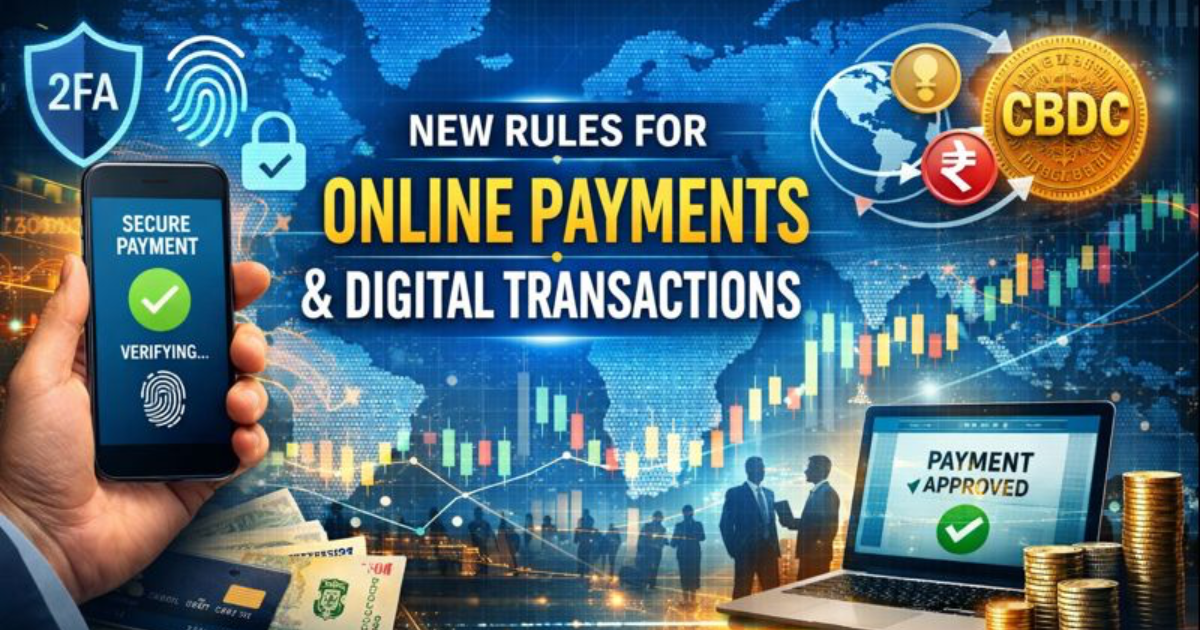
digital payments become the backbone of everyday commerce, governments and financial regulators are rolling out a new set of rules aimed at strengthening security, improving transparency, and protecting consumers. From online shopping and mobile wallets to instant bank transfers and cross-border payments, the regulatory overhaul is set to affect millions of users and businesses that rely on digital transactions daily.
The changes reflect growing concerns over cyber fraud, data privacy, system overloads, and the rapid expansion of fintech platforms operating at scale. Regulators say the new framework is designed to ensure that the speed and convenience of digital payments are matched by safety and accountability.
Stronger Security Measures Take Center Stage
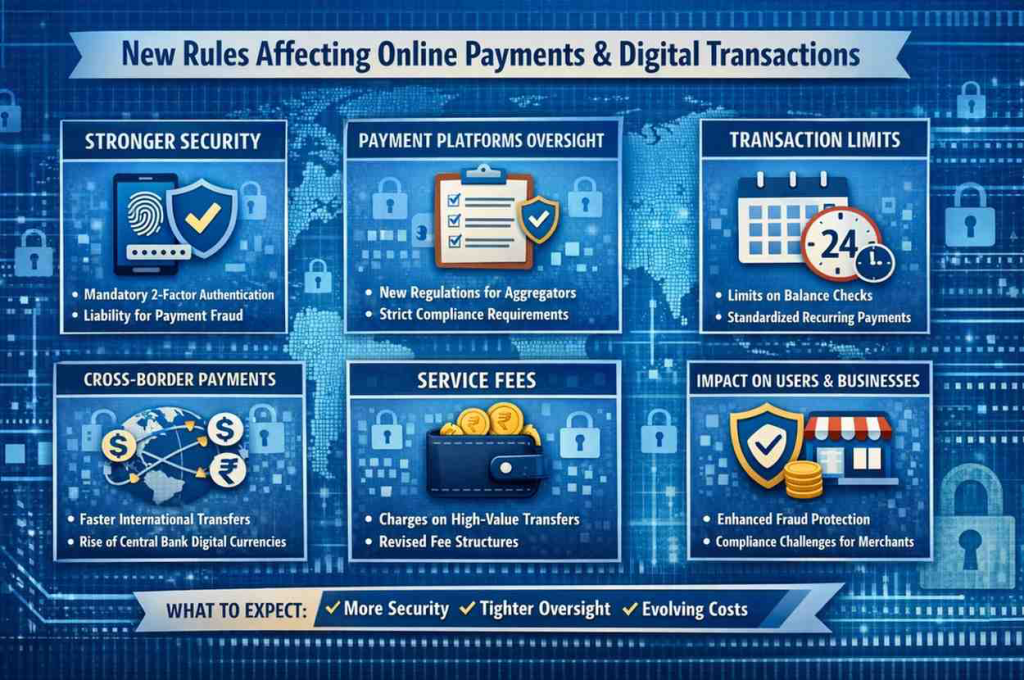
One of the most significant developments is the tightening of security norms for online transactions. Regulators are mandating stronger authentication processes for digital payments, particularly for high-value and remote transactions.
Under the new approach, users may be required to verify payments through multiple authentication factors, such as a password or PIN combined with a one-time code or biometric confirmation. The move is intended to reduce incidents of phishing, unauthorized access, and identity theft, which have risen alongside the growth of digital payment usage.
Banks and payment service providers will also face stricter liability rules. In cases where security protocols are not followed, customers may be entitled to quicker refunds, shifting greater responsibility onto institutions to maintain robust safeguards.
New Oversight for Payment Platforms
Another major focus of the updated rules is payment aggregators and digital intermediaries—the platforms that enable merchants to accept online payments. These entities are being brought under a unified regulatory framework, requiring them to meet defined standards for capital adequacy, data protection, customer grievance redressal, and operational transparency.
Regulators argue that consistent oversight is essential as payment aggregators play a critical role in handling large volumes of consumer funds. For businesses, this could mean more compliance checks when onboarding payment gateways, while for consumers, it promises greater clarity on how and where their money is processed.
Changes in Transaction Limits and Usage Rules
Users may also notice changes in how often and how freely certain digital payment features can be used. In some systems, limits are being placed on non-financial actions such as repeated balance checks or frequent status queries, measures aimed at reducing system congestion and improving reliability during peak usage hours.
Recurring payments, auto-debits, and subscription-based transactions are also being standardized with clearer consent and notification requirements. The intention is to ensure users are fully aware of ongoing deductions and have easier options to pause or cancel them.
Cross-Border Payments and Digital Currency Push
The new rules arrive at a time when authorities are also looking beyond domestic transactions. Regulators are exploring ways to streamline cross-border digital payments, which have traditionally been slower and more expensive than local transfers.
At the same time, central banks in several countries are experimenting with digital currencies as a regulated alternative to private digital assets. While still in pilot stages in many regions, these initiatives signal a future where official digital currencies could coexist with existing payment systems under strict regulatory oversight.
Possible Impact on Costs
While many digital payments remain low-cost or free, some institutions are reassessing their fee structures, particularly for high-value or instant transfers. Banks and service providers cite rising compliance and infrastructure costs as reasons for introducing or revising charges in certain segments.
Consumers are being advised to stay informed about applicable fees and to compare payment options based on speed, convenience, and cost.
What It Means for Consumers and Businesses
For consumers, the new rules are expected to bring stronger protection against fraud and clearer accountability, though they may also involve additional verification steps. For businesses and merchants, especially those operating online, compliance with updated payment norms will be essential to avoid disruptions.
Industry experts note that while the transition may cause short-term adjustments, the long-term goal is a more resilient and trusted digital payment ecosystem.
The Road Ahead
As digital transactions continue to expand in volume and complexity, regulators are signaling that oversight will evolve alongside technology. The current set of rules marks a shift from rapid adoption to structured governance—ensuring that innovation in payments is supported by stability, security, and consumer confidence.
With digital finance now deeply embedded in daily life, these regulatory changes are set to shape how money moves in the years ahead.
Also read :https://newsestate.in/how-recent-policy-decisions-could-influence-indias-economic-growth-outlook/
Add digitalherald.in as a preferred source on google – click here
Last Updated on: Thursday, January 22, 2026 10:55 am by Digital Herald Team | Published by: Digital Herald Team on Thursday, January 22, 2026 10:55 am | News Categories: Finance