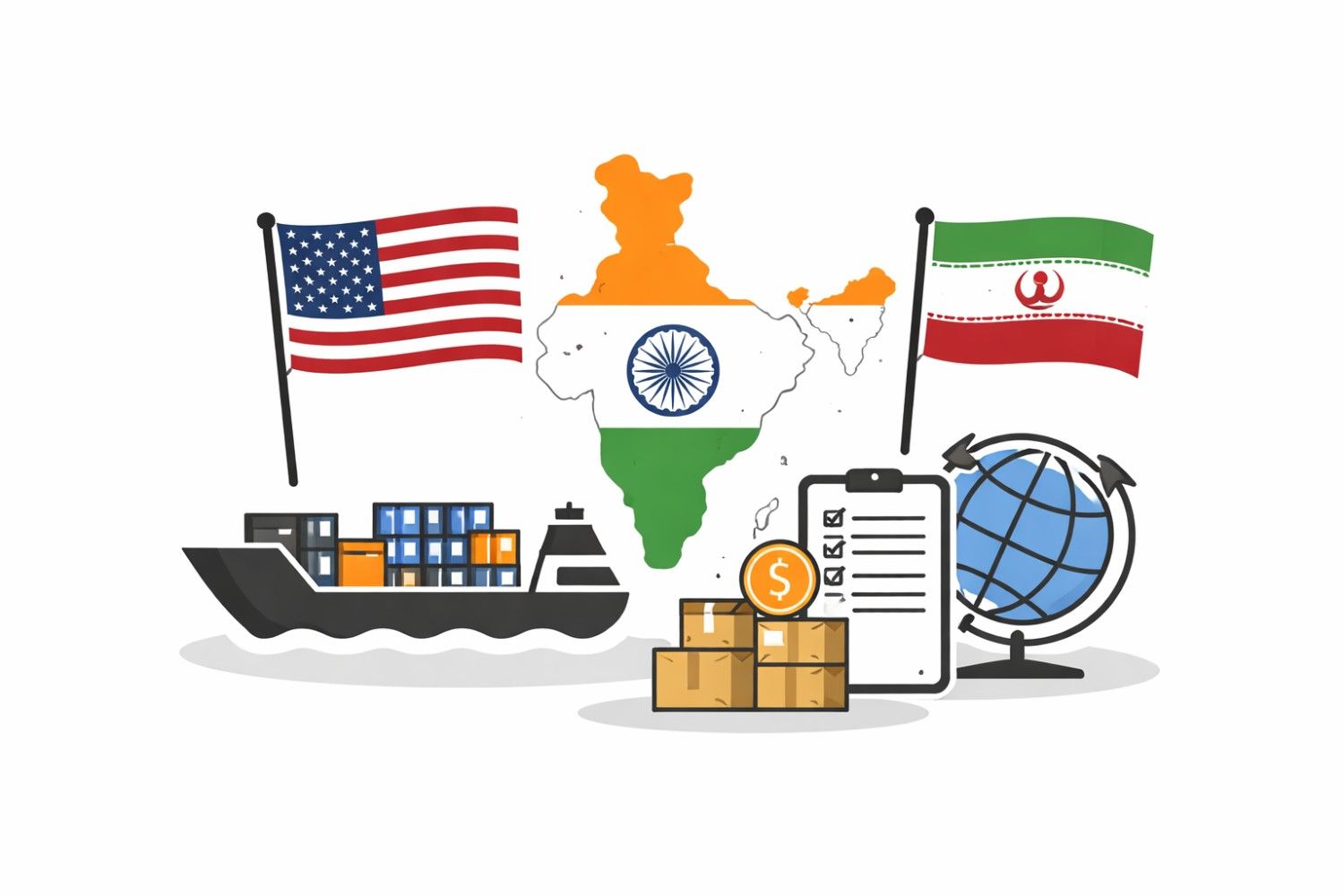
As global trade negotiations gain pace and tensions between the United States and Iran continue to shape West Asian geopolitics, India finds itself in a critical strategic position.
The outcome of ongoing trade talks and regional power pressures could impact oil prices, supply chains, exports, and diplomatic alignments. For India, which depends heavily on global energy imports and trade stability, the developments carry direct economic and security implications.
This moment is important not just for policymakers, but also for businesses, investors, and citizens tracking global economic trends.
Why Global Trade Talks Matter in 2026
Global trade discussions are taking place at a time when supply chains are still adjusting after pandemic disruptions and geopolitical conflicts.
Major economies are focusing on:
• Strengthening domestic manufacturing
• Reducing overdependence on single markets
• Securing energy supply routes
• Protecting technology and critical minerals
Trade agreements today are not only about tariffs. They include digital trade, data flows, green energy cooperation, and strategic partnerships.
India has been actively engaging in bilateral and multilateral trade negotiations in recent years. Agreements with countries in Asia, Europe, and Australia have shown India’s intent to expand export markets while protecting domestic industries.
In this broader context, tensions in West Asia and US–Iran relations add another layer of uncertainty.
US–Iran Tensions: A Persistent Global Flashpoint
Relations between the United States and Iran have remained strained for years, especially after the US withdrew from the 2015 nuclear agreement in 2018.
Sanctions on Iran’s oil exports and financial systems have continued to shape global energy markets.
Any escalation in tensions can lead to:
• Volatility in crude oil prices
• Risks to shipping routes in the Strait of Hormuz
• Disruptions in global energy supply
The Strait of Hormuz is one of the world’s most important oil transit chokepoints. A significant portion of global crude shipments passes through this narrow waterway.
For India, which imports over 80 percent of its crude oil needs, stability in this region is crucial.
Impact on Global Energy Markets
Oil prices react quickly to geopolitical tensions.
Even small signals of conflict in West Asia can push prices higher in international markets. Higher crude prices can lead to:
• Increased fuel costs in India
• Pressure on inflation
• Higher import bills
• Impact on fiscal balance
India has diversified its energy sources over the years, importing from countries such as Iraq, Saudi Arabia, Russia, and the United States. However, regional instability can still affect shipping costs and insurance premiums.
Energy security remains a key priority in India’s foreign policy.
India’s Strategic Balancing Act
India maintains diplomatic relations with both the United States and Iran.
The US is one of India’s largest trading partners and a key strategic ally in defence, technology, and Indo-Pacific cooperation.
At the same time, Iran has been historically important for India’s energy imports and regional connectivity projects.
India’s approach has generally focused on:
• Strategic autonomy
• Balanced diplomacy
• Protecting national economic interests
This balancing act becomes more complex when global tensions rise.
The Chabahar Port and Connectivity
One of India’s major interests in Iran is the development of the Chabahar Port. The project aims to improve connectivity to Afghanistan and Central Asia.
Chabahar provides India with access to markets that bypass Pakistan, strengthening regional trade routes.
Despite US sanctions on Iran, India has received limited exemptions in the past for work related to Chabahar due to its strategic importance.
Any change in US–Iran dynamics could affect the pace and scope of such projects.
Trade Realignments and Supply Chain Shifts
Global trade talks are increasingly influenced by geopolitical tensions.
Countries are focusing on “friend-shoring” and “near-shoring” strategies. This means shifting supply chains toward trusted partners.
India has positioned itself as an alternative manufacturing hub under initiatives such as “Make in India” and Production Linked Incentive (PLI) schemes.
As companies look to diversify away from high-risk zones, India may benefit from supply chain realignment.
However, energy price volatility remains a risk factor.
India–US Trade Relations
India and the United States have strengthened economic ties over the last decade.
The US is among India’s top export destinations. Key sectors include:
• Information technology services
• Pharmaceuticals
• Engineering goods
• Textiles and apparel
Trade discussions between the two countries have focused on market access, digital trade, and tariff issues.
In a world shaped by US–Iran tensions, India must ensure that its economic partnership with Washington remains strong while preserving its independent foreign policy.
West Asia’s Importance for Indian Diaspora
Beyond trade and oil, West Asia is home to millions of Indian workers.
Countries in the Gulf region employ a large Indian diaspora that contributes significantly to remittances.
Regional instability could affect:
• Employment opportunities
• Remittance flows
• Safety of Indian nationals abroad
The Indian government closely monitors developments in the region to protect its citizens and economic interests.
Multilateral Platforms and India’s Role
India has increased its participation in global forums such as the G20, BRICS, and the Quad.
Through these platforms, India advocates:
• Stable global trade rules
• Energy security
• Respect for sovereignty
• Balanced global governance
India’s growing economic size gives it greater influence in shaping international discussions.
Its diplomatic strategy often emphasises dialogue and de-escalation in conflict situations.
Risks and Opportunities Ahead
The combination of global trade negotiations and US–Iran tensions presents both risks and opportunities.
Risks include:
• Oil price spikes
• Market volatility
• Disrupted trade routes
• Currency fluctuations
Opportunities include:
• Expanded trade partnerships
• Supply chain diversification
• Stronger strategic positioning
• Increased global investment interest
India’s ability to navigate this environment will depend on economic resilience and diplomatic agility.
What Businesses and Investors Should Watch
Indian businesses should closely monitor:
• Crude oil price movements
• Shipping and logistics costs
• Policy updates from major economies
• Currency exchange trends
Investors should also watch how global tensions influence stock markets, commodity prices, and foreign investment flows.
Energy, defence, shipping, and export-oriented sectors may be particularly sensitive to global developments.
Conclusion
Global trade talks and ongoing US–Iran tensions are reshaping the international economic landscape, placing India in a strategically important position.
As a major emerging economy with strong ties to multiple global powers, India must carefully balance its diplomatic and economic priorities.
Energy security, supply chain resilience, and trade diversification remain central to India’s strategy.
In a world marked by uncertainty, India’s measured and pragmatic approach could help it strengthen its role as a stabilising force in global affairs.
For Indian businesses, policymakers, and citizens, staying informed about these developments is essential as global events continue to influence domestic economic realities.
Disclaimer: The information presented in this article is intended for general informational purposes only. While every effort is made to ensure accuracy, completeness, and timeliness, data such as prices, market figures, government notifications, weather updates, holiday announcements, and public advisories are subject to change and may vary based on location and official revisions. Readers are strongly encouraged to verify details from relevant official sources before making financial, investment, career, travel, or personal decisions. This publication does not provide financial, investment, legal, or professional advice and shall not be held liable for any losses, damages, or actions taken in reliance on the information provided.
Edited by Mantena sasank
Last Updated on: Thursday, February 26, 2026 11:31 am by Digital Herald Team | Published by: Digital Herald Team on Thursday, February 26, 2026 11:31 am | News Categories: General