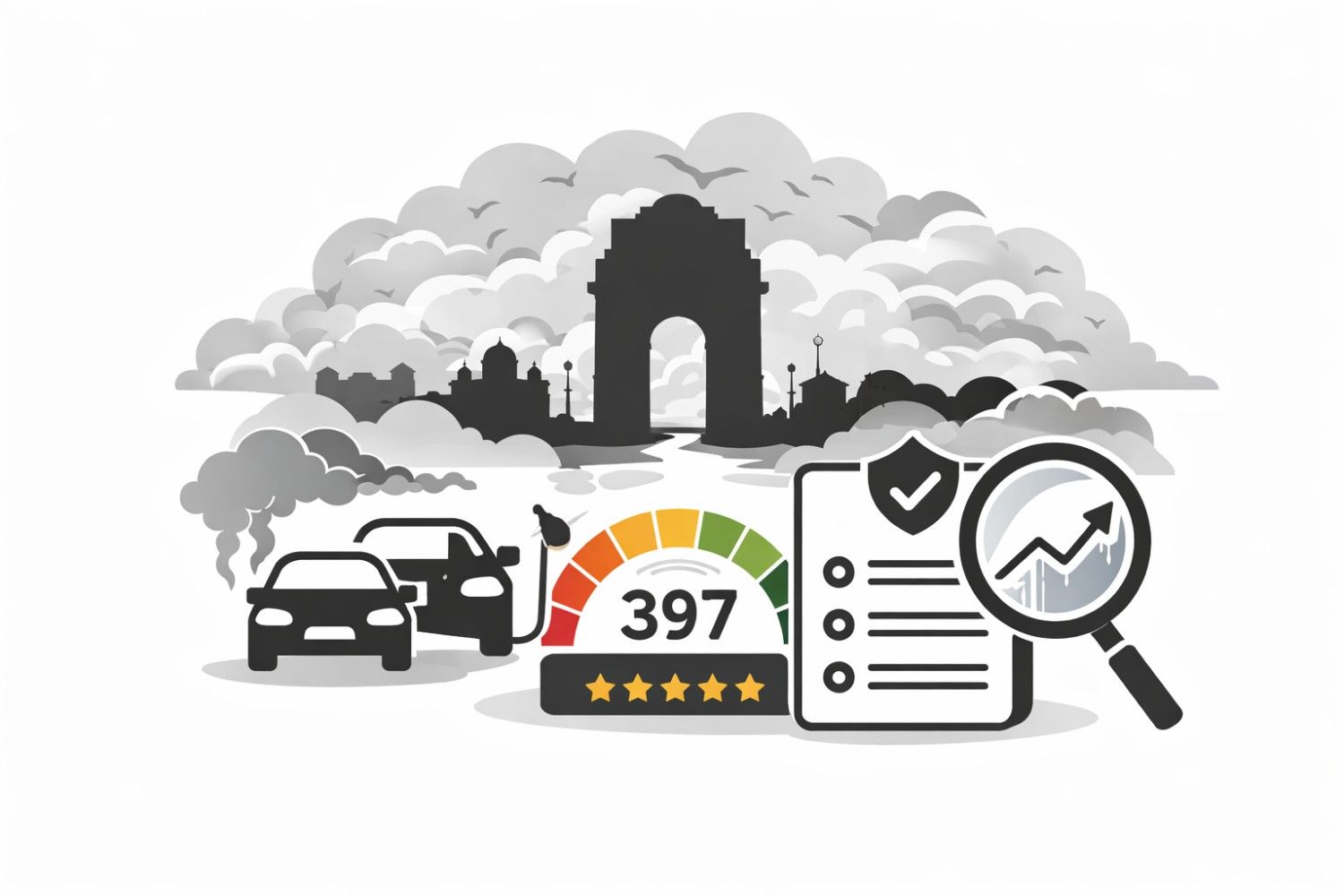
Delhi’s air pollution levels have once again pushed air quality into the ‘poor’ to ‘very poor’ category, leading to a spike in online searches related to vehicles, fuel norms, electric cars, and government pollution policies.
Residents across the National Capital Region (NCR) are closely tracking the Air Quality Index (AQI), health advisories, and traffic restrictions. At the same time, searches for terms such as “Delhi AQI today,” “odd-even rule,” “BS6 vehicles,” “electric cars in India,” and “CAQM restrictions” have risen sharply.
The renewed focus highlights how air pollution in Delhi is not just an environmental issue but also an automotive and policy debate with wide economic and public health impact.
Delhi AQI: Why It Matters Today
Delhi regularly faces high pollution levels, especially during winter months. Weather conditions, low wind speed, and temperature inversion often trap pollutants near the ground.
The Air Quality Index (AQI) categorises pollution levels as:
• 0–50: Good
• 51–100: Satisfactory
• 101–200: Moderate
• 201–300: Poor
• 301–400: Very Poor
• 401–500: Severe
When AQI crosses 300, health risks increase, particularly for children, the elderly, and those with respiratory conditions.
As pollution levels rise, public attention shifts to traffic control measures, vehicle emissions, and long-term clean air solutions.
Vehicle Emissions Under Fresh Scrutiny
Vehicular emissions remain a major contributor to Delhi’s air pollution.
According to studies by government and research agencies, transport emissions account for a significant share of local pollution. As a result, search interest around automotive norms tends to rise whenever AQI worsens.
Key automotive topics trending today include:
• Bharat Stage (BS6) emission standards
• Diesel vehicle restrictions
• Electric vehicle (EV) adoption
• Scrappage policy rules
• CNG vehicle benefits
Delhi implemented BS6 fuel norms in April 2020, aimed at reducing sulphur content and harmful emissions.
The transition to cleaner fuel was a major policy shift in India’s automotive sector.
Odd-Even Rule and Traffic Restrictions
Whenever pollution crosses critical levels, authorities consider measures such as the odd-even traffic rule.
Under this system:
• Vehicles with odd-numbered plates run on odd dates
• Even-numbered vehicles run on even dates
This temporary step aims to reduce traffic volume and emissions.
Although not always in force, public searches spike when AQI levels rise and the possibility of restrictions increases.
Residents want clarity on school closures, work-from-home advisories, and public transport guidelines.
Role of CAQM and GRAP Measures
The Commission for Air Quality Management (CAQM) oversees pollution control in Delhi and surrounding states.
Under the Graded Response Action Plan (GRAP), restrictions are imposed in stages based on AQI levels.
GRAP includes actions such as:
• Ban on construction activities
• Restrictions on diesel generators
• Increased public transport services
• Closure of certain industrial units
These measures aim to reduce immediate pollution spikes.
As GRAP stages are activated, policy-related searches increase rapidly.
Electric Vehicles Gain Attention
As pollution concerns grow, interest in electric vehicles (EVs) rises.
Delhi has one of India’s most active EV policies, offering incentives to promote adoption.
Searches for:
• “Best electric car in India”
• “EV subsidy in Delhi”
• “Electric scooter price”
often trend during high pollution episodes.
EVs are seen as a long-term solution to reduce vehicular emissions, though infrastructure challenges remain.
Charging stations, battery costs, and resale value are among the top concerns for consumers.
Health Concerns Drive Public Response
Air pollution has direct health effects.
High AQI levels can lead to:
• Breathing difficulties
• Eye irritation
• Increased asthma attacks
• Reduced lung function
Hospitals in Delhi often report higher respiratory cases during peak pollution months.
As a result, people search for:
• Air purifiers
• N95 masks
• Indoor air quality tips
• School advisories
This combination of health and policy interest fuels search spikes.
Construction Dust and Regional Factors
Air pollution in Delhi is not caused by vehicles alone.
Major contributors include:
• Construction dust
• Industrial emissions
• Stubble burning in neighbouring states
• Road dust
• Firecrackers during festive seasons
Wind direction and weather patterns also play a key role.
When pollution rises, public debate often shifts toward regional coordination between Delhi, Haryana, Punjab, and Uttar Pradesh.
Automotive Industry Impact
The automotive sector closely monitors pollution-related policies.
Temporary bans or restrictions can affect:
• Vehicle sales
• Diesel car demand
• Fleet operations
• Logistics costs
When stricter measures are announced, companies adjust marketing and inventory strategies.
In recent years, automakers have increased focus on hybrid and electric vehicles to align with sustainability goals.
Public Transport and Policy Shift
Delhi Metro and bus services often see increased ridership during high pollution alerts.
Authorities encourage residents to reduce private vehicle use.
Searches for:
• Metro routes
• Bus timings
• Carpool options
tend to rise.
Policy discussions now increasingly focus on:
• Expanding electric bus fleets
• Improving last-mile connectivity
• Promoting cycling infrastructure
Clean mobility is becoming central to urban planning.
Air Purifiers and Consumer Market Trends
Retail demand for air purifiers and indoor filtration systems usually increases during pollution peaks.
E-commerce platforms report higher interest in:
• HEPA filter purifiers
• Smart air monitors
• Pollution masks
While these products offer temporary relief, experts stress that long-term solutions must address pollution sources.
Government’s Long-Term Strategy
India has launched several initiatives to tackle air pollution, including:
• National Clean Air Programme (NCAP)
• Promotion of electric mobility
• Crop residue management schemes
• Stricter emission norms
The NCAP aims to reduce particulate pollution in major cities through coordinated efforts.
Delhi remains one of the most closely monitored cities under this programme.
Why Search Interest Is Surging Today
Search trends spike when:
• AQI crosses “very poor” levels
• GRAP restrictions are activated
• Schools issue advisories
• Traffic rules are debated
• Health warnings circulate
The combination of real-time AQI updates and instant digital access makes pollution a trending topic quickly.
For residents, information is essential for daily decisions such as commuting, outdoor activities, and school attendance.
What Residents Should Do
Health experts often advise:
• Limiting outdoor exposure during peak pollution hours
• Using masks in severe conditions
• Keeping indoor air clean
• Following official advisories
Checking AQI updates from reliable sources can help residents plan better.
Conclusion
Delhi’s rising air pollution levels have triggered renewed public concern, leading to sharp growth in automotive and policy-related online searches.
From BS6 norms and EV incentives to GRAP restrictions and odd-even rules, residents are seeking clarity on how policies affect daily life.
The spike in search interest reflects the deep connection between environmental health, mobility choices, and governance.
While short-term restrictions aim to manage immediate risks, long-term solutions will depend on cleaner transport, regional coordination, and sustained policy action.
As Delhi continues to battle seasonal air quality challenges, informed citizens and responsible policy implementation remain key to lasting improvement.
Disclaimer: The information presented in this article is intended for general informational purposes only. While every effort is made to ensure accuracy, completeness, and timeliness, data such as prices, market figures, government notifications, weather updates, holiday announcements, and public advisories are subject to change and may vary based on location and official revisions. Readers are strongly encouraged to verify details from relevant official sources before making financial, investment, career, travel, or personal decisions. This publication does not provide financial, investment, legal, or professional advice and shall not be held liable for any losses, damages, or actions taken in reliance on the information provided.
Edited by Mantena sasank
Last Updated on: Thursday, February 26, 2026 11:57 am by Digital Herald Team | Published by: Digital Herald Team on Thursday, February 26, 2026 11:57 am | News Categories: Automobile