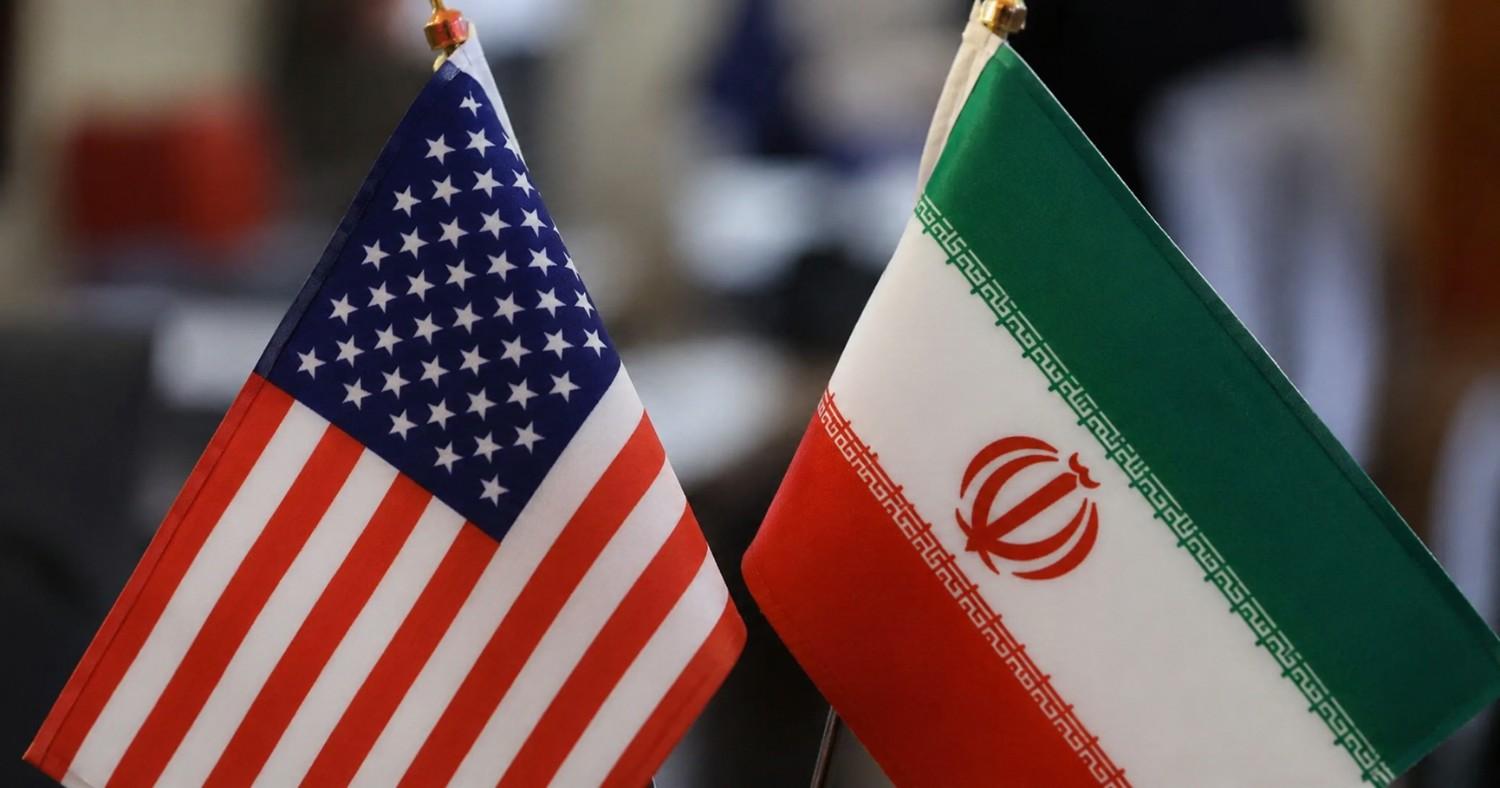
The United States has imposed a new round of sanctions targeting Iran’s financial and shipping networks, signaling that Washington intends to maintain economic pressure on Tehran even as broader geopolitical tensions and diplomatic negotiations continue to evolve.
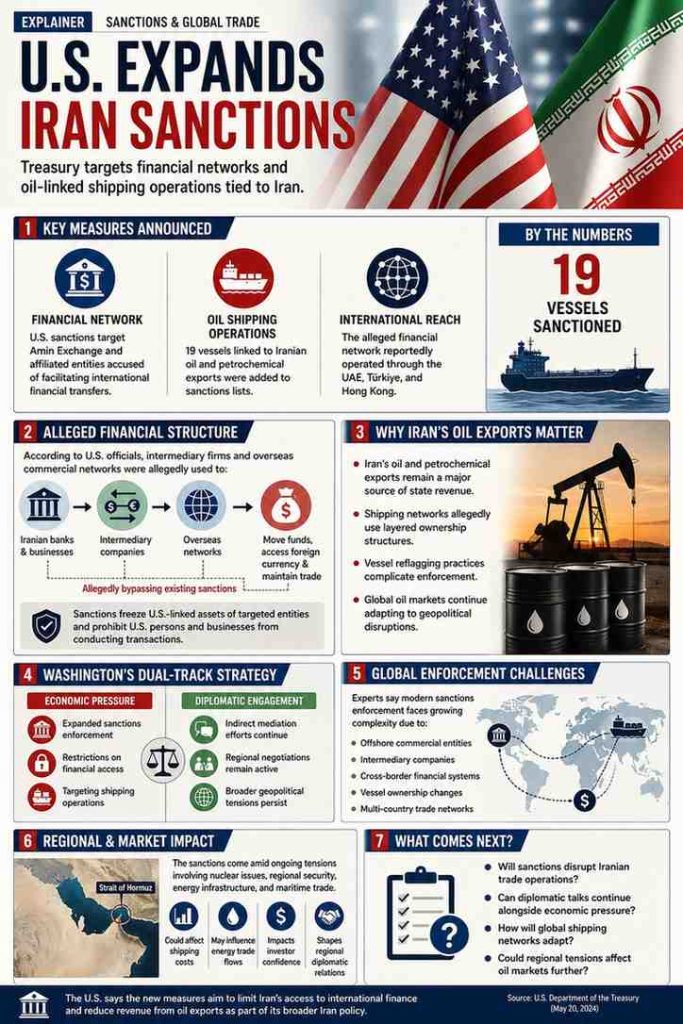
The latest measures, announced by the U.S. Department of the Treasury, focus on a foreign exchange company identified as Amin Exchange, along with a network of affiliated entities and 19 vessels allegedly involved in facilitating Iranian oil and petrochemical exports.
American officials said the sanctions are designed to disrupt channels that Iran allegedly uses to access the international financial system and generate revenue despite years of restrictions tied to its nuclear program, regional activities, and sanctions enforcement disputes.
Treasury Targets Alleged Financial Evasion Network
According to the Treasury Department, Amin Exchange operated as part of a broader financial structure that allegedly enabled Iranian banks and businesses to conduct cross-border transactions through intermediary companies and overseas commercial networks.
U.S. officials claim the operation extended through jurisdictions including the United Arab Emirates, Türkiye, and Hong Kong, regions that have increasingly become focal points in global sanctions enforcement efforts.
Washington alleges that the network helped Iranian entities move funds internationally, obtain foreign currency, and maintain trade flows despite existing restrictions on Iran’s banking sector.
The Treasury Department said the latest sanctions aim to close loopholes that American authorities believe Tehran has used to soften the impact of international economic isolation.
The sanctions generally freeze any U.S.-linked assets connected to the targeted entities and prohibit American individuals or businesses from conducting transactions with them.
Focus on Iran’s Oil Revenue
Alongside the financial sanctions, the United States also imposed restrictions on 19 vessels accused of transporting Iranian oil and petrochemical products.
U.S. officials allege the ships were involved in moving Iranian energy exports to foreign buyers through complex shipping arrangements designed to obscure cargo origins and ownership structures.
Iran’s oil exports remain a central target of American sanctions policy because energy sales continue to represent one of Tehran’s most important sources of revenue.
Over the past several years, Washington has repeatedly accused Iran of using layered shipping networks, vessel reflagging practices, and intermediary firms to continue exporting crude oil and petrochemical products despite restrictions.
Analysts note that enforcement actions against shipping fleets have become an increasingly important tool in U.S. sanctions policy, particularly as global energy markets adapt to geopolitical disruptions and fluctuating oil demand.
Sanctions Strategy Continues Despite Diplomatic Openings
The latest measures arrive during a period of heightened uncertainty surrounding U.S.-Iran relations.
While indirect diplomatic contacts and international mediation efforts have periodically resumed, Washington has simultaneously continued expanding sanctions enforcement against Iranian-linked financial and commercial operations.
That dual-track approach — combining economic pressure with selective diplomacy — has defined much of the U.S. strategy toward Iran in recent years across multiple administrations.
American policymakers argue that sustained sanctions are necessary to limit Iran’s access to international finance and constrain funding for activities viewed by Washington as destabilizing.
Iranian officials, however, have long criticized the sanctions regime as economically punitive and politically motivated, arguing that broad restrictions have severely affected ordinary citizens, trade access, and economic development.
Tehran has consistently maintained that many of its commercial and financial activities are lawful under international trade norms.
Global Enforcement Challenges Persist
The latest sanctions also highlight the growing complexity of enforcing international financial restrictions in a deeply interconnected global economy.
Financial networks operating across multiple jurisdictions can make sanctions enforcement increasingly difficult, particularly when transactions involve intermediaries, layered ownership structures, and offshore commercial entities.
Countries such as the UAE and Türkiye have emerged as important regional commercial hubs where regulators and financial institutions face mounting scrutiny over sanctions compliance and cross-border trade monitoring.
Shipping enforcement presents similar challenges. Energy cargoes can be transferred between vessels, re-documented under different ownership arrangements, or routed through third-party intermediaries before reaching global markets.
Experts say these evolving tactics have turned sanctions enforcement into a continuous regulatory and geopolitical contest between governments and commercial networks.
Economic and Geopolitical Implications
The renewed sanctions underscore how Iran remains a central issue in broader Middle East and global geopolitical calculations.
The measures come amid continued tensions over Iran’s nuclear activities, regional security concerns, and disputes involving energy infrastructure and maritime trade routes.
Although global oil markets have adapted to years of sanctions-related volatility involving Iran, Russia, and other major producers, analysts say additional enforcement actions can still influence shipping costs, energy flows, and investor sentiment.
The sanctions also reflect Washington’s effort to demonstrate continued pressure on Tehran while balancing diplomatic engagement with regional allies and international partners.
Whether the latest measures significantly disrupt Iran’s commercial operations remains uncertain. Previous sanctions rounds have often led Iranian-linked networks to adopt new logistical and financial mechanisms to continue trade activity.
Still, the latest action signals that the United States intends to sustain aggressive enforcement efforts as part of its broader Iran policy in the months ahead.
Key Highlights
- The United States imposed new sanctions on Iran targeting Amin Exchange, an alleged financial network, and 19 vessels accused of supporting Iranian oil and petrochemical exports.
- U.S. officials claim the network operated through jurisdictions including the UAE, Türkiye, and Hong Kong to help Iranian entities access international financial systems despite existing sanctions.
- Washington said the measures are aimed at limiting Iran’s ability to generate revenue through foreign currency transactions and energy exports.
- The sanctions reflect the continued U.S. strategy of combining economic pressure with diplomatic engagement as tensions over Iran’s nuclear activities and regional influence persist.
- Iran’s oil shipping operations remain a major focus of U.S. enforcement efforts, with American authorities alleging the use of complex maritime arrangements to bypass restrictions.
- Analysts say enforcing sanctions has become increasingly difficult due to globalized financial systems, intermediary firms, vessel reflagging, and multi-country commercial networks.
- The latest measures could affect shipping operations, trade flows, and regional energy markets, although previous sanctions have often led Iranian-linked networks to adapt through alternative channels.
Input & Images: Hindusthan Samachar
Edited by Manten Sasank
Add Digital Herald as preferred source on google – click here
Also read – Modi’s Norway Visit Signals India’s Expanding Strategic Push Into Europe and the Arctic
Last Updated on: Wednesday, May 20, 2026 11:23 am by Mantena Sasank | Published by: Mantena Sasank on Wednesday, May 20, 2026 11:23 am | News Categories: News