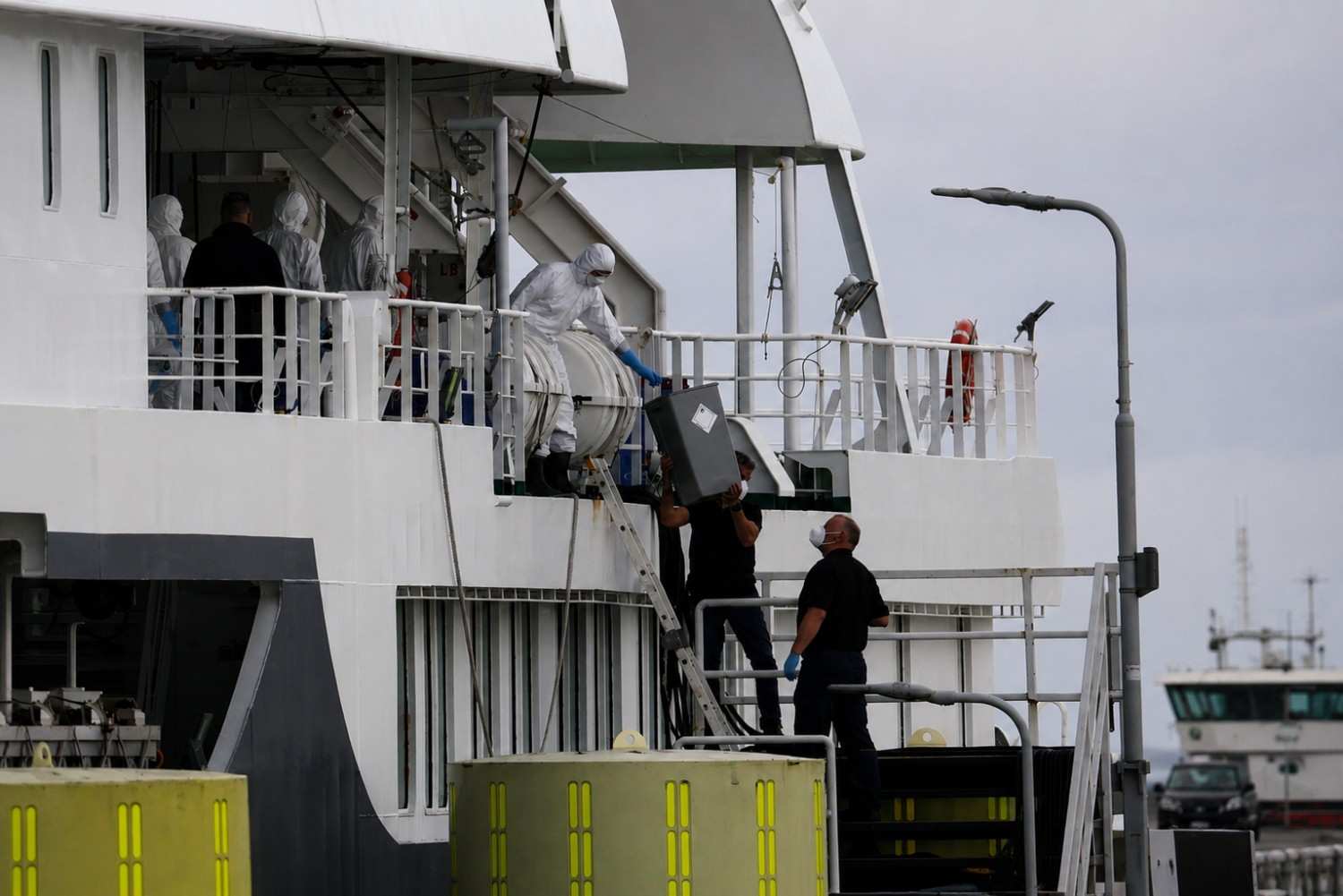
Spanish health authorities have transferred a cruise passenger infected with hantavirus to a high-isolation medical facility in Madrid after confirming a case linked to a broader outbreak aboard an expedition cruise ship that travelled through remote areas of the South Atlantic.
The patient, who had already been placed under precautionary quarantine following the voyage, is currently receiving treatment and observation at Gómez Ulla Hospital, one of Spain’s specialized centers equipped to manage infectious disease cases requiring enhanced containment measures.
Officials from Spain’s Ministry of Health said the situation remains under control and stressed that there is currently no indication of widespread public health risk. Health authorities have continued contact tracing and medical monitoring for passengers and crew associated with the voyage.
The incident has renewed attention on hantavirus infections, a relatively rare but potentially severe disease that public health agencies often monitor closely because of its ability to cause serious respiratory complications.
Outbreak Linked to Expedition Cruise Route
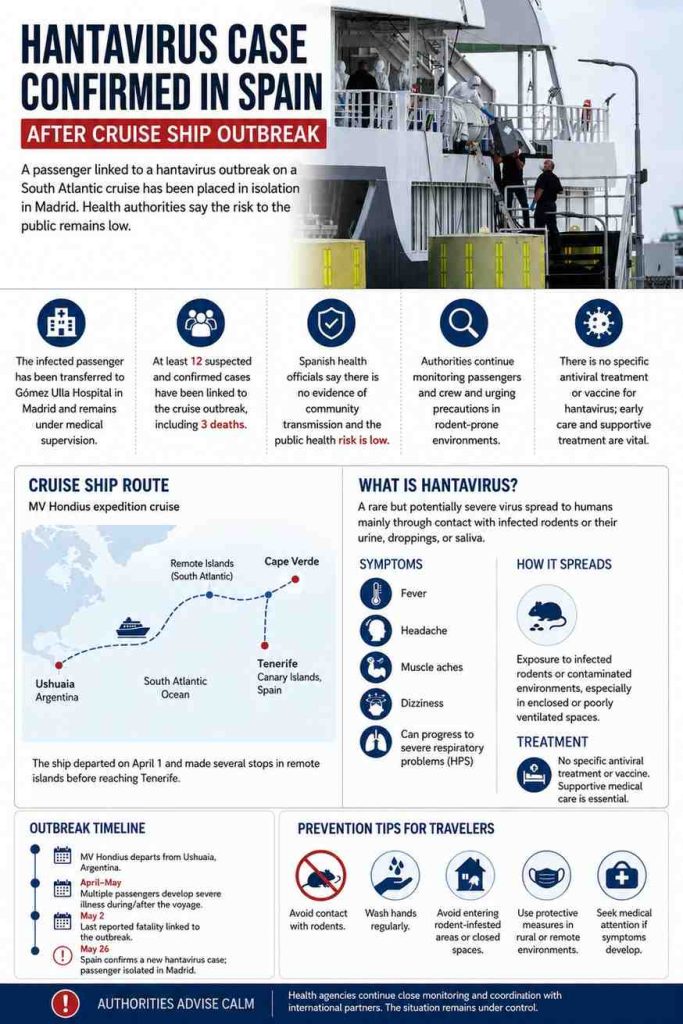
The confirmed case is connected to passengers aboard the Dutch-flagged expedition vessel MV Hondius, which departed from Ushuaia, Argentina, in early April for a route that included remote South Atlantic islands before heading toward Cape Verde and eventually Tenerife in Spain’s Canary Islands.
The voyage drew international health scrutiny after multiple passengers reportedly developed symptoms consistent with hantavirus infection during or after the expedition.
According to international health monitoring reports, at least a dozen suspected or confirmed cases have been linked to the outbreak, including several fatalities reported earlier this month. No new deaths have been publicly reported in recent weeks.
Authorities have not yet publicly identified the precise source of exposure aboard the vessel, though health investigators are examining whether passengers may have encountered rodent-contaminated environments during shore excursions in isolated regions visited during the trip.
Understanding Hantavirus
Hantavirus refers to a family of viruses primarily transmitted to humans through exposure to infected rodents or contaminated materials such as urine, saliva, or droppings. Human infection most commonly occurs when virus particles become airborne and are inhaled in enclosed or poorly ventilated environments.
While infections remain uncommon globally, some strains can lead to severe illness, including Hantavirus Pulmonary Syndrome (HPS), a respiratory condition that can rapidly progress and become life-threatening.
Medical experts say early symptoms often resemble influenza-like illness and may include:
- fever,
- muscle pain,
- fatigue,
- headaches,
- nausea,
- and dizziness.
In more serious cases, patients can develop breathing difficulties and lung complications requiring intensive medical care.
There is currently no approved vaccine or specific antiviral therapy for hantavirus infections. Treatment primarily focuses on supportive care, including oxygen support and intensive respiratory management in severe cases.
Why Health Officials Are Monitoring the Situation Closely
Although Spanish authorities have emphasized that the risk to the broader population remains low, outbreaks involving international travel routes often attract heightened monitoring because passengers can disperse across multiple countries before symptoms fully emerge.
Cruise ships present particular challenges for infectious disease management due to close-contact environments, shared facilities, and the logistical complexity of tracing international travelers after disembarkation.
Public health agencies in Europe and Latin America have reportedly continued coordinating passenger follow-up efforts, especially for travelers who may have visited remote ecological zones associated with rodent-borne diseases.
Health officials have also reiterated that hantavirus transmission between humans is considered extremely rare for most strains, unlike respiratory viruses that spread efficiently through casual contact.
Travel Health Concerns in Remote Tourism Destinations
The outbreak has also highlighted broader concerns surrounding expedition tourism to isolated regions where travelers may encounter unfamiliar environmental health risks.
Adventure cruises and eco-tourism expeditions to polar, subpolar, and remote island regions have grown significantly in recent years, bringing increasing numbers of tourists into environments where zoonotic diseases — illnesses transmitted from animals to humans — may exist naturally.
Infectious disease specialists note that travelers often underestimate the risks associated with exposure to wildlife habitats, abandoned structures, storage areas, or rodent-infested locations during remote expeditions.
Authorities continue advising travelers to:
- avoid direct contact with rodents,
- maintain hygiene precautions in rural or isolated areas,
- avoid contaminated enclosed spaces,
- and seek medical attention promptly if symptoms develop after travel.
International Health Surveillance Continues
The World Health Organization and national health agencies continue to monitor developments linked to the outbreak while assessing whether any additional cases emerge among former passengers or crew members.
Spanish authorities have sought to reassure the public that existing containment and monitoring measures remain effective, and there is currently no evidence suggesting broader community spread within Spain.
Still, the case underscores how rapidly localized infectious disease risks can become international public health concerns in an era of expanding global travel and expedition tourism.
For now, medical teams remain focused on monitoring exposed individuals, containing any potential further spread, and ensuring early treatment for patients who may develop severe symptoms in the coming days or weeks.
Key Highlights
- Spain confirmed a new hantavirus infection linked to passengers aboard the expedition cruise ship MV Hondius following a recent outbreak investigation.
- The infected passenger has been transferred to a high-isolation unit at Madrid’s Gómez Ulla Hospital and remains under medical supervision.
- International health authorities have reported at least 12 suspected or confirmed cases connected to the cruise outbreak, including three deaths earlier this month.
- Hantavirus is a rare rodent-borne disease that can cause severe respiratory complications, including Hantavirus Pulmonary Syndrome (HPS).
- Spanish officials said there is currently no evidence of broader community transmission and described the overall public health risk as low.
- Authorities continue monitoring passengers and crew members while urging travelers to follow hygiene precautions in remote or rodent-prone environments.
- The case has renewed attention on health risks linked to expedition tourism and international cruise travel in isolated regions.
Input & Images: Hindusthan Samachar
Edited by Manten Sasank
Add Digital Herald as preferred source on google – click here
Also read – Trump Pushes Tough Nuclear Terms as Iran Talks Enter Critical Phase
Last Updated on: Tuesday, May 26, 2026 11:06 am by Mantena Sasank | Published by: Mantena Sasank on Tuesday, May 26, 2026 11:06 am | News Categories: News