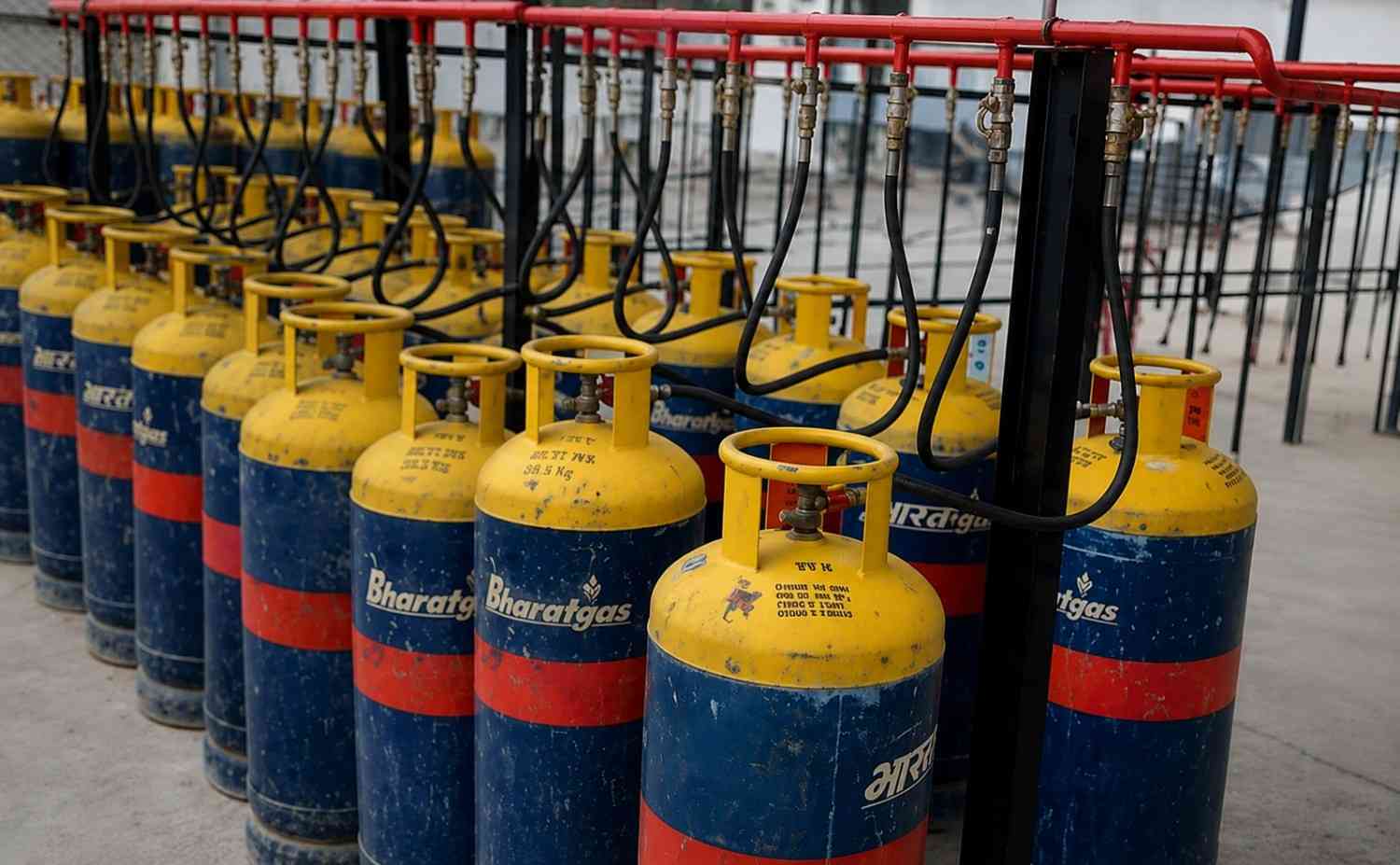
Businesses that rely on commercial cooking gas will face higher operating costs from June 1 after state-run fuel retailers increased prices of commercial LPG cylinders across major Indian cities. The price revision comes alongside a separate government decision to reduce export duties on petroleum products, a move aimed at easing pressure on refiners and maintaining competitiveness in global energy markets.
While commercial users will bear the impact of the latest LPG hike, households received some relief as domestic cooking gas prices remained unchanged.
Commercial LPG Becomes More Expensive
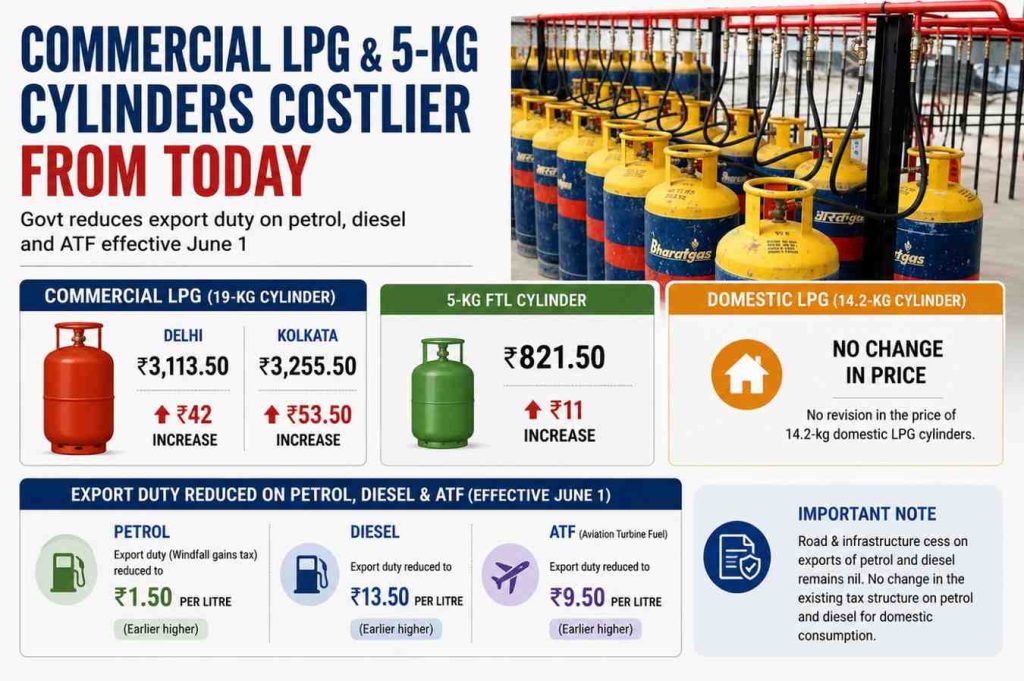
Oil marketing companies revised rates for 19-kilogram commercial LPG cylinders effective June 1, increasing costs for restaurants, hotels, catering businesses, and other commercial establishments that depend heavily on liquefied petroleum gas.
In the national capital, the price of a commercial cylinder rose by ₹42, taking the retail rate above ₹3,100. Similar increases were recorded in other metropolitan markets, with Kolkata witnessing one of the larger revisions.
The price of smaller 5-kilogram Free Trade LPG cylinders was also increased, affecting consumers and businesses that use portable LPG solutions.
Industry observers note that commercial LPG prices are reviewed periodically and are influenced by international energy trends, import costs, exchange-rate movements, and domestic distribution expenses.
No Change for Household Consumers
Unlike commercial cylinders, domestic LPG connections used by households did not witness any price revision.
The decision to leave residential cooking gas prices unchanged may help shield households from additional inflationary pressures at a time when consumers continue to monitor food, transport, and utility costs closely.
Domestic LPG pricing has remained a politically and economically sensitive issue, given its direct impact on millions of households across the country.
Government Eases Export Duty Burden
Alongside the LPG revision, the central government announced reductions in export duties on petrol, diesel, and aviation turbine fuel (ATF).
The move lowers the tax burden on fuel exports and is expected to provide some relief to refiners operating in a volatile global energy environment.
The reduction affects duties imposed on exports of refined petroleum products and comes amid changing international crude oil dynamics and fluctuating refining margins.
Energy analysts said the decision reflects the government’s attempt to balance domestic fuel security with the competitiveness of India’s refining sector, which has emerged as a major exporter of petroleum products.
Global Energy Markets Continue to Influence Policy
India’s fuel pricing decisions are increasingly linked to developments in international energy markets. Crude oil prices remain sensitive to geopolitical tensions, production decisions by major oil-producing nations, shipping disruptions, and shifts in global demand.
Changes in export duties and fuel taxation are often used as policy tools to respond to these external developments while protecting domestic supplies.
The latest adjustments indicate that policymakers continue to monitor global energy trends closely while attempting to manage inflationary risks and support industrial activity.
Impact on Businesses
The increase in commercial LPG prices is expected to be felt most strongly by sectors with high fuel consumption, including hospitality, food services, bakeries, catering operations, and small manufacturing units.
Business owners may face pressure on operating margins if higher fuel costs persist over an extended period. Some enterprises could eventually pass part of the additional expense on to consumers, although competitive market conditions may limit immediate price increases.
For larger businesses, fuel costs remain one of several variables affecting profitability alongside labor, logistics, and raw-material expenses.
What Comes Next
Market participants will continue watching international crude oil prices, government tax decisions, and future fuel price revisions for signals about the broader energy outlook.
While households have avoided an immediate increase in cooking gas costs, commercial users enter June facing higher fuel expenses. At the same time, refiners may benefit from lower export duties as India seeks to maintain its position in global petroleum markets.
The combination of higher commercial LPG rates and reduced export levies underscores the government’s effort to manage competing priorities in an energy sector shaped by both domestic needs and international market forces.
Key Highlights
- Commercial LPG cylinder prices were increased nationwide from June 1, raising costs for restaurants, hotels, and other commercial users.
- In Delhi, the price of a 19-kg commercial LPG cylinder rose by ₹42, while Kolkata saw a larger increase of ₹53.50.
- The price of 5-kg Free Trade LPG (FTL) cylinders was also increased by ₹11.
- Domestic consumers received relief as there was no change in the price of 14.2-kg household cooking gas cylinders.
- The central government simultaneously reduced export duties on petrol, diesel, and aviation turbine fuel (ATF) to support the refining sector.
- The windfall gains tax on petrol exports was cut to ₹1.50 per litre, while export duties on diesel and ATF were also reduced.
- Officials said there is no change in the tax structure or pricing mechanism for petrol and diesel sold in the domestic market.
- The latest revisions highlight the government’s effort to balance domestic energy affordability with the competitiveness of India’s fuel export industry.
Input & Images: Hindusthan Samachar
Edited by Manten Sasank
Add Digital Herald as preferred source on google – click here
Also read – Shubman Gill’s Century Sends Gujarat Titans Into IPL 2026 Final as Rajasthan’s Young Star Shines in Defeat
Last Updated on: Monday, June 1, 2026 10:28 am by Mantena Sasank | Published by: Mantena Sasank on Monday, June 1, 2026 10:28 am | News Categories: Business