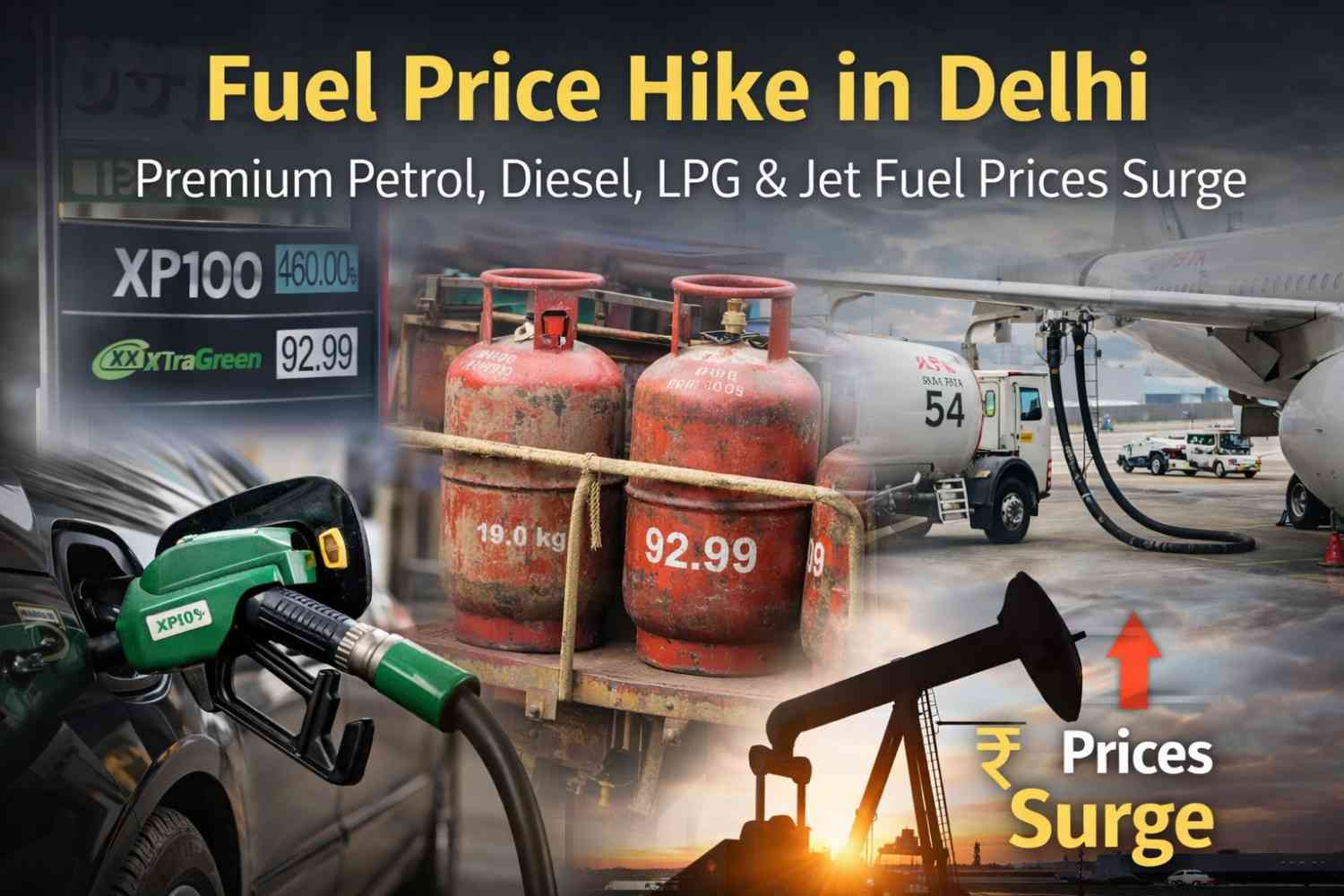
Surge in global crude oil prices pushes up fuel costs, raising concerns over inflation and travel expenses
Fuel prices in Delhi have increased across multiple categories, with premium petrol, diesel, LPG cylinders, and aviation fuel witnessing sharp hikes. State-run Indian Oil Corporation revised rates for its premium fuels, while rising global crude prices have pushed aviation turbine fuel (ATF) beyond the ₹2 lakh mark per kilolitre for the first time.
Key Highlights
Indian Oil has raised the price of XP100 premium petrol from ₹149 to ₹160 per litre in Delhi. The company also increased the price of its Xtra Green premium diesel from ₹91.49 to ₹92.99 per litre.
In addition, the cost of a 19-kg commercial LPG cylinder has risen significantly. Prices have climbed from ₹1,768.50 on March 1 to ₹2,078.50 on April 1, marking an increase of over ₹300 within a month.
Jet fuel prices have seen a sharper rise, crossing ₹2,07,000 per kilolitre, setting a new high.
Official Position
While no detailed official explanation has been issued, industry trends suggest that the price revisions are linked to rising global crude oil rates and higher logistics costs. These increases are being passed on to consumers in line with market-linked pricing mechanisms.
Context and Background
Fuel prices in India are influenced by international crude oil rates, currency movements, and transportation costs. Premium fuels such as XP100 are high-octane variants designed for high-performance vehicles, while ATF is a key cost component for airlines.
The recent surge in oil prices has been driven by geopolitical tensions in the Middle East, particularly involving Iran and the United States, which has disrupted supply expectations.
Public Impact
The increase in fuel prices is expected to have a wider economic impact. Higher LPG costs may affect restaurants, hotels, and small businesses that rely on commercial cylinders.
The rise in aviation fuel prices could lead to increased airfares, as fuel constitutes a major portion of airline operating costs. Additionally, higher fuel costs may contribute to inflation by raising transportation and logistics expenses across sectors.
Conclusion
The latest fuel price hikes highlight the sensitivity of domestic markets to global energy trends. With geopolitical tensions continuing and oil prices remaining volatile, further price fluctuations cannot be ruled out.
Consumers and businesses are likely to feel the effects in the coming weeks, particularly through higher transportation and service costs.
Image Credit: AI-generated image for illustrative purposes
Edited by Manten Sasank
Add Digital Herald as preferred source on google – click here
Also read – Adani Green Energy Adds 5 GW Capacity in FY26, Expands Portfolio to 19.3 GW
Last Updated on: Wednesday, April 1, 2026 11:54 am by Mantena Sasank | Published by: Mantena Sasank on Wednesday, April 1, 2026 11:54 am | News Categories: News, Business, Trending