Precious metals see notable correction in March as global financial factors reshape investor preferences
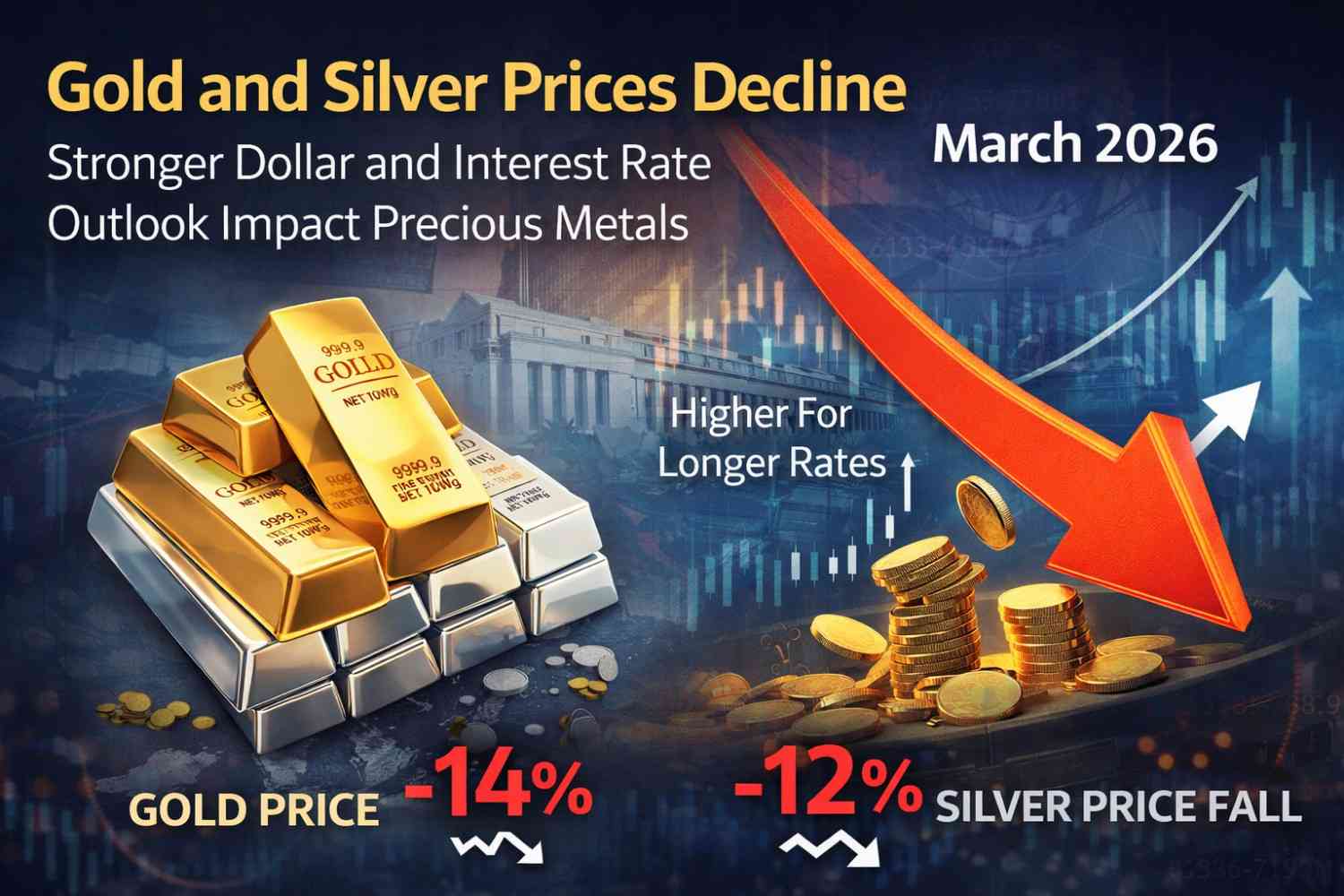
Gold and silver prices witnessed a noticeable decline in March 2026, even as global markets remained volatile. Contrary to typical trends during periods of uncertainty, precious metals did not see increased demand. Analysts attribute the movement to broader macroeconomic factors, including currency strength and interest rate expectations.
Key Highlights
Gold prices declined by around 14% during March, while silver also recorded a downward trend. The fall comes at a time when global markets are experiencing fluctuations, making the shift in precious metal prices particularly noteworthy.
Market data suggests that investor behavior is being influenced more by financial conditions than by geopolitical developments.
Factors Influencing Price Movement
One of the primary factors is the strength of the US dollar. Since gold is priced internationally in dollars, a stronger currency makes it more expensive for buyers using other currencies. This can reduce global demand and put downward pressure on prices.
Another key factor is the outlook on interest rates. Expectations that the Federal Reserve may maintain higher interest rates for a longer period have made interest-bearing assets more attractive. Unlike bonds or fixed-income instruments, gold does not generate returns, which can influence investor choices.
Additionally, rising energy prices have contributed to inflation concerns, reinforcing expectations of tighter monetary policy. This environment typically limits the appeal of non-yielding assets like gold and silver.
Context and Background
Gold and silver are traditionally considered “safe-haven” assets, often attracting investors during periods of market uncertainty. However, their performance can vary depending on broader economic conditions such as currency movements and central bank policies.
The current trend highlights how global financial dynamics can influence asset classes in different ways, even during periods of uncertainty.
Public Impact
For investors, the decline in precious metal prices may affect portfolio valuations, particularly for those with significant exposure to gold or silver. At the same time, it underscores the importance of diversification and monitoring global economic indicators.
The shift may also influence investment strategies, as some investors reassess the role of precious metals in their portfolios.
Conclusion
The recent movement in gold and silver prices reflects the complex interplay of global financial factors, including currency strength and interest rate expectations. While precious metals remain an important asset class, their performance may continue to depend on evolving economic conditions.
Market participants are likely to watch developments in interest rates and currency trends closely to assess the future direction of gold and silver prices.
Image Credit: AI-generated image for illustrative purposes
Edited by Manten Sasank
Add Digital Herald as preferred source on google – click here
Also read – UAE Considers Joining US–Iran Conflict, Pushes for Action to Reopen Strait of Hormuz
Last Updated on: Thursday, April 2, 2026 1:26 pm by Mantena Sasank | Published by: Mantena Sasank on Thursday, April 2, 2026 1:26 pm | News Categories: News, Business, Finance, Trending