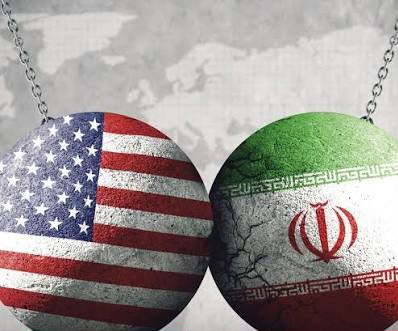
Fresh remarks from a senior Iranian lawmaker have highlighted the continuing obstacles facing any potential diplomatic breakthrough between Iran and the United States, underscoring how deeply entrenched mistrust and competing strategic priorities continue to shape one of the world’s most sensitive geopolitical disputes.
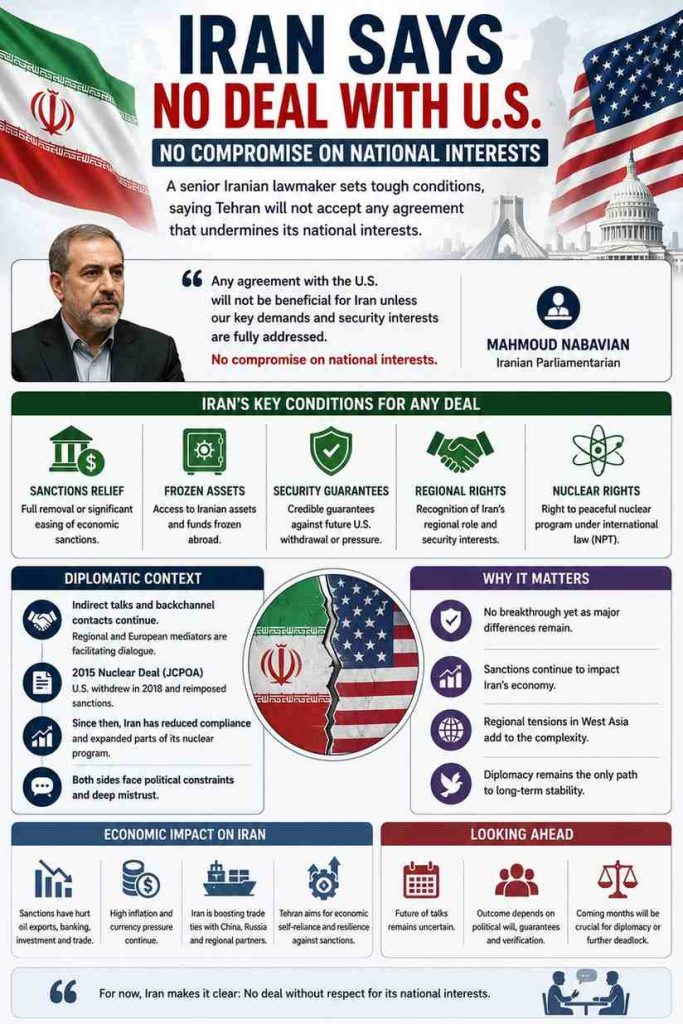
Mahmoud Nabavian, an Iranian parliamentarian associated with conservative political factions in Tehran, said Iran would not accept any agreement that compromises what he described as the country’s “national interests” or strategic independence. His comments come amid renewed international speculation over whether indirect diplomacy between Washington and Tehran could eventually evolve into a broader understanding over sanctions, regional security, and Iran’s nuclear activities.
The statement reflects a recurring theme inside Iran’s political establishment: while Tehran remains open to negotiations in principle, influential political figures continue insisting that any future agreement must deliver tangible economic and security guarantees rather than symbolic diplomatic concessions.
Diplomatic Contacts Continue Behind the Scenes
Although no formal breakthrough has been announced, diplomatic engagement surrounding Iran has intensified in recent months through indirect talks, regional mediation efforts, and backchannel communications involving European and Middle Eastern intermediaries.
Officials from multiple countries have periodically signaled interest in reducing tensions that have escalated over nuclear enrichment activities, regional conflicts, maritime security concerns, and economic sanctions imposed by the United States and its allies.
The broader diplomatic environment remains fragile. Relations between Washington and Tehran have been strained for years following the collapse of the 2015 Joint Comprehensive Plan of Action (JCPOA), the nuclear agreement that had temporarily eased sanctions on Iran in exchange for restrictions on its nuclear program.
After the United States withdrew from the accord in 2018 and reimposed sweeping sanctions, Iran gradually reduced compliance with several nuclear commitments, accelerating uranium enrichment and expanding parts of its nuclear infrastructure.
Since then, attempts to restore or redesign a framework acceptable to both sides have repeatedly stalled.
Iran’s Core Demands Remain Unchanged
Nabavian’s remarks illustrate how Iran’s negotiating priorities continue extending beyond nuclear restrictions alone.
According to Iranian officials and lawmakers, several issues remain central to Tehran’s position, including:
- removal or easing of economic sanctions,
- access to frozen Iranian financial assets abroad,
- guarantees against future unilateral U.S. withdrawal from agreements,
- recognition of Iran’s regional security interests,
- and preservation of what Tehran describes as its peaceful nuclear rights.
Iranian leaders have long argued that previous diplomatic arrangements failed to adequately protect the country from economic pressure and political unpredictability.
Conservative political factions inside Iran, many of which remain skeptical of Western diplomacy, have repeatedly warned against agreements they believe could weaken Iran’s strategic leverage without guaranteeing long-term economic benefits.
That internal political dynamic continues influencing Tehran’s negotiating posture.
Washington Faces Its Own Political Constraints
The United States also faces significant domestic and international political pressures in any future engagement with Iran.
American policymakers remain divided over how to balance diplomacy with sanctions enforcement and regional security concerns. Critics of renewed engagement argue that Tehran’s expanding nuclear activities and regional alliances require stronger containment measures rather than sanctions relief.
At the same time, some Western diplomats and nonproliferation experts continue warning that the absence of diplomacy increases the risk of escalation, regional instability, and further nuclear expansion.
The Biden administration and European governments have periodically emphasized that diplomatic channels remain preferable to military confrontation, though progress has remained limited and uneven.
The debate has become increasingly complicated by broader geopolitical developments, including conflicts in West Asia, energy market volatility, and shifting global alliances involving Russia and China.
Economic Pressure Continues to Shape Iran’s Strategy
Sanctions remain one of the most significant pressure points in the standoff.
Iran’s economy has faced years of restrictions affecting oil exports, banking access, international investment, and trade flows. Inflation, currency instability, and reduced foreign investment have placed sustained pressure on domestic economic conditions.
However, Tehran has also adapted parts of its economy through alternative trade routes, regional partnerships, and closer commercial ties with countries including China and Russia.
Analysts note that Iran’s leadership increasingly frames sanctions resilience as part of a broader strategy of economic self-reliance and geopolitical resistance.
Still, access to global financial systems and overseas assets remains critically important for long-term economic stabilization.
Regional Security Concerns Complicate Diplomacy
Any future understanding between Iran and the United States is likely to involve wider regional considerations beyond nuclear policy alone.
Iran’s role in regional conflicts, its relationships with armed groups across the Middle East, maritime security tensions in the Gulf region, and concerns surrounding missile programs all remain highly sensitive topics in broader international negotiations.
Meanwhile, recent instability across West Asia has increased fears that even limited diplomatic failures could contribute to wider regional escalation.
Several Gulf states have simultaneously pursued cautious diplomatic normalization with Tehran while continuing security cooperation with Western allies, reflecting the complex balance shaping modern Middle Eastern geopolitics.
Uncertainty Surrounds Future Negotiations
Despite periodic diplomatic signals from both sides, substantial differences remain unresolved.
Iranian officials continue insisting that any agreement must produce measurable economic relief and credible guarantees, while Washington and its partners continue seeking stronger assurances regarding nuclear transparency and regional security behavior.
For now, the latest remarks from Tehran suggest that although diplomacy remains possible, expectations for a rapid breakthrough remain limited.
The coming months are likely to determine whether ongoing indirect contacts evolve into more substantive negotiations or whether the long-running standoff enters another prolonged period of strategic deadlock.
Key Highlights
- Senior Iranian lawmaker Mahmoud Nabavian said Tehran will not accept any agreement with the United States that compromises Iran’s national interests or strategic priorities.
- Iran insists that sanctions relief, access to frozen assets, security guarantees, and nuclear rights remain central conditions for any future deal.
- The remarks come amid renewed diplomatic activity and indirect discussions aimed at easing tensions between Washington and Tehran.
- The ongoing dispute reflects deep mistrust following the collapse of the 2015 nuclear agreement after the U.S. withdrawal in 2018.
- U.S.-Iran negotiations remain complicated by broader regional security concerns, including conflicts in West Asia and maritime tensions.
- Analysts say economic pressure from sanctions continues to shape Iran’s negotiating strategy, even as Tehran strengthens alternative trade partnerships.
- The latest comments highlight that significant political and strategic differences still stand in the way of a major diplomatic breakthrough.
Input & Images: Hindusthan Samachar
Edited by Manten Sasank
Add Digital Herald as preferred source on google – click here
Also read – Maharashtra Warns Against Fuel Hoarding Amid Rumours of Petrol and Diesel Shortage
Last Updated on: Monday, May 25, 2026 10:57 am by Mantena Sasank | Published by: Mantena Sasank on Monday, May 25, 2026 10:57 am | News Categories: News