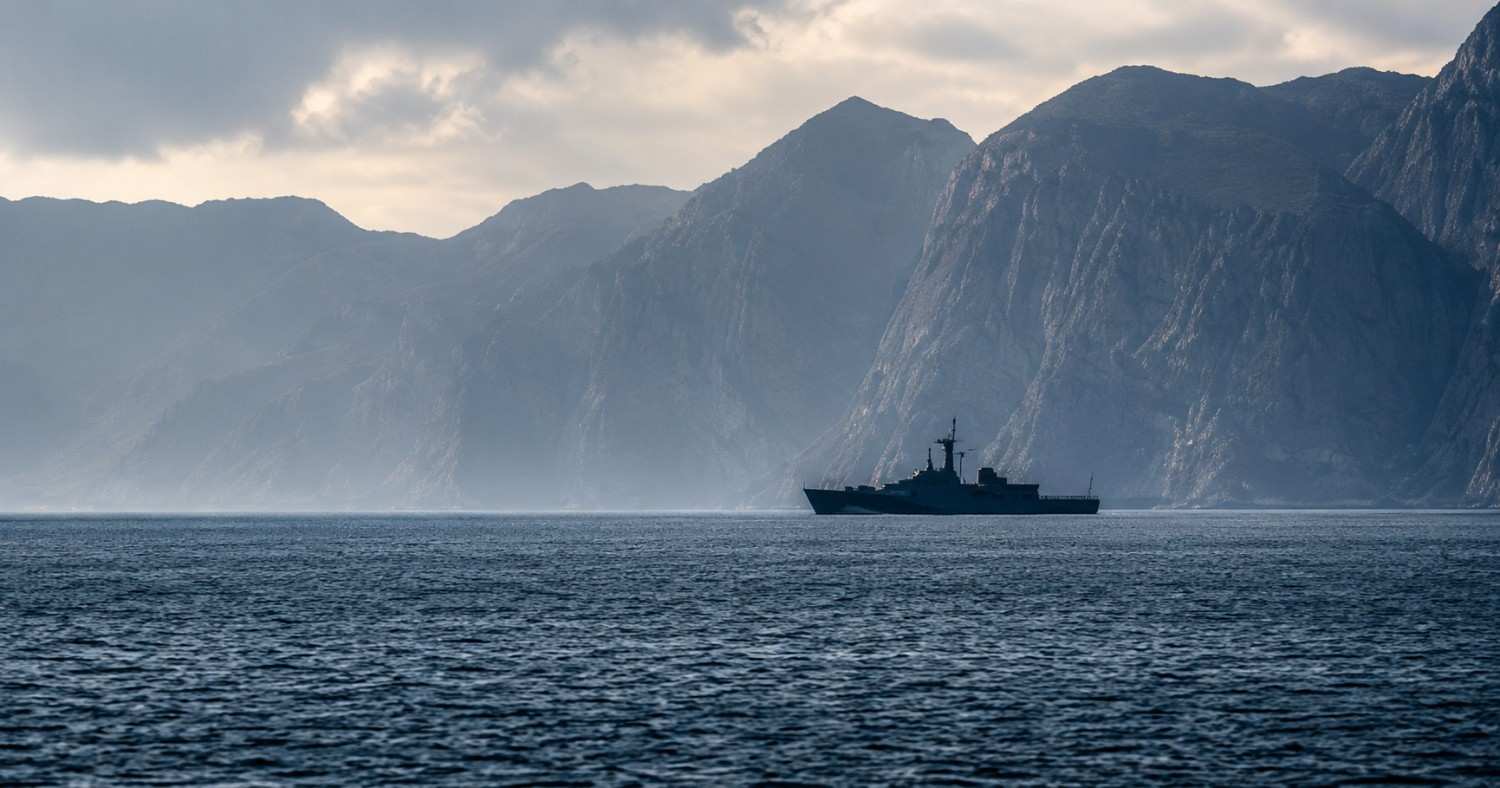
A fresh dispute between the United States and Iran has intensified concerns about stability in the Gulf after Tehran claimed responsibility for an attack on an American naval vessel in the Sea of Oman, an allegation that U.S. military officials have firmly denied.
The conflicting accounts emerged against the backdrop of growing regional tensions, renewed missile exchanges, and increasing uncertainty over the future of a fragile ceasefire that has held only intermittently in recent months.
According to Iranian state-linked media, naval forces targeted a U.S. military vessel operating near strategic waters bordering the Strait of Hormuz. Iranian officials framed the alleged action as retaliation for what they described as hostile American activities affecting Iranian shipping interests and regional navigation routes.
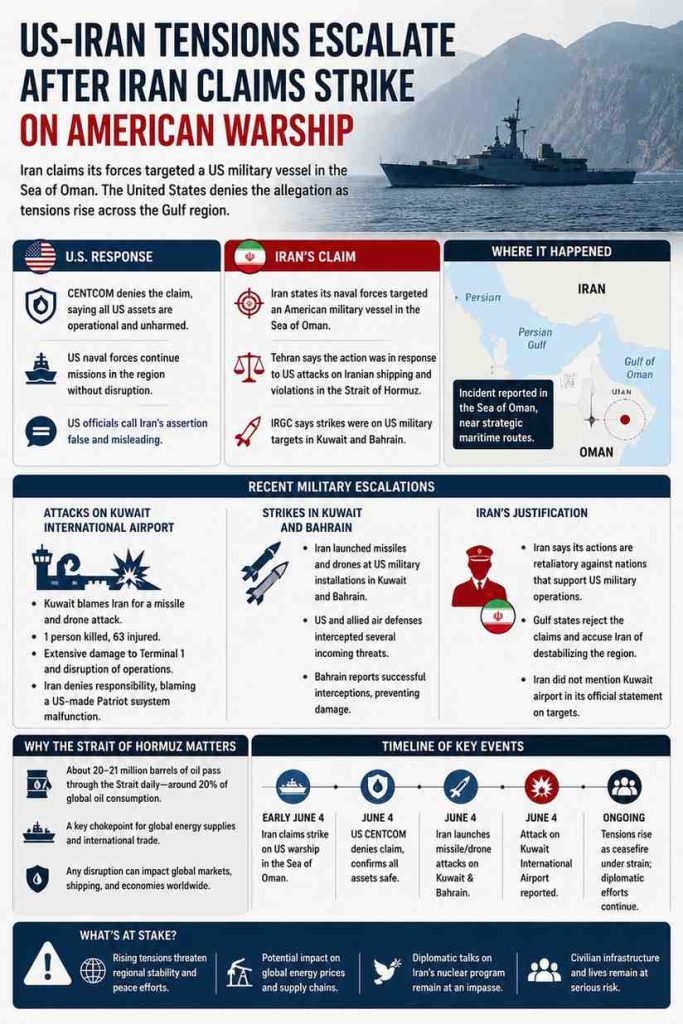
However, the United States Central Command (CENTCOM) rejected the claim, stating that American military assets in the region remain fully operational and that no U.S. vessel had been struck. U.S. officials characterized Tehran’s assertions as misinformation and reiterated that naval operations were continuing without disruption.
Strategic Waterways Back in Focus
The latest dispute has drawn renewed attention to the Sea of Oman and the Strait of Hormuz, two maritime corridors that play a critical role in global energy transportation.
A significant portion of the world’s seaborne oil exports passes through the Strait of Hormuz, making any military confrontation in the area a matter of international concern. Even limited incidents involving commercial or military vessels can trigger volatility in energy markets and raise fears of broader disruptions to global trade.
Security analysts note that tensions in these waterways have historically served as flashpoints during periods of heightened confrontation between Washington and Tehran.
Escalation Beyond the Sea
The maritime dispute unfolded amid reports of additional military activity across the Gulf region.
Recent attacks involving missiles and drones directed at facilities in Kuwait and Bahrain have further complicated diplomatic efforts aimed at containing the crisis. While Iran has defended its actions as responses to regional security threats, Gulf governments and Western allies have accused Tehran of destabilizing the region through military escalation.
The situation has become particularly sensitive following a deadly incident involving Kuwait International Airport. Competing narratives surrounding responsibility for the attack have widened divisions among regional actors and increased pressure on diplomatic channels already under strain.
Kuwaiti authorities reported casualties and significant disruption to airport operations, while investigations into the circumstances surrounding the strike continue.
Regional Leaders Call for Restraint
The escalation has prompted renewed appeals for de-escalation from governments across the Middle East and beyond.
Several regional leaders have warned that continued military exchanges risk undermining efforts to preserve stability and could draw additional countries into an expanding confrontation. Diplomatic observers note that neighboring Gulf states increasingly view regional security as interconnected, making any escalation a matter of collective concern.
Calls for restraint have also focused on protecting civilian infrastructure and ensuring that commercial transportation networks remain operational during periods of heightened tension.
Ceasefire Under Growing Pressure
The latest developments threaten to weaken a ceasefire framework that was intended to reduce direct military confrontation and create space for broader negotiations.
Analysts warn that repeated incidents, regardless of disputed responsibility, can erode trust between parties and make future diplomatic progress more difficult. At the same time, unresolved disagreements over security arrangements, regional influence, and military deployments continue to fuel friction.
The dispute also comes as international efforts to address broader issues surrounding Iran’s regional role and nuclear programme remain unresolved.
Global Implications
Beyond its regional impact, the confrontation carries significant implications for international energy markets, shipping security, and geopolitical stability.
Any sustained disruption in the Gulf could affect oil prices, insurance costs for maritime transport, and supply chains dependent on uninterrupted access to key trade routes.
For now, both sides continue to defend sharply contrasting versions of recent events. With military tensions rising and diplomatic efforts facing renewed challenges, international attention remains focused on whether regional actors can prevent another escalation and preserve a pathway toward dialogue.
As conflicting claims continue to emerge, the coming days are likely to prove critical in determining whether the crisis moves toward negotiation or deeper confrontation.
Key Highlights
- Iran claimed its naval forces targeted a U.S. military vessel in the Sea of Oman, escalating tensions in the Gulf region.
- The United States Central Command (CENTCOM) denied the claim, stating that all American military assets remain operational and unharmed.
- The incident occurred near the strategically important Strait of Hormuz, a key route for global oil and energy shipments.
- The dispute follows recent missile and drone attacks attributed to Iran against U.S.-linked military targets in Kuwait and Bahrain.
- A separate attack on Kuwait International Airport has become a major point of contention, with Iran denying responsibility and U.S. and Kuwaiti officials blaming Tehran.
- Kuwaiti authorities reported one death, 63 injuries, and significant damage to airport infrastructure following the incident.
- Gulf nations, including Kuwait and Bahrain, have accused Iran of destabilizing the region through military escalation.
- Iran maintains that its actions are defensive and retaliatory, while regional governments reject those claims.
- The latest developments have increased pressure on an already fragile ceasefire and complicated ongoing diplomatic efforts.
- Analysts warn that continued military incidents could threaten regional stability, disrupt energy markets, and undermine negotiations over Iran’s nuclear programme.
Input & Images: Hindusthan Samachar
Edited by Manten Sasank
Add Digital Herald as preferred source on google – click here
Also read – Deep Earthquake Off Southern Italy Felt Across Region, No Major Damage Reported
Last Updated on: Thursday, June 4, 2026 11:50 am by Mantena Sasank | Published by: Mantena Sasank on Thursday, June 4, 2026 11:50 am | News Categories: News